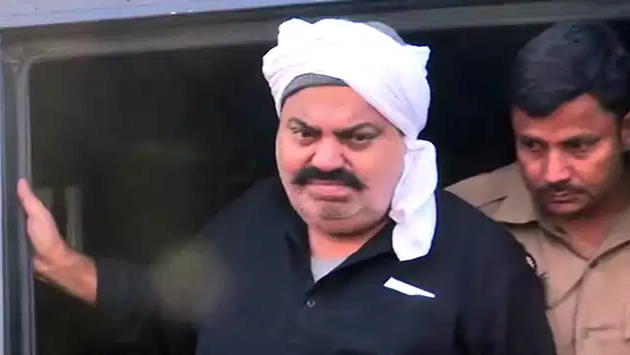
The story of Atiq Ahmed, who was once a notorious strongman of Uttar Pradesh, continues to be a subject of interest even years after his dramatic killing in April 2023. From a local gangster to a political leader, and the supposed connections to the underworld, the tale of Atiq Ahmed has now found renewed focus through cinematic interpretation in Dhurandhar: The Revenge.
Rise from crime to political power
Atiq Ahmed, born in 1962, had a history of crime from a young age. His name had appeared as a teenager in a murder case. In the 1980s, he had already made a name for himself in the underworld of Prayagraj.
Also Read | Dhurandhar: The Revenge strikes the perfect notes, yet leaves room for perfection
What made him stand apart from the others was the fact that he had made a name for himself in politics as well. In 1989, he had won the seat of Allahabad West Assembly. He had served several terms as MLA and had also become a Member of Parliament from Phulpur Constituency in 2004, a seat previously occupied by Jawaharlal Nehru.
Atiq had created a vast network of criminals and politicians, with more than 100 cases against him, including murder, extortion, and land grabbing.
The killing that shocked the country
On April 15, 2023, Ahmed and his brother, Ashraf, were shot dead while being escorted by police for a medical examination in Prayagraj.
Three men, claiming to be journalists, fired shots at close range during a media interaction. The assailants, police said, were Lavlesh Tiwari, Arun Maurya, and Sunny, and they surrendered soon after firing the shots. The crime was shown live on television, and it sparked a debate about law and order and security.
The murder occurred just two days after Ahmed’s son, Asad, was shot dead during a police encounter in Jhansi over his alleged role in the murder of Umesh Pal.
Network of money, power and alleged terror links
IInvestigations conducted by agencies like the Enforcement Directorate have indicated the presence of a vast financial empire believed to be connected with Ahmed.
According to official findings, as indicated in various reports:
More than 200 bank accounts were reportedly connected with associates and members of the Ahmed family.
Around 50 shell companies were allegedly used as conduits for money laundering.
Benami properties worth hundreds of crores were reportedly identified.
Income sources were said to include extortion, land, and illegal trade.
It has also been indicated that there were connections with cross-border entities, including the Lashkar-e-Taiba. Police documents have claimed that weapons used by his gang may have been sourced through illegal channels, including drone drops across borders.
While some allegations remain under investigation, officials have consistently flagged the overlap between organised crime and illegal financial operations in his case.
How Dhurandhar reinterprets the story
Director Aditya Dhar does not present a direct biopic but draws from real-world elements to construct a broader narrative. In Dhurandhar: The Revenge, the character inspired by such figures is positioned within a larger network involving:
Illegal financial flows and fake currency circulation
Arms supply chains linked to cross-border operations
Crime syndicates acting as intermediaries in larger geopolitical conflicts
Also Read | ‘Full blown cinematic explosion’: Ranveer Singh’s Dhurandhar 2 earns praise but divides viewers online
The film expands the scope of the story, portraying such figures not merely as local gangsters but as part of a wider system influencing national security.
A death that still raises questions
The circumstances of the killing of Atiq Ahmed are a subject of division of opinion. For some, it was the end of a long criminal career that was moulded and defined by violence and the exercise of power. For others, the public nature of the killing was a source of serious concern.
There is a third way of understanding the killing of Atiq Ahmed, which is depicted in cinematic productions. It is the dismantling of a larger network, rather than the end of a single individual’s story.