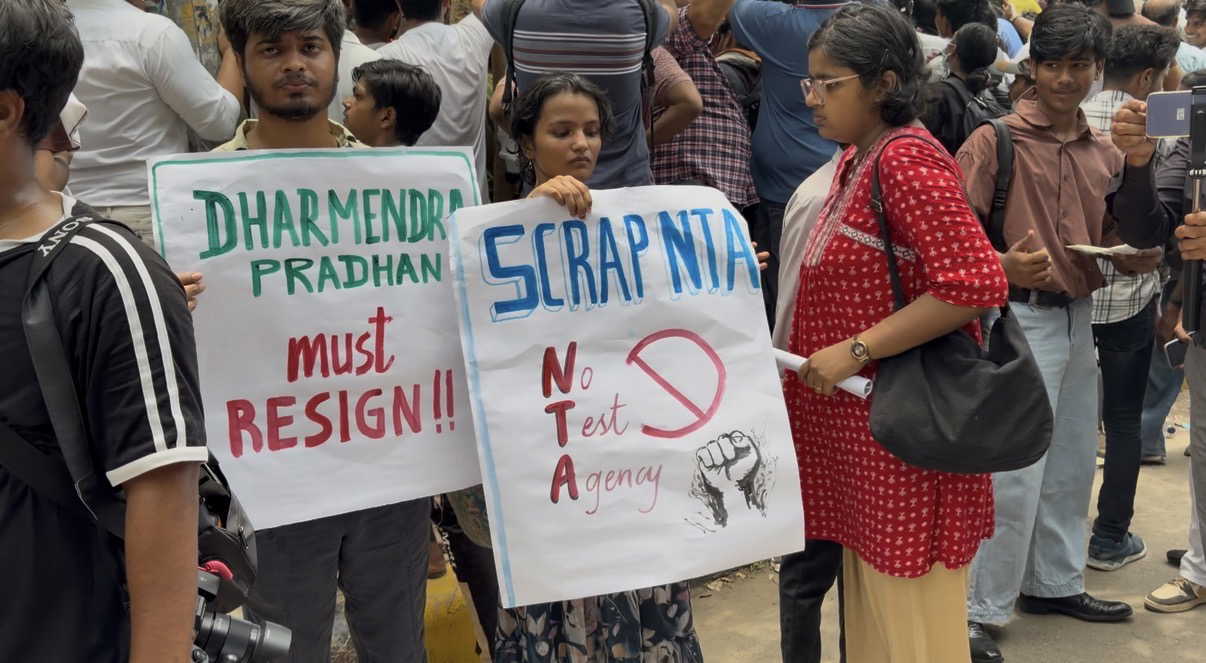
What started as a satirical online movement has transformed into one of the most unusual youth-led protests India has witnessed in recent years. Hundreds of students, young professionals and job seekers have now entered the third day of demonstrations at Delhi's Jantar Mantar under the banner of the Cockroach Janata Party, demanding the resignation of Union Education Minister Dharmendra Pradhan over the NEET-UG controversy.
The movement was initially triggered by allegations of a paper leak in one of India's most competitive medical entrance examinations. However, for many protesters gathered in the national capital, the issue has now moved far beyond a single examination.
The sit-in has become a larger expression of frustration against what participants describe as a lack of accountability in India's education system.
Also Read | India halts sugar exports till September 2026 to secure domestic supplies
 (File Image/Shaptadeep Saha)
 From online satire to a national protest movement
The Cockroach Janata Party, popularly known as CJP, emerged only weeks ago but has rapidly gained traction online.
The collective is led by Abhijeet Dipke, a student at Boston University in the United States, who returned to India earlier this month to organise demonstrations.
Its mascot, a cockroach, is intentionally satirical and draws inspiration from India's political landscape while attempting to challenge established narratives around governance and youth issues.
The movement itself was born after controversial remarks made by India's Chief Justice Surya Kant, who had compared certain unemployed youths to "cockroaches" and "parasites" during a court hearing. Although the judge later clarified his statement, social media users quickly adopted the symbol in protest.
Also Read | PoK unrest intensifies as children and women join anti-Pakistan protests
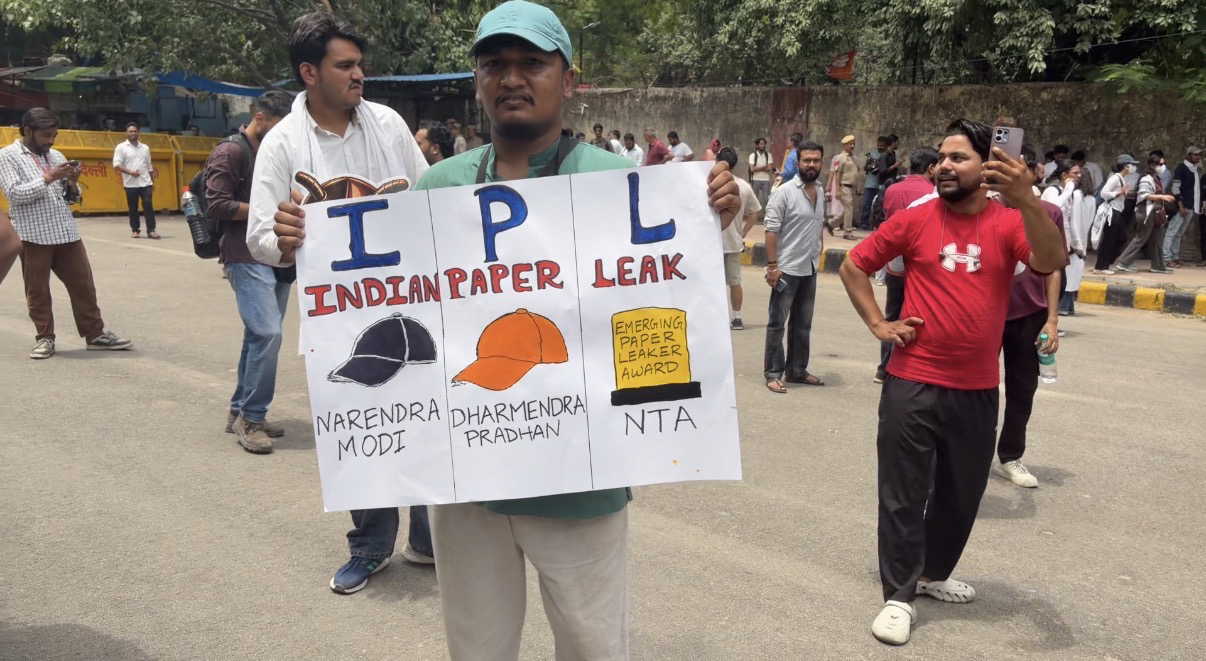 The immediate trigger for the demonstrations remains the NEET-UG examination controversy. (File Image/Shaptadeep Saha)
 NEET controversy fuels public anger
The immediate trigger for the demonstrations remains the NEET-UG examination controversy.
After allegations of a paper leak surfaced following the May examination, authorities cancelled the results and conducted a fresh test on Sunday under strict security arrangements.
Millions of candidates returned to examination centres equipped with biometric verification systems and enhanced monitoring measures.
The National Testing Agency later announced that the re-examination was completed smoothly and reported no complaints of paper leaks.
Yet protesters argue that conducting another examination does not address deeper institutional problems.
In a scathing critique of the current administration, speaking to News Ei Samay, Navy veteran Commander Rakesh Kumar has publicly voiced his support for "Gen Z" activists demanding greater governmental accountability. Speaking from a protest site, Kumar emphasised the constitutional premise of a "government by the people, for the people", accusing the ruling leadership of ignoring the public mandate.
Drawing parallels to India’s freedom struggle, he noted that historical revolutionaries like Bhagat Singh had to rely on secret printing presses to bypass crackdowns. Kumar called on citizens to leverage social media platforms like Instagram, X (formerly Twitter), and Facebook to bypass mainstream blockades, warning that without public intervention, the nation's key resources risk being completely monopolised.
Demonstrators refuse to leave Jantar Mantar
The protest began on June 19 after Delhi Police granted permission for a limited demonstration.
However, once the official permit expired, participants refused to disperse and instead expanded the sit-in.
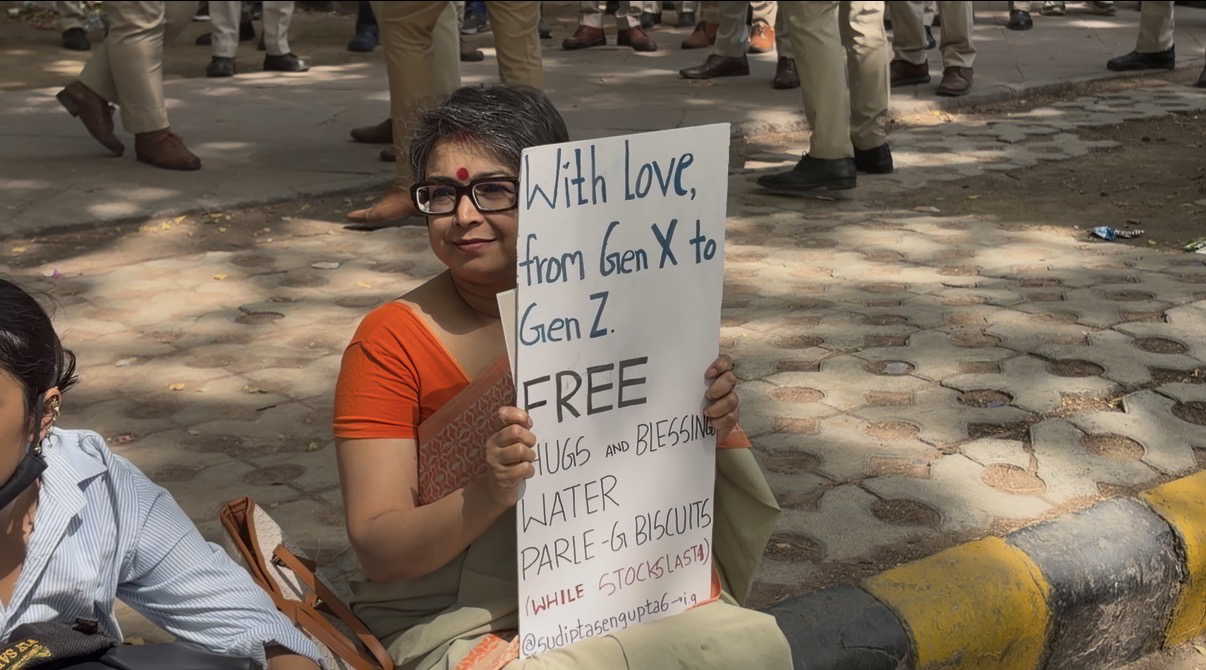
Several protesters spent nights sleeping on mattresses laid out on pavements, while volunteers arranged food and drinking water.
Organisers also accused authorities of temporarily restricting access to basic facilities after the permit expired, although they later said conditions improved.
People from various professions have joined the movement, including lawyers, storekeepers and students who are not directly connected to the examination.