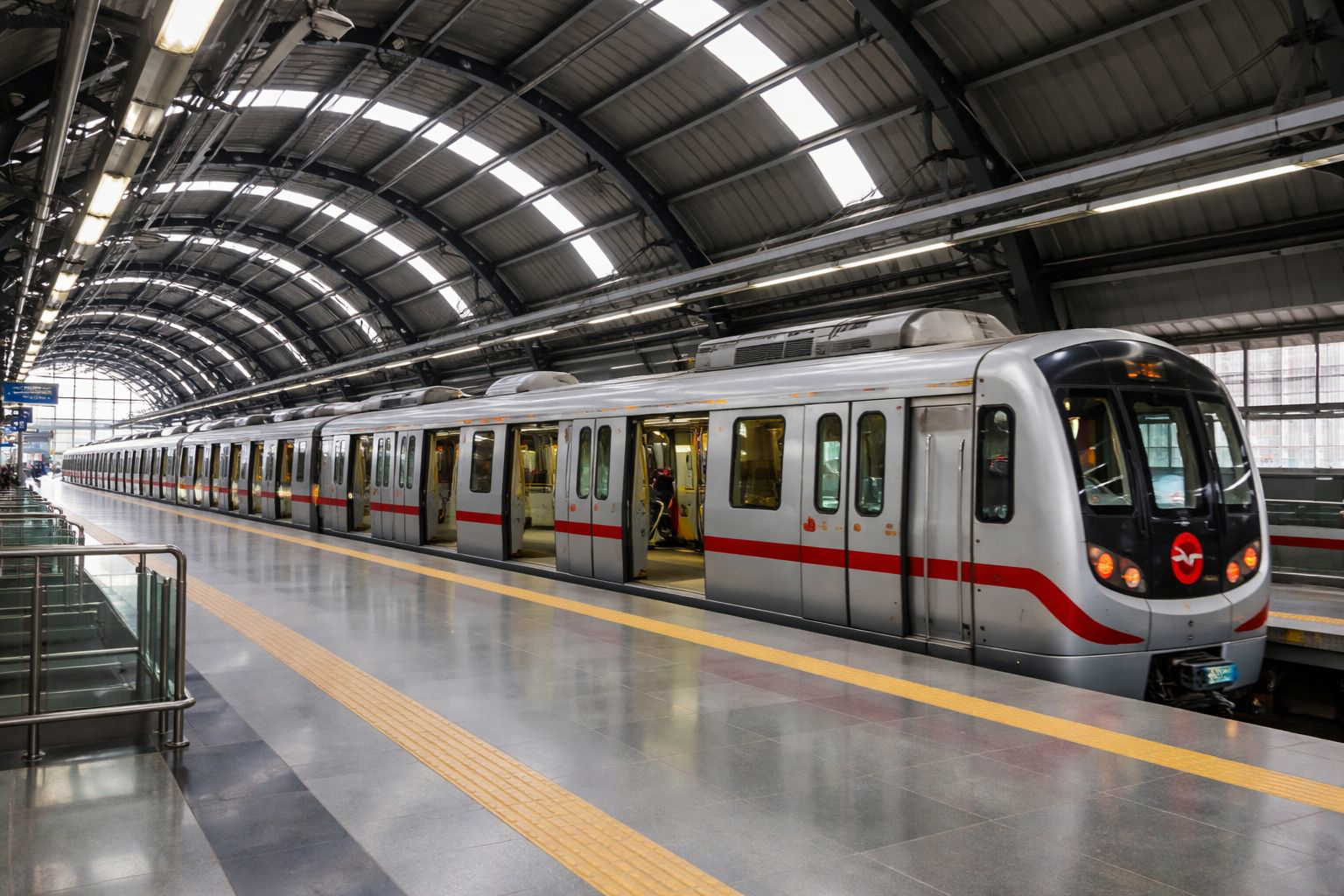
The Delhi Metro Rail Corporation is set for a major expansion after the Delhi government approved an ambitious plan to add over 97 kilometres of new Metro lines and 65 stations across the city. The project, estimated at ₹48,204 crore, is designed to improve connectivity between central Delhi and its rapidly expanding outskirts, bringing several underserved areas onto the Metro map.
Chief Minister Rekha Gupta said the expansion under Phase V(B) will focus on inclusive urban growth, ensuring that emerging residential and industrial pockets are better integrated with the capital’s transport network. The proposal has already been submitted to the Centre and is awaiting final approval before construction begins.
Focus on connectivity and urban expansion
According to The Hindustan Times, the project aims to bridge long-standing gaps in public transport by extending Metro access to areas such as Najafgarh, Narela, Mithapur and Khera Kalan. These localities, which have seen steady population growth, currently depend heavily on road-based transport.
Officials indicated that four of the seven proposed corridors will be treated as priority routes, with a target completion timeline of 2029. The expansion includes a mix of elevated and underground stretches, along with multiple interchange stations to ensure seamless connectivity with the existing network.
Key corridors include the Dhansa Bus Stand to Nangloi route, a fully elevated stretch that will connect several western Delhi localities, and the Central Secretariat to Kishangarh line, which will largely run underground and link important institutional and residential zones.
Also Read | Your local pharmacy could be closed on May 20: Here's why
Seven corridors to reshape mobility
Other proposed routes include the extension from Samaypur Badli to Narela, which will push the northern edge of the network further out, and the Kirti Nagar to Palam corridor, expected to improve east-west connectivity. A separate corridor from Jor Bagh to Mithapur will connect parts of south and southeast Delhi that currently lack direct Metro access.
In East Delhi, the Shastri Park to Mayur Vihar Phase III corridor is expected to ease congestion and improve connectivity across densely populated neighbourhoods. Another elevated route from Keshavpuram to Rohini Sector 34 will strengthen links in northwest Delhi, including access to educational and residential hubs.
Each corridor has been designed with interchange points to integrate smoothly with existing lines, reducing travel time and improving overall commuter convenience.
Also Read | Auto industry faces ₹25,000 crore hit as ELV rules raise liability concerns
Next steps and long-term impact
The government plans to implement the project in phases, with detailed project reports already prepared. Financial approvals from both the Centre and the Delhi government will be required before work can begin on the ground.
Once completed, the expansion is expected to significantly enhance last-mile connectivity and reduce dependence on private vehicles. It will also support more balanced urban development by making peripheral areas more accessible.
The scale of the project underlines Delhi’s continued reliance on the Metro as the backbone of its public transport system. If executed on schedule, Phase V(B) could reshape daily commuting patterns and ease pressure on the city’s overstretched road network.