One year after the deadly attack in Pahalgam, the events that followed continue to shape India's counter-terror narrative. The April 22, 2025 assault at Baisaran, which claimed 26 lives, led to the launch of Operation Mahadev; a nearly three-month effort that tracked and eliminated the attackers.
Attack and immediate response
The attack at Baisaran was marked by targeted killings of civilians, triggering widespread outrage. Security forces moved in within hours, with Indian Army units reaching the site and reconstructing the sequence of events.
What began as a rapid response soon turned into a structured operation, moving through stages of identification, tracking, containment and final engagement.
Also Read | Planning Kedarnath visit? You can't carry your phone inside temple now
Quick identification of attackers
The first breakthrough came early. Eyewitness accounts, including those of survivors, were combined with technical inputs and intelligence records to establish the identities of the attackers.
Investigators identified three Pakistani terrorists, Suleiman alias Faizal Jat, Hamza Afgani and Jibran, linked to Lashkar-e-Taiba. This clarity allowed forces to move swiftly from response to pursuit without delay.
Tracking movement across south Kashmir
Once identified, the focus shifted to containment. Security forces sealed possible escape routes across the Kashmir Valley while intelligence teams mapped movement corridors using "time-space-force analysis".
The attackers were tracked moving through areas such as Hapatnar, Bugmar and Tral before heading towards the forested stretches along the Mahadeo Ridge in Dachhigam. The terrain, though offering cover, also limited movement options, helping forces narrow their search.
Expansion of Operation Mahadev
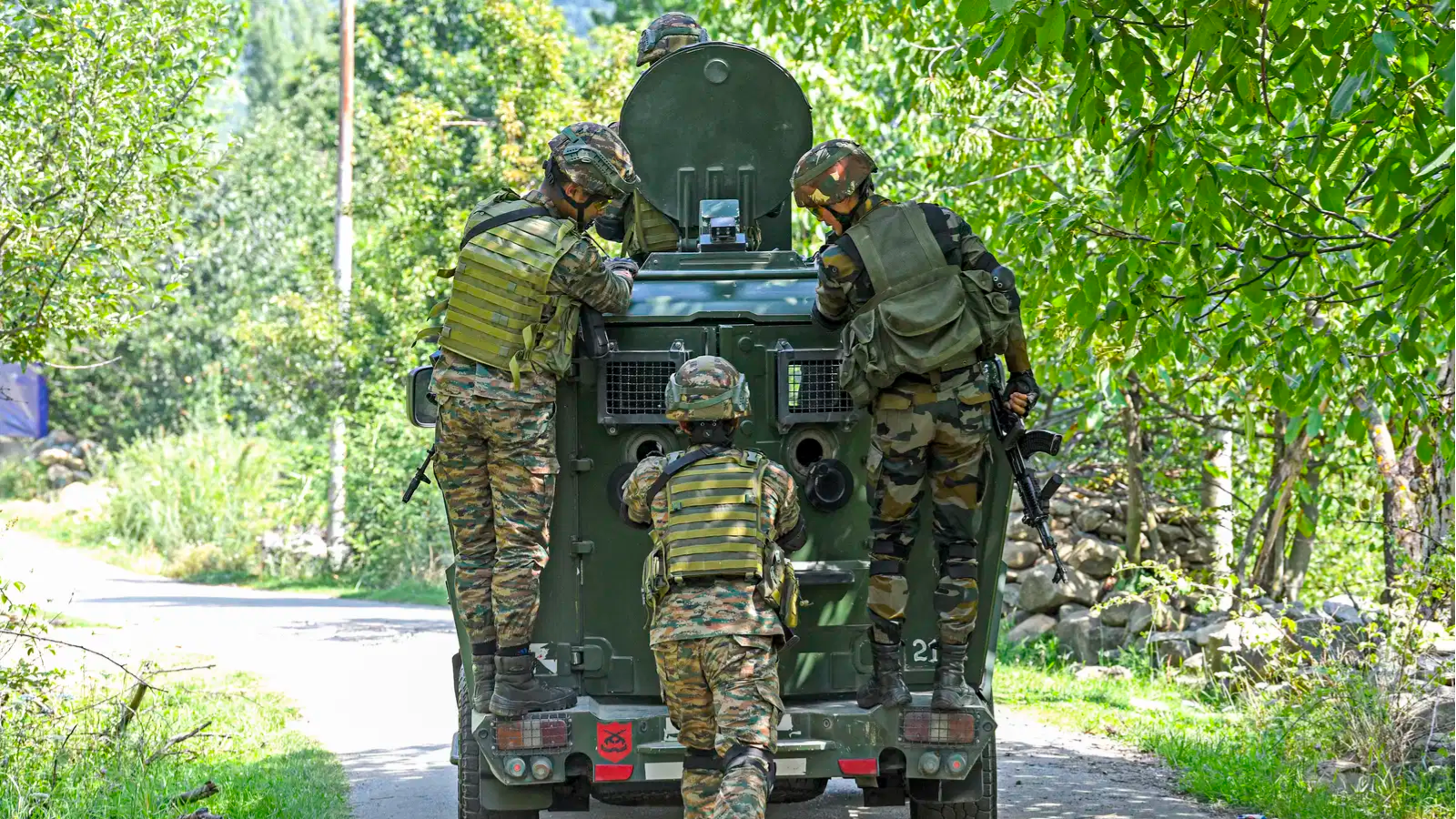
As the operation progressed, its scale increased. Additional forces, including PARA (Special Forces) units, were deployed to intensify the pursuit. The approaching Amarnath Yatra added urgency, prompting tighter security grids.
The operation evolved into a coordinated effort involving the Indian Army, Jammu and Kashmir Police, intelligence agencies and Central Armed Police Forces. Technology played a key role, with drones, surveillance aircraft and electro-optical sensors monitoring movement in dense forest zones.
This phase gradually reduced the attackers' mobility, turning a wide-area search into a focused pursuit.
Final phase and elimination
A decisive shift came on July 10, 2025, following fresh intelligence inputs. Operations intensified across Lidwas, Harwan and Dachhigam, with forces blocking escape routes and confining the attackers within a shrinking operational grid of around 25 square kilometre.
On July 28, 2025, the final operation unfolded in the Dachhigam–Mahadeo Ridge belt. A PARA (Special Forces) team advanced through dense forest terrain over nearly 10 hours, maintaining a low profile to retain the element of surprise.
The engagement was brief and precise, resulting in the elimination of all three attackers and bringing the operation to a close.
Also Read | What is happening in Manipur? Twin shutdowns, protests- here's all we know
Army's message a year later
Marking one year since the attack, the Indian Army reiterated its stance on counter-terror operations. In a post on X, it stated, "For acts against India, the response is assured. Justice will be served. Always."
Referring to the operation, the message added, "Operation Mahadev – it was only a matter of time," while noting that "Operation Sindoor continues".
The statement reflects continuity in India's security approach, emphasising sustained efforts to track and respond to threats.