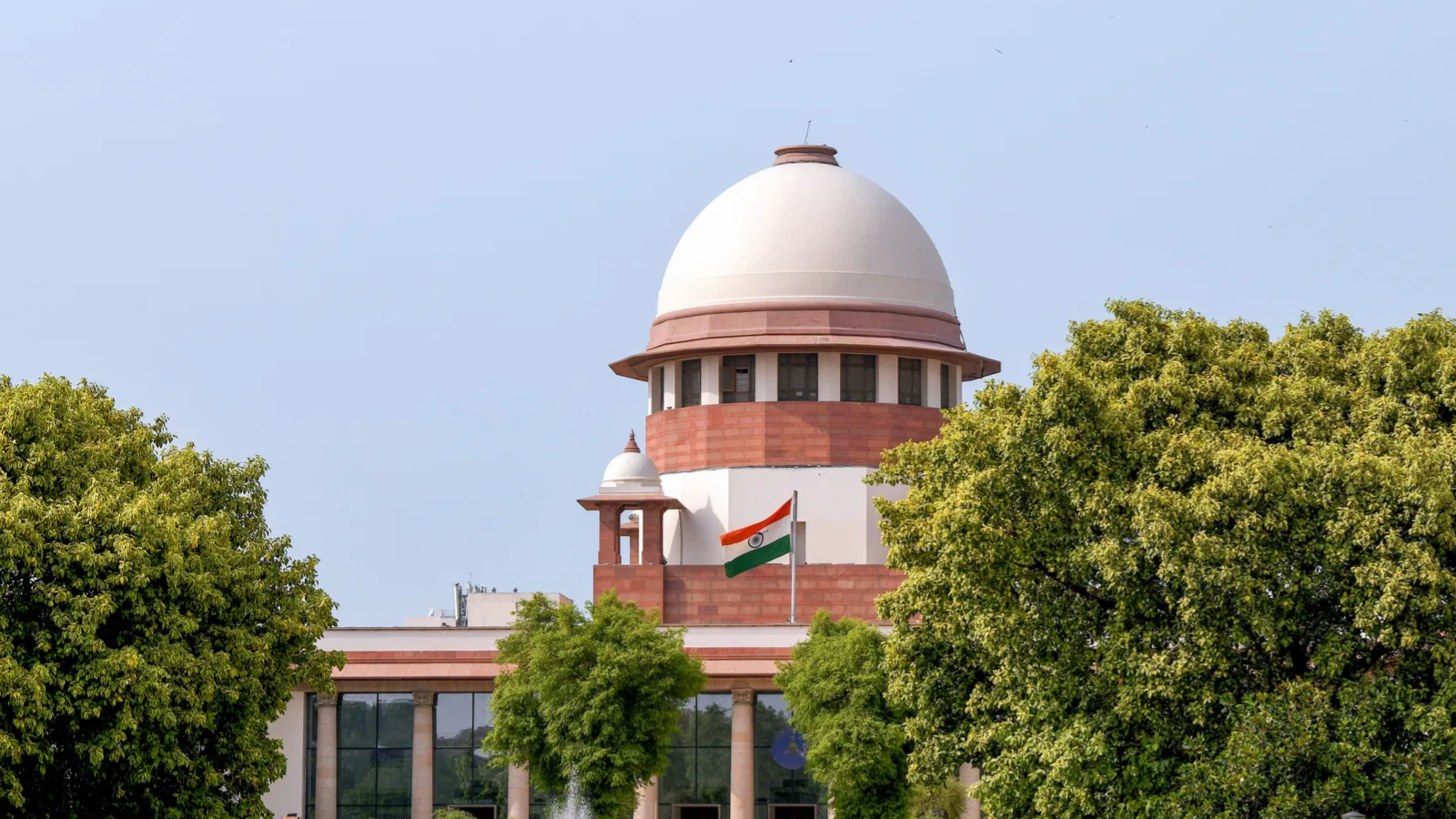
In a significant decision, the Supreme Court has ruled that pensioners cannot be given lower dearness relief (DR) hikes compared to dearness allowance (DA) increases granted to serving employees when both are meant to offset inflation.
The judgment brings clarity to a long-standing issue affecting retirees, reinforcing the principle of equal treatment under the law.
Also Read | Delhi High Court seeks Centre, ED response on plea challenging PMLA property attachment rules
What triggered the dispute
The case stemmed from a decision by the Kerala State Road Transport Corporation (KSRTC), which granted a 14 per cent DA hike to employees while limiting DR for pensioners to 11 per cent, reported Financial Express.
Pensioners challenged this disparity, arguing that both DA and DR serve the same purpose, protecting income against rising prices, and should therefore be aligned.
The state of Kerala defended the move, citing financial constraints and claiming that employees and pensioners belong to different categories, allowing separate treatment.
Court's reasoning on equality
A bench comprising Justices Manoj Misra and Prasanna B Varale rejected the argument, stating that the distinction lacked a valid basis.
The court emphasised that inflation affects both employees and pensioners in the same way, making unequal rates unjustifiable.
"Once pension is admissible and, based on inflation, DR is admissible on it, announcing DR at a rate lower than at what DA is provided… would be nothing but discriminatory as well as arbitrary," the SC ruling said.
It further observed that such a difference "lack a rational nexus to the objective of tackling inflation".
The ruling makes it clear that while governments may delay benefits due to financial pressures, they cannot offer different rates once those benefits are granted.
Also Read | 'Patriarchy still permeates the everyday': Supreme Court calls violence against women a deeper issue
It also reaffirms that any such disparity violates Article 14 of the Constitution, which guarantees equality before the law.
Impact on pensioners
The judgment is expected to have broader implications for government departments and public sector undertakings across India. It sets a precedent that inflation-linked benefits must be applied uniformly.
For pensioners, the ruling strengthens their claim to fair and equal treatment, especially in matters related to cost-of-living adjustments and retirement benefits.