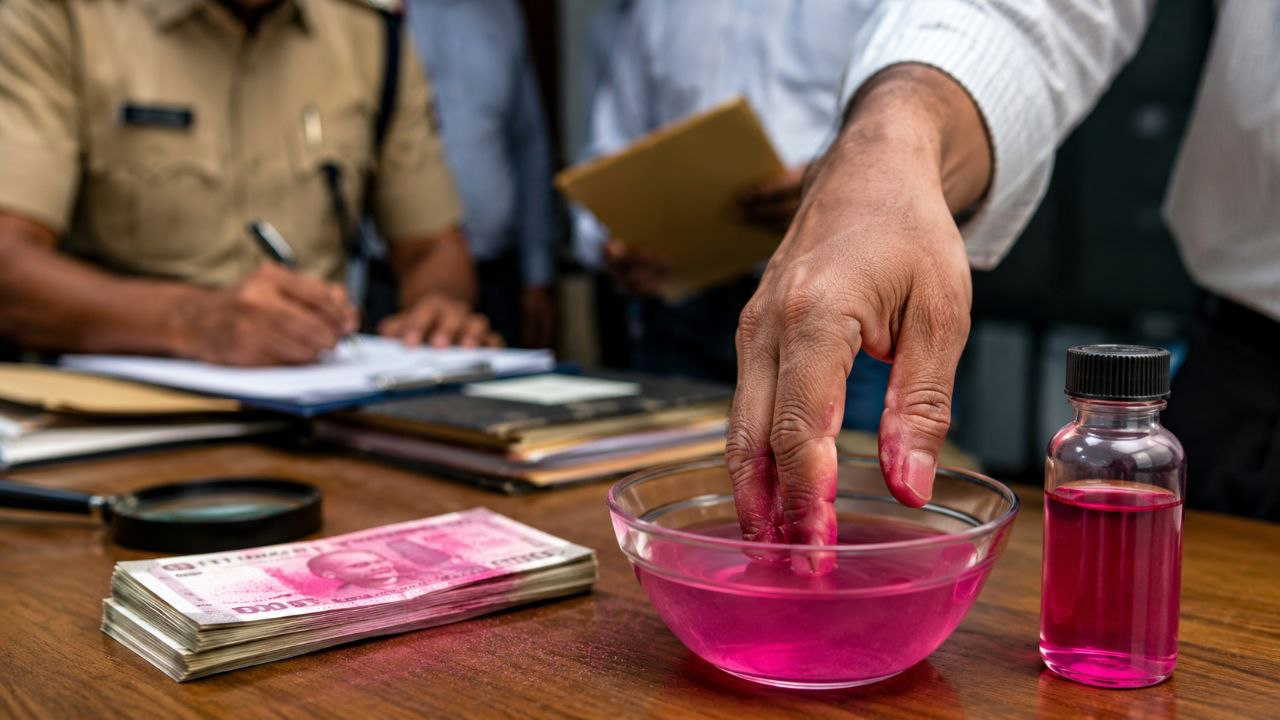
During anti-corruption raids across India, one object often grabs public attention , a small bottle containing a pink liquid. The bottle, frequently shown in videos and photographs after trap operations, has now sparked curiosity online, with many wondering how it actually works and why investigators use it.
The “pink bottle” is commonly linked to anti-bribery operations carried out by vigilance departments and anti-corruption bureaus to catch officials allegedly accepting bribes.
What is the pink bottle?
The pink bottle used during anti-corruption raids contains a chemical solution prepared using phenolphthalein powder and sodium carbonate solution. The chemical is used as part of a scientific trap process during bribery investigations.
Investigators reportedly apply phenolphthalein powder to currency notes that are handed over to a suspect during a trap operation. The powder itself is colourless and usually invisible to the naked eye.
Once the accused touches the treated notes, traces of the chemical stick to their fingers and hands.
How does the chemical test work?
After the suspect allegedly accepts the bribe money, investigators conduct a hand-wash test using the pink bottle solution. The accused is asked to dip their fingers into the liquid, and if phenolphthalein traces are present, the solution changes colour , usually turning bright pink.
This colour change acts as chemical evidence suggesting the suspect handled the treated currency notes during the operation.
Also Read | From flirting to dating apps: Where do people draw the line on cheating?
The process is widely used by anti-corruption agencies because it provides immediate visual proof during trap cases.
Why is phenolphthalein used?
Phenolphthalein is a chemical compound commonly used as an acid-base indicator in laboratories. It remains colourless under normal conditions but turns pink in alkaline solutions.
During anti-corruption raids, investigators reportedly prepare an alkaline sodium carbonate solution in advance. When phenolphthalein-covered fingers come into contact with the solution, the liquid changes colour almost instantly.
Also Read | Why pregnant women often experience more sexual dreams at night
This simple reaction makes the test highly useful in corruption investigations.
How anti-corruption trap operations happen
In a typical trap case, a complainant approaches anti-corruption officials alleging that a government official demanded a bribe. Investigators then prepare marked currency notes coated with phenolphthalein powder before sending the complainant to meet the accused.
Once the money is allegedly accepted, the raid team enters and conducts the chemical hand-wash test. The treated notes are also recovered as evidence.
The pink bottle demonstration often becomes one of the most recognisable visuals from these operations because of the dramatic colour change captured on camera.