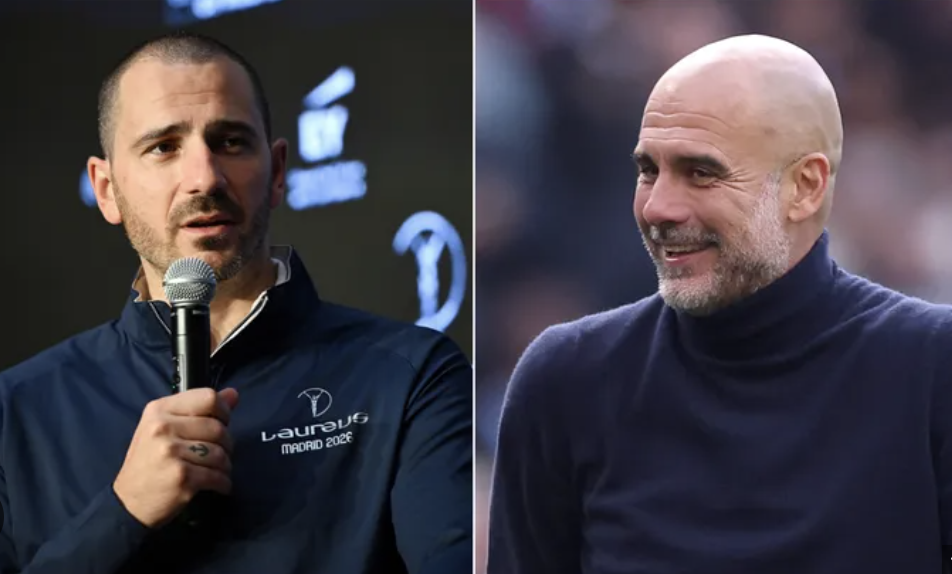
Italy’s ongoing struggles on the international stage have triggered calls for sweeping changes, with former defender Leonardo Bonucci advocating for a high-profile appointment to lead a rebuild. After failing to qualify for the World Cup yet again, the four-time champions find themselves at a crossroads, prompting debate over the direction of the national team and the kind of leadership required to restore its stature.
Bonucci calls for bold leadership shift
Bonucci has openly backed Pep Guardiola as the ideal candidate to usher in a new era, describing the need for a radical transformation in Italian football. While acknowledging that such an appointment would be difficult, he stressed that ambitious thinking is necessary given the current situation. Guardiola, widely regarded for his success with clubs like Manchester City, has long been linked with a potential move into international management, adding intrigue to the suggestion.
Also Read | Was letting Modric go a huge mistake for Real Madrid?
Italy’s prolonged World Cup absence
Italy’s failure to qualify for the tournament for a third consecutive time has deepened concerns among fans and officials alike. The team’s last appearance at the World Cup came in 2014, and the recent elimination has only intensified scrutiny of the system. The setback also led to the resignation of head coach Gennaro Gattuso, leaving the national setup in urgent need of direction and stability.
Also Read | Kerala Blasters’ empty stands spark concern as CK Vineet opposes fan boycott
Other contenders and structural challenges
Alongside Guardiola, experienced managers such as Antonio Conte and Massimiliano Allegri have emerged as possible candidates. However, Bonucci emphasised that the issues go beyond coaching, pointing to the need for grassroots development, better coordination between football authorities and institutions, and patience in nurturing young talent. As Italy looks to rebuild, the focus will not only be on appointing the right coach but also on addressing deeper structural gaps that have contributed to its decline.