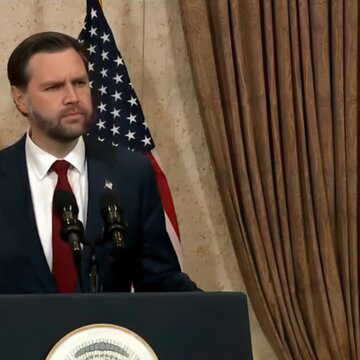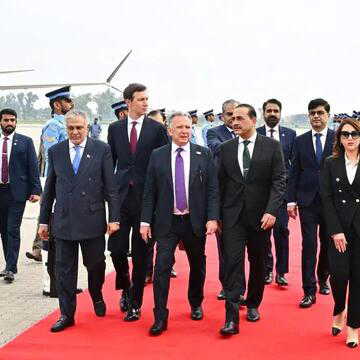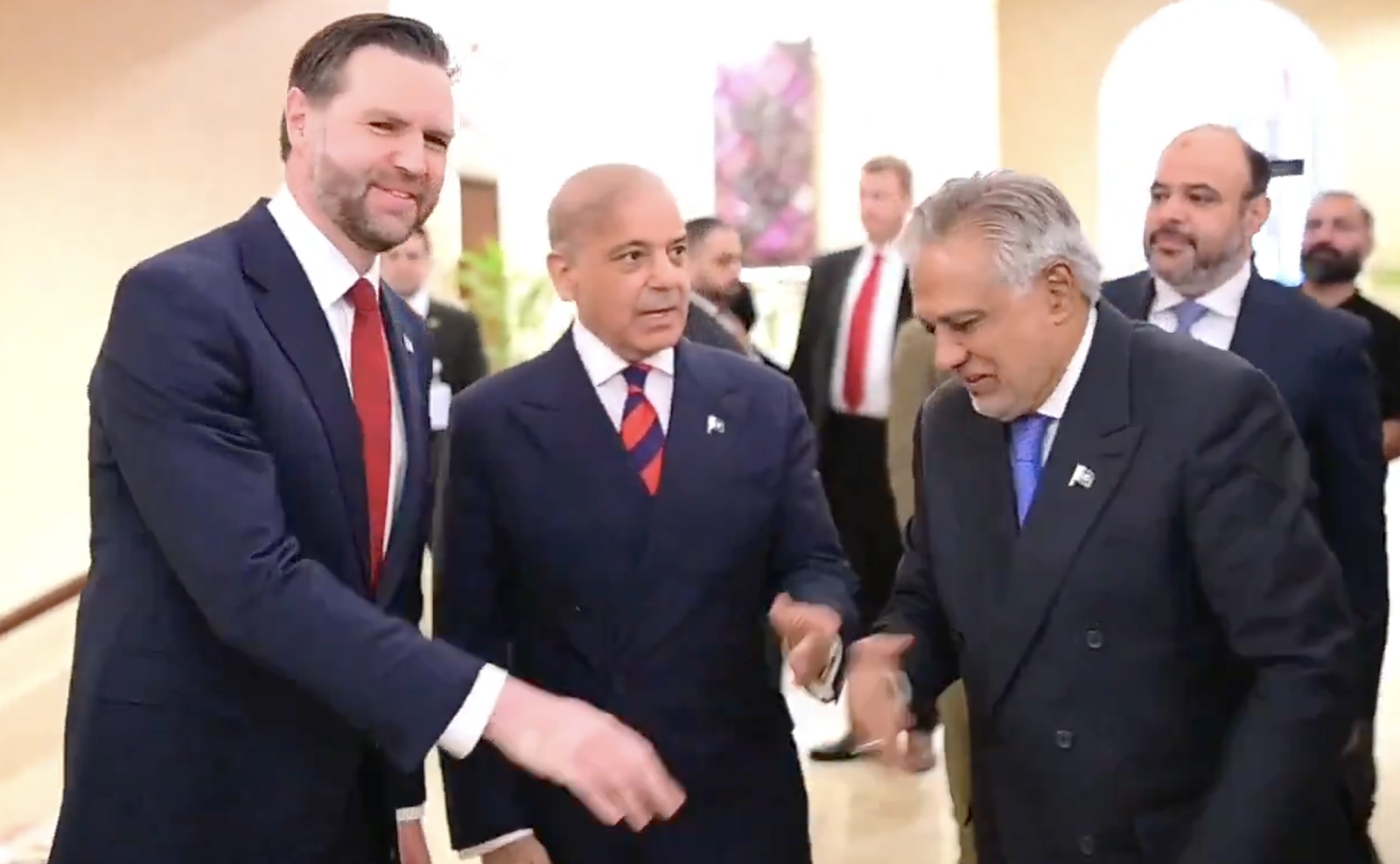
US Vice President JD Vance arrived in Islamabad on Saturday aboard Air Force Two to lead a fresh round of negotiations with Iranian officials, as Pakistan hosts one of the most closely watched diplomatic meetings in recent months.
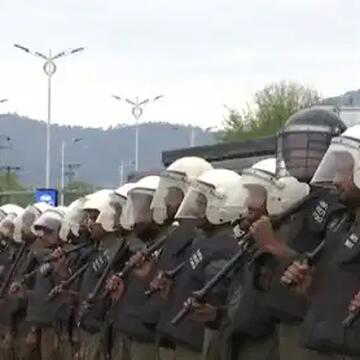
According to Reuters, the U.S. delegation also includes special envoy Steve Witkoff and Jared Kushner, while Iran’s side is led by Parliament Speaker Mohammad Bagher Qalibaf and Foreign Minister Abbas Araqchi. Pakistan is mediating the talks under tight security in the capital.
What is 'Air Force Two'?
The official air traffic control call sign for any US Air Force aircraft transporting the US vice president is Air Force Two. The classification is based on the function being carried out rather than a specific aircraft. The US Air Force information sheet states that it ensures safe and efficient operation of the aircraft across airspace systems when the vice president is on board.
The vice president typically flies in a Boeing C-32, which is a modified Boeing 757-200. The aircraft is operated by the US Air Force's 89th Airlift Wing and is built for executive missions. It has cutting edge communication equipment that enables safe connectivity when traveling abroad.
Read More : Did millions benefit from Trump’s 'No Tax on Tips, Overtime' plan? Here's what the numbers reveal
The C-32 is designed to be both durable and practical. It is ideal for long distance diplomatic trips as it can cruise at about 537 miles per hour and travel up to 5,500 nautical miles without refueling. The aircraft is designed to facilitate official tasks while in motion, guaranteeing the uninterrupted operation of the government.
Just a call sign
When the vice president is travelling, the aircraft is typically identified as “Air Force Two,” though that call sign is not always used publicly. In sensitive situations, it may instead fly under a Special Air Mission, or SAM, designation. According to the Free Press Journal, aviation watchers noted that Vice President JD Vance arrived in Islamabad under the call sign “SAM095” rather than the standard one.
The change is meant to add a layer of discretion and make the flight less visible on public tracking systems. In high-level diplomatic travel, such measures are often used to reduce security risks and keep operational details from being easily identified in real time.