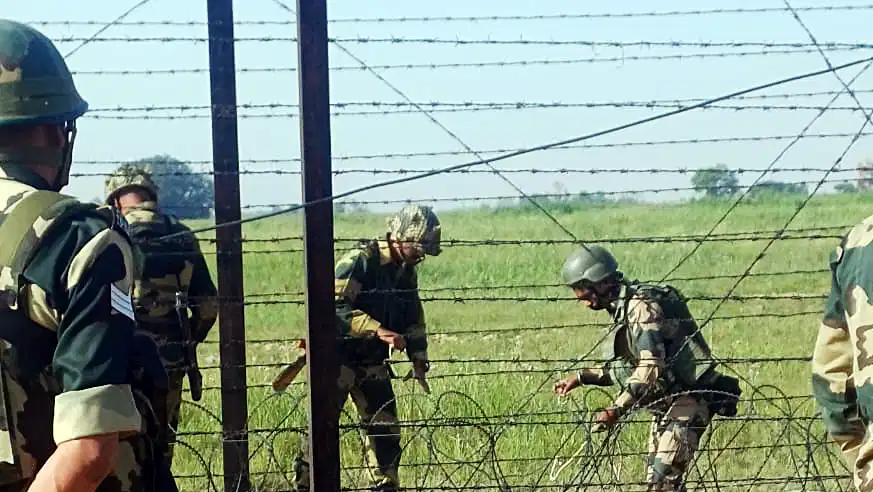
Pakistan carried out a series of military strikes along its border with Afghanistan early Sunday, targeting what it described as militant hideouts linked to recent suicide attacks that have killed dozens across the country, officials said.
The action comes days after multiple deadly incidents, including a suicide bombing at a Shia Mosque in Islamabad that left 31 worshippers dead, and attacks on security forces in Khyber Pakhtunkhwa during the holy month of Ramzan, according to official statements.
Also Read | Bangladesh to resume visa services for Indians after two-month suspension
'Intelligence-based, selective operations'
Pakistan’s Information Minister Attaullah Tarar said the military conducted "intelligence-based, selective operations" against seven camps belonging to Tehrik-e-Taliban Pakistan (TTP) and its affiliates. He added that at least one Islamic State-linked group was also targeted in the border region.
While Islamabad did not officially confirm the exact locations, Pakistani media reports and Afghan sources suggested the strikes crossed into Afghan territory. According to Tolo News, Pakistani Air Force jets hit a religious seminary in the Bermal district of Afghanistan’s Paktika province and carried out multiple airstrikes in Nangarhar’s Khogyani district.
Additional strikes were reported in Argun (Paktika) and Bahsod and Ghani Khel districts in Nangarhar, according to regional media outlets. In the Behsud district of Nangarhar, a strike on a single residential home reportedly killed 17 members of one family, including 12 children.
Suicide attacks in Islamabad, Bajaur and Bannu
The strikes followed a sharp escalation in militant violence. Earlier this week, a suicide bomber rammed an explosives-laden vehicle into a security post in Bajaur district, killing 11 soldiers and a child. Authorities later identified the attacker as an Afghan national.
Hours before the border operation, another suicide bomber targeted a military convoy in Bannu district, killing two soldiers, including a lieutenant colonel.
After the latest violence, Pakistan’s military warned that it would not "exercise any restraint" and said operations against those responsible would continue "irrespective of their location," Tarar said.
Islamabad accuses Afghanistan-based handlers
Pakistan said it has "conclusive evidence" that recent attacks were planned and directed by militants operating from Afghanistan, acting on the instructions of their leadership across the border. The Afghan Taliban government has denied allowing its territory to be used for attacks against Pakistan.
Pakistan’s Foreign Office also signalled a tougher posture. Spokesperson Tahir Andrabi said Islamabad "very legitimately demands that Afghan territory should not be used for terrorism inside Pakistan," adding that all options remain open if the issue is not addressed.
Also Read | Iran issues stark warning: US bases 'legitimate targets' if conflict escalates
Tense relations and rising violence
Pakistan has witnessed a steady rise in militant attacks over the past two years, largely blamed on the TTP and outlawed Baloch separatist groups. The TTP, while separate from the Afghan Taliban, is considered ideologically aligned with it.
Relations between Islamabad and Kabul have remained strained since late last year, when border clashes killed dozens of soldiers and civilians. Although a Qatar-mediated ceasefire has largely held, talks in Istanbul failed to produce a lasting agreement, leaving tensions unresolved.