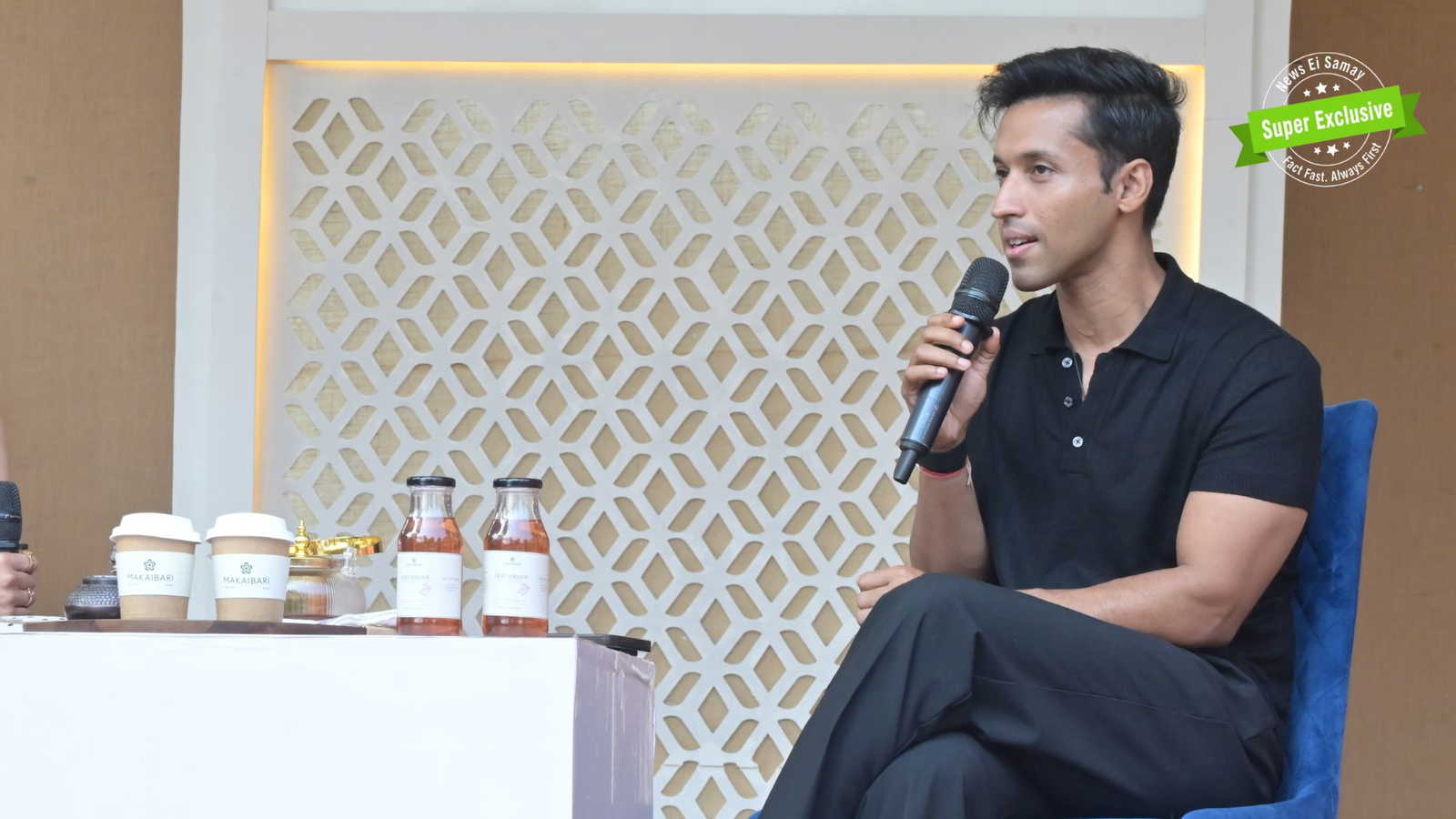
Popular bestselling author Durjoy Datta is in town for the Kolkata Literary Meet 2026, and reflected on his evolving writing journey and the emotions behind his latest book, ‘While We Wait’. Known for his romance-led narratives, the author’s new release marks a quieter, more introspective turn in his body of work.
The If It's Not Forever spoke to News Ei Samay on the sidelines of the Literary Meet. He opened up about writing grief for the first time, how his worldview has evolved over the years, and why he refuses to see cinema as a higher cultural pedestal than books or television.
For a writer best known for romance-driven narratives, his latest release signals unfamiliar emotional territory. Datta described the book as something he had consciously avoided for years until now.
“I have never written about grief in general. Grief has never been the central theme of my books. I've never written about healing, because I stayed away from it… some stupid superstition that if I write about grief, it is going to somehow enter into my life. So this is the first time I'm writing about it,” he shared.
He also pointed out that the book explores friendship, another theme largely absent from his earlier works. “Usually, the characters start off in a romantic tussle. So I wanted to explore these,” he said, underscoring how this book departs from his familiar narrative patterns while staying emotionally grounded.
ALSO READ | ‘I don’t watch Bengali movies’: Moon Moon Sen’s honest take on cinema, romance and Uttam-Suchitra
Durjoy Datta's view on writing responsibly
During the interaction, Datta was also asked about fatherhood and whether having two children has altered the way he writes female characters. He was clear in his response. “The kids did not change that,” he said, adding that most of his influences still come from popular culture and the books he has read over the years.
However, he acknowledged a visible change in his own writing. He admitted that if his children were to read his earlier books, they might find parts of them “a little problematic,” but felt his recent work reflects a more evolved version of himself. “They’ll find that I’m a changed person. But I will not say that they have changed me because that's a very big burden for children to have,” he said, calling it an unfair expectation to place on kids.
Datta also spoke about responsibility as a writer, clarifying that while he doesn’t see himself as someone who must “change society,” he does believe in being “a little more responsible” in the stories he tells today.
Cinema, television and the idea of hierarchy
The conversation also turned to screenwriting and the perceived hierarchy between cinema, television, and books in India. Datta, who has written for television series, was quick to dismantle the idea that cinema holds a superior cultural currency for writers.
Asked directly if cinema enjoys a higher status, Datta said he doesn’t see it that way as either a writer or a consumer. While he acknowledged that film writers may appear to have more access and visibility, he added, “Writers are still at the bottom of the food chain in the movie industry… so I don't see it as a real hierarchy.”
ALSO READ | Ei Samay’s ‘Galpo Swalpo’ begins its journey at International Kolkata Book Fair
He also added, “When you talk about movies, I don't think I'm cut out for it,” explaining that cinema was never a medium he grew up loving deeply. In contrast, television felt more instinctive to him. “I have grown up watching a lot of television shows. I do find myself gravitating towards writing more of that, and I enjoy writing it. But having said that, I like writing books more.”
He also reflected on his relationship with readers, particularly in the online space. Even after 18 years of writing, Datta admitted he has still not grown accustomed to people reading his books. He noted that whenever readers approach him, the conversations around how they discovered his work and what they felt while reading it genuinely interest him. For the author, engaging with readers has never felt like a chore, even if, at times, it is expressed through a simple but sincere note of gratitude.