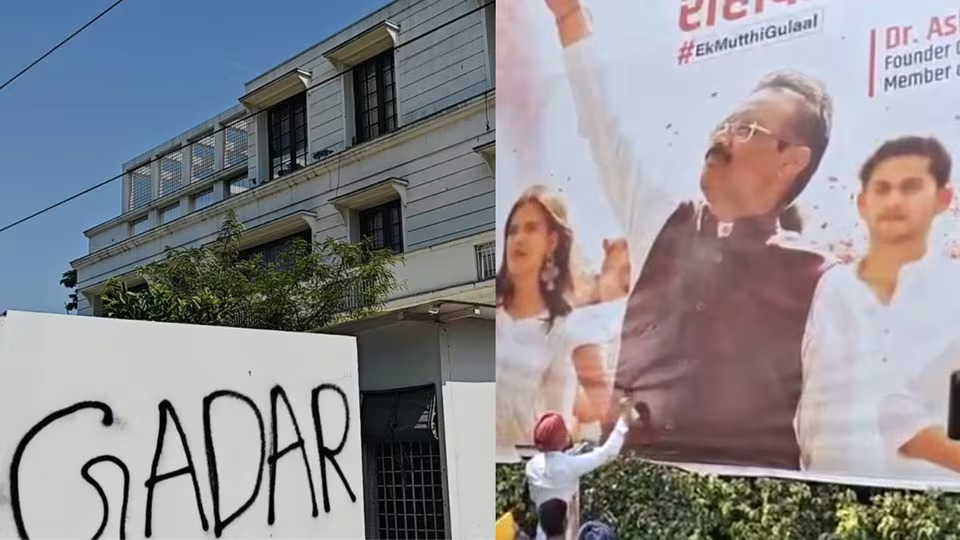
Tensions flared across Punjab as protests erupted against a group of former Aam Aadmi Party MPs who recently joined the Bharatiya Janata Party. Demonstrators took to the streets, expressing anger through slogans, defaced posters and graffiti targeting the leaders involved in the political shift.
Anger spills onto streets and homes
Among those facing the backlash were Harbhajan Singh, Ashok Mittal and Sandeep Pathak. Protesters spray-painted the word “gaddar” on walls and gates, including outside Singh’s residence in Jalandhar and Pathak’s house in Ludhiana.
At the Phagwara campus of Lovely Professional University, founded by Mittal, demonstrators reportedly tore posters and raised slogans accusing the leaders of betraying Punjab. Similar protests were reported in multiple locations, reflecting widespread discontent among party workers.
Political shift triggers sharp reactions
According to The Hindustan Times, the controversy stems from a major political development in which seven Rajya Sabha MPs, including Raghav Chadha, Swati Maliwal, Vikram Singh Sahney, and Rajinder Gupta, left AAP and joined the BJP. Since they constitute two-thirds of the party’s Upper House strength, they are allowed to retain their memberships under parliamentary rules. AAP leaders have strongly criticised the move, alleging it was driven by pressure and political manoeuvring. Some within the party have described the development as part of a larger strategy to weaken AAP’s presence.
Also Read | AAP MP Ashok Mittal hosted Arvind Kejriwal for a year, quit party soon after exit
‘Not fear, but frustration’: Chadha responds
Responding to the backlash, Raghav Chadha rejected claims that the MPs switched sides under pressure. He stated that the decision was driven by dissatisfaction with the party’s direction, arguing that AAP had strayed from its founding principles.
Also Read | A rupture that was brewing? How AAP lost Raghav Chadha and six MPs in one sweep
The episode has intensified political tensions in Punjab, with both sides trading accusations. While AAP continues to frame the exits as betrayal, the defecting MPs maintain that their move reflects deeper internal issues within the party. As protests continue, the situation underscores how political realignments can quickly spill beyond party corridors and into public spaces, fuelling emotional and sometimes volatile reactions.