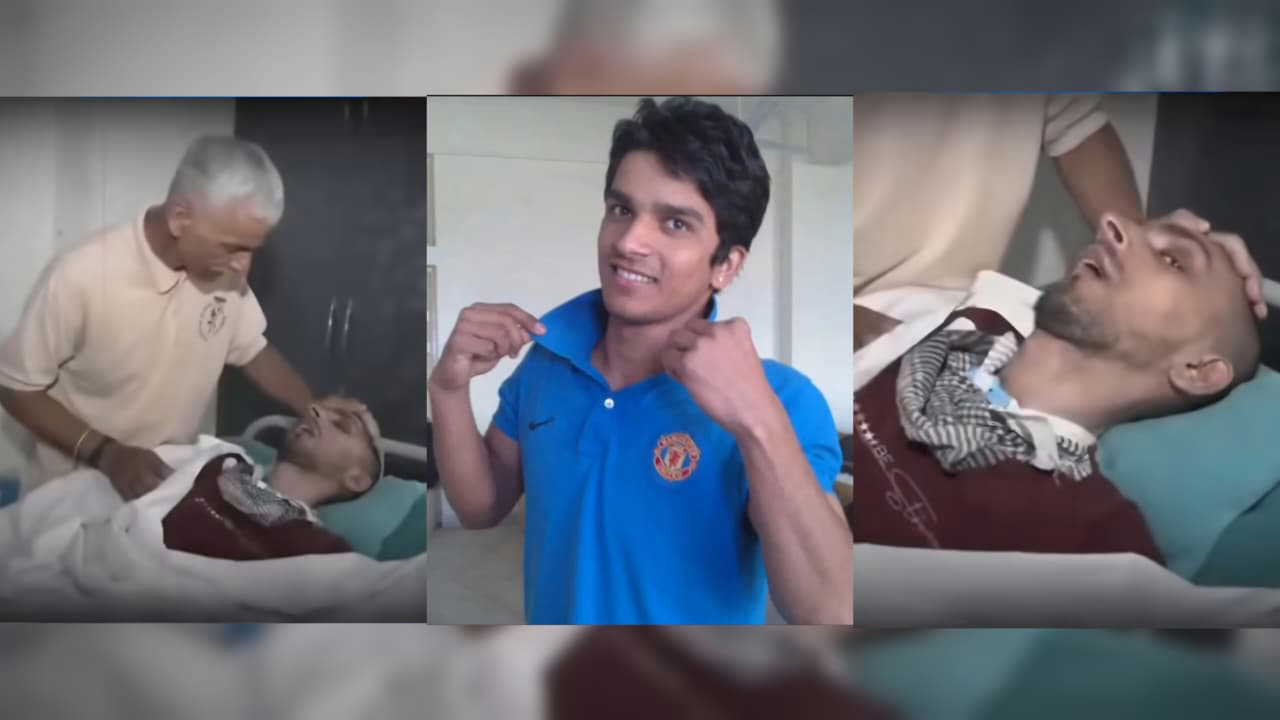
The process of passive euthanasia for 32-year-old Harish Rana has begun after the Supreme Court permitted the withdrawal of artificial life support earlier this month. The procedure is expected to take time, with medical experts indicating it may take two to three weeks to complete.
Shifted to AIIMS for palliative care
Rana, a resident of Ghaziabad in Uttar Pradesh, has been in a coma since 2013 after suffering a severe head injury from a fall at his paying guest accommodation in Chandigarh. He was recently moved from his home to the palliative care unit at Dr BR Ambedkar Institute Rotary Cancer Hospital at AIIMS Delhi, where the process is being carried out under medical supervision.
In its March 11 order, the Supreme Court allowed passive euthanasia in the case, marking a significant moment in the application of such provisions.
Also Read | Over 1,000 vehicles stranded at Atal Tunnel after heavy snowfall in Manali
What the process involves
Passive euthanasia focuses on withdrawing life-sustaining support in cases where recovery is no longer possible. It is carried out in stages and under strict medical and legal guidelines.
Dr Sushma Bhatnagar, former AIIMS chief and professor of onco anaesthesia and palliative medicine, was quoted as saying by Hindustan Times, "As a principle of palliative care, external support that prolongs suffering in irreversible medical conditions may be withheld or withdrawn after all medical approvals, thereby allowing nature to take its course."
The procedure typically involves gradually reducing nutritional support while ensuring that the patient does not experience pain or distress. Palliative sedation is administered and life-support measures such as artificial nutrition, oxygen and medications are slowly withdrawn.
Multiple medical approvals required
The process also includes approvals from two medical boards, as required under Indian law. A primary board at the treating hospital must first confirm that the patient has an irreversible condition.
Dr Sandeep Dewan, senior director of Critical Care at Fortis, explained that a secondary board is then formed within 48 hours by the district chief medical officer to verify the findings. Only after both boards give their approval can life support be withdrawn.
"If the patient is not on a ventilator but is receiving life sustaining treatment through Ryles tube feeding, that too can be withdrawn after certification by both medical boards, which forms part of passive euthanasia treatment," the HT report quoted Dr Dhawan.
Also Read | Buying eggs in UP? From April 1, unmarked eggs could be destroyed
AIIMS has confirmed that all procedures are being carried out in accordance with legal requirements. "AIIMS is following the orders of the Supreme Court in Harish Rana's case," the hospital said in an official statement.
The case is being handled with close monitoring as the process moves forward in stages.