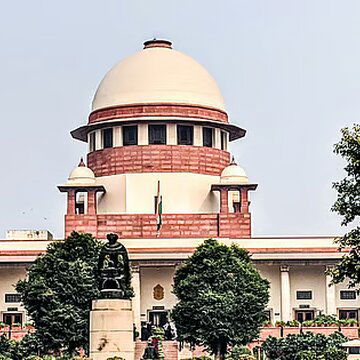
The Supreme Court on Tuesday asked the Central government and the Reserve Bank of India (RBI) to file fresh affidavits on a plea seeking a centralised system to help families trace and claim money left behind in bank accounts and other financial instruments after a person's death.
A Bench of Justices Vikram Nath and Sandeep Mehta issued the direction while hearing a petition filed by financial journalist Sucheta Dalal. The Court has given the Centre and the RBI four weeks to respond and listed the matter for further hearing on May 5, Bar and Bench stated.
Issue of unclaimed funds
During the hearing, advocate Prashant Bhushan, appearing for Dalal, highlighted that large amounts of money remain unclaimed because legal heirs often have no way of identifying where such funds are held.
"There are three different government funds where unclaimed amounts are transferred. One is the Depositors Education and Awareness Fund, then the Investor Education and Protection Fund, and also the Senior Citizens Welfare Fund. Together these funds have more than ₹1 lakh crore," Bhushan submitted.
He explained that the absence of a unified system is a major hurdle. "The reason why so much funds of dead people remain unclaimed is because their heirs are not able to find out where the funds are lying. They don't know how many bank accounts are held by their fathers etc who have passed away," he told the Court.
Call for a centralised database
Bhushan urged the Court to direct the creation of a centralised, searchable database that would allow families to locate such assets more easily. He also suggested simplifying the claims process.
"Instead of having to file a probate etc, it can be done by saying you produce will, give indemnity, advertise. This will facilitate the heirs of dead people to claim the funds," Bhushan submitted.
The Bench, however, raised concerns about potential misuse if such data were made widely accessible. "Opening this type of data, giving access will give rise to another set of fraudsters who will start filing claims. Have you watched the movie Housefull 4? That will happen," the Court remarked.
Centre and RBI's stand
Additional Solicitor General N Venkataraman, representing the Centre, said the matter involves policy considerations. "Let this policy choice go to the government," he said, adding that a fresh affidavit would be filed.
The RBI's counsel pointed to existing safeguards such as Know Your Customer (KYC) norms and nomination requirements. "Banks today insist on giving a nominee's name. KYC is required to be done every one year. There's a central KYC. It can be linked to Aadhaar also," he said.
He also stressed that banks cannot release funds without proper verification. "If I am not satisfied with the person who has come claiming the money, I will not give it on the basis of an indemnity bond," he submitted.
Also Read | Allahabad HC judge under scanner for granting bail in 99.6% dowry death cases
As the hearing concluded, Bhushan noted that authorities had earlier indicated a centralised database would be set up by July 2023, but it has not materialised.
"Let fresh affidavits come, then we will take a call," the Court said, deferring further consideration to the next hearing scheduled for May 5.