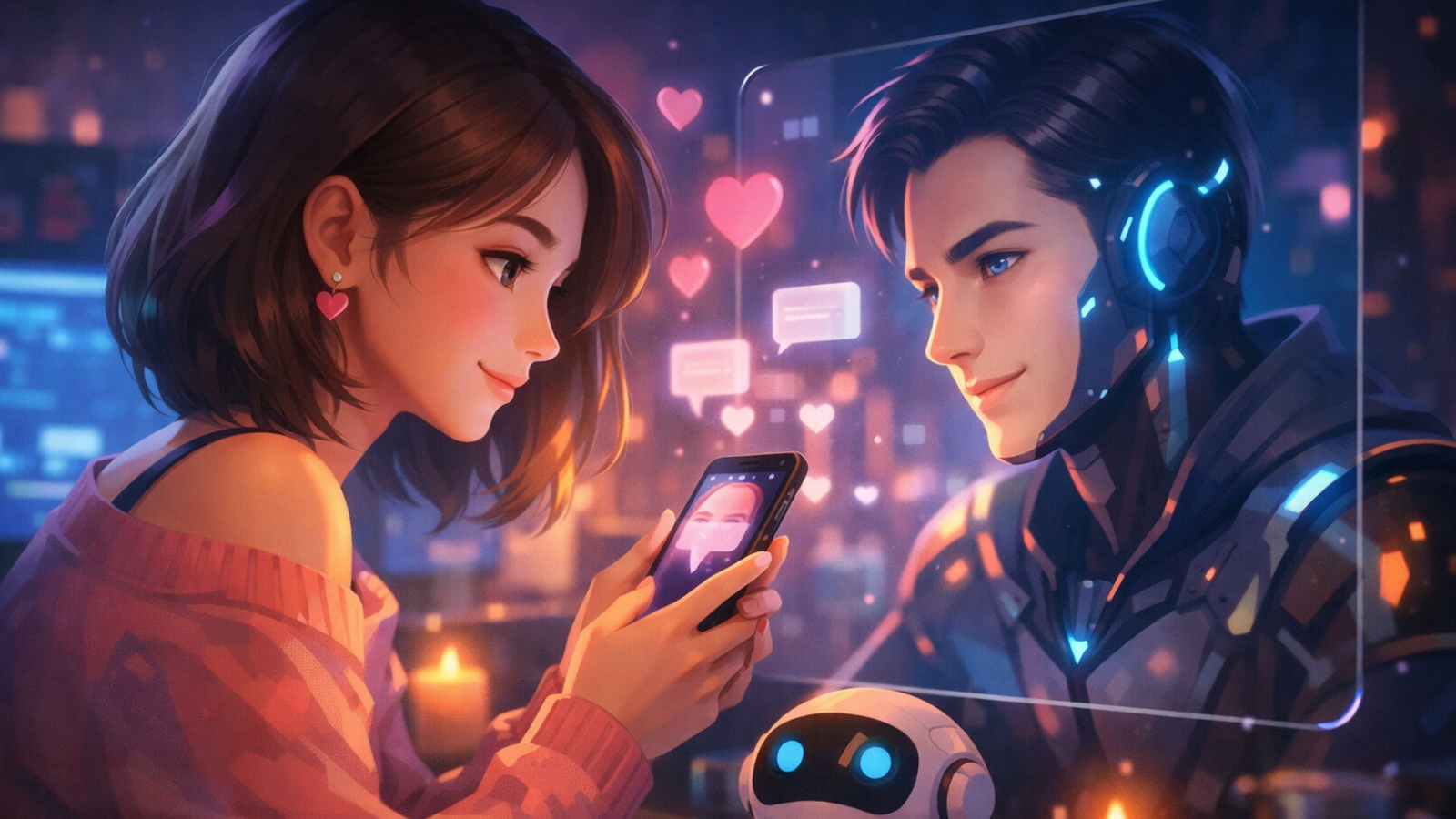
In a world where we rely on apps for directions, playlists, and even daily decisions, it is perhaps no surprise that emotional and intimate lives are also moving into digital spaces. A growing number of people are turning to artificial intelligence not just for assistance, but for connection.
Social media is increasingly filled with stories of users forming bonds with AI chatbots. Some describe these interactions as companionship, while others use them to explore more personal aspects of their lives. A recent survey by Joi AI suggests this shift is not limited to a small group. According to its findings, 55 per cent of Gen Z and Millennials identify as “AI-sexual,” meaning they are open to intimate or sexual experiences involving AI.
The ways in which people interact with AI systems differ greatly. For instance, 43 per cent of people want advice on sexual health, and 37 per cent use chatbots to practice flirting or dating. Others experiment with personal boundaries, where 33 per cent use digital intimacy and 25 per cent experiment with fantasies that they wouldn’t normally do in real life.
Also Read | What is tolyamory? The dating term sparking debate over cheating and consent
A shift in behaviour, not identity
As per a report by News18, Dr Shorouq Motwani, Consultant in Child and Adolescent Psychiatry at Narayana Health SRCC Children’s Hospital, Mumbai, explains that this trend reflects changing behaviour rather than a new sexual identity. She notes that people have always formed emotional connections beyond real-life relationships, whether with fictional characters or ideas. AI, however, adds a layer of responsiveness that makes these interactions feel more real and personal.
The appeal of a 'perfect' partner
For many users, the attraction lies in the ease of interaction. “At this point, it’s less about a new identity and more about how people are choosing to experience connection. When we talk about sexual orientation, we usually mean attraction to other people. With AI, it feels more like a shift in behaviour, using technology to meet emotional or intimate needs”, she said.
Also Read | What is Ghostlighting? The toxic dating trend that leaves you blaming yourself
The hidden trade-off
However, the same qualities that make AI appealing can also pose challenges. Real relationships involve unpredictability and effort, elements that AI is designed to smooth out. Over time, this contrast may make human interactions feel more demanding.
Dr Motwani cautions that reliance on AI could gradually affect real-world social skills. At the same time, she notes that when used in moderation, such interactions may help individuals better understand themselves and build confidence.
As digital and emotional lives continue to overlap, the core desire remains unchanged. People still seek connection, understanding, and companionship. What is evolving is simply the medium through which those needs are met.