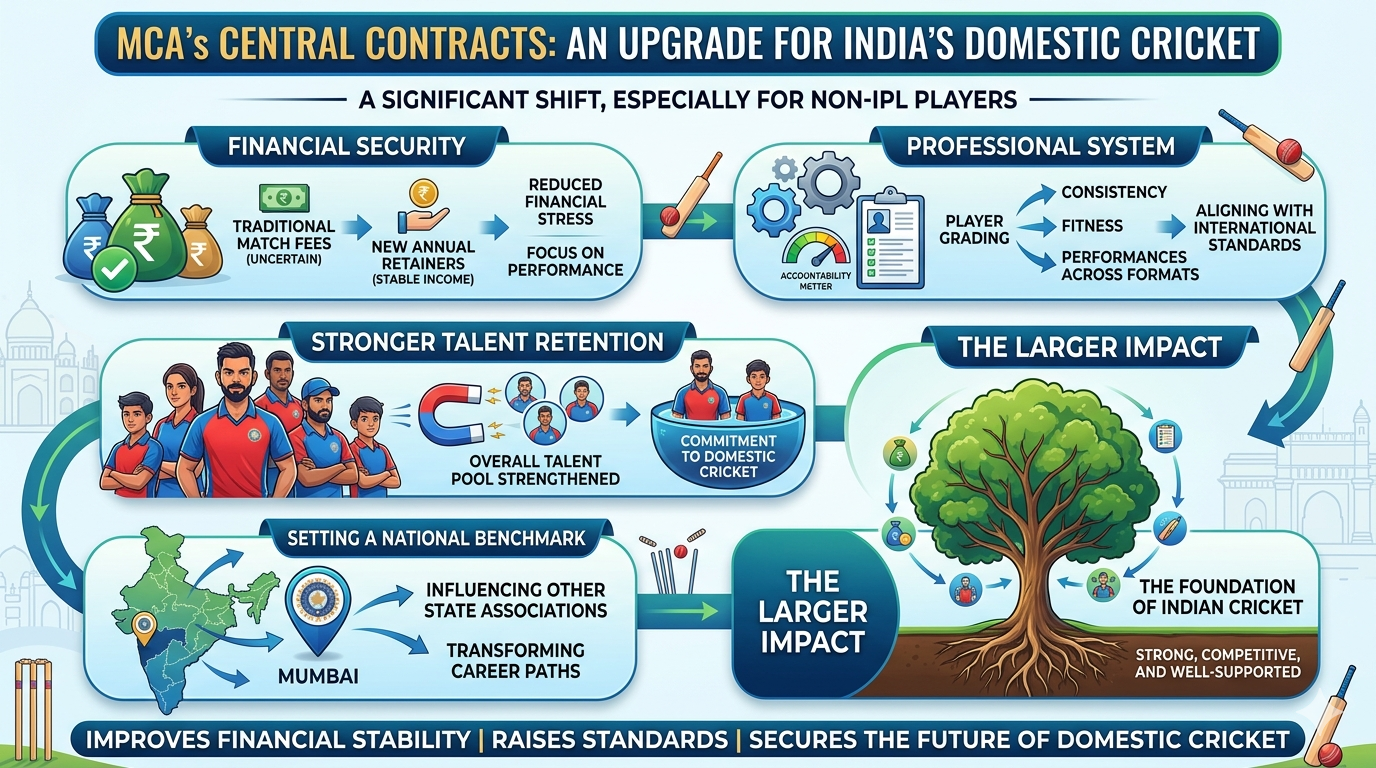
The move by the Mumbai Cricket Association (MCA) to introduce central contracts marks a significant upgrade in India’s domestic cricket structure, especially for players outside the IPL spotlight. Traditionally, domestic cricketers relied mainly on match fees, making income uncertain and performance-dependent. The MCA’s new system introduces annual retainers based on player categories, ensuring a fixed income throughout the season. This provides stability and allows players to focus on performance without financial stress.
A more professional system
Sunil Gavaskar thinks the contracts will bring structure and accountability. Writing to Sportstar he said that player grading is linked to consistency, fitness, and performance across formats.
Also Read | Injury scare for Spain as Yamal limps off after match-winning goal
This aligns domestic cricket more closely with international standards, where contracts are tied to measurable output and discipline.
Stronger talent retention
A major challenge in Indian cricket has been retaining players who do not break into the IPL or national team. With guaranteed earnings and incentives, players now have a reason to stay committed to domestic cricket. This strengthens the overall talent pool and keeps experienced players within the system.
Setting a national benchmark
The MCA is the first state association to implement such a model, and it could influence others to follow. If adopted across India, central contracts can transform domestic cricket into a sustainable career path rather than just a stepping stone.
Also Read | India joins FIFA Women’s Development Programme to accelerate commercial growth in women’s football
Overall, this system improves financial stability, raises professional standards, and secures the future of domestic cricket. It ensures that the foundation of Indian cricket remains strong, competitive, and well-supported.