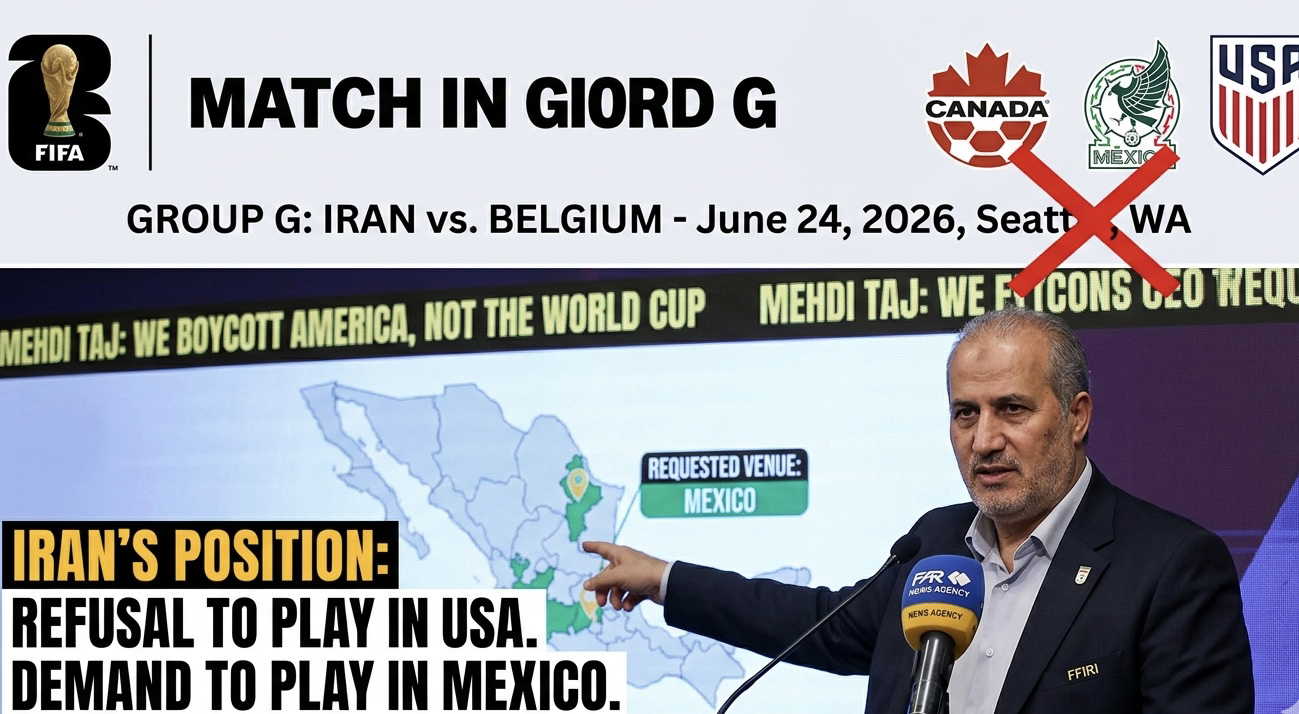
The conflict in the Middle East has escalated, and for that reason, Iran’s participation in the World Cup has come under question. Previously in a statement, they said they are looking to boycott the World Cup for a few days. News is coming that they are seeking to play in Mexico, now they have made their position clear. On Wednesday, Iran’s football federation chief, Mehdi Taj, confirmed that they are looking to boycott America, not the World Cup which is scheduled to be played from June 11 to July 12.
Also Read | KKR in trouble? Sunil Narine’s IPL 2026 arrival under massive doubt amid travel chaos
This year's World Cup is going to be played in three countries, the USA, Mexico and Canada. Reports had come, that Iran had asked FIFA to change their venue to Mexico but the FIFA president had dismissed it.
What is Iran’s stance?
Talking about their plan, Iran's football president was quoted as saying by the Fars News , "The national team is holding a training camp in Turkey, and we will also play two friendly matches there.” He specifically mentioned that they will boycott America, but we will not boycott the World Cup.
In reply, FIFA dismissed Iran's hopes of playing in Mexico and said, “FIFA is in regular contact with all participating member associations, including Iran, to discuss planning for the FIFA World Cup 2026,FIFA is looking forward to all participating teams competing as per the match schedule announced on 6 December 2025.”
Also Read | Virat Kohli joins RCB training ahead of IPL 2026, focus shifts to fixing key gaps
US President Donald Trump also remarked on this matter and said, “I really don’t believe it is appropriate that they be there, for their own life and safety.”
Which teams had boycotted the World Cup before?
FIFA World Cup history includes several boycotts and withdrawals driven mainly by political tensions, logistical challenges, and qualification disputes. Notable instances include European absences in 1930, India’s withdrawal in 1950, and the major African boycott in 1966 over unfair qualification spots. Cold War politics also influenced participation, with teams like the Soviet Union refusing matches. While fewer than Olympic boycotts, these incidents highlight how global politics have repeatedly intersected with football’s biggest tournament.