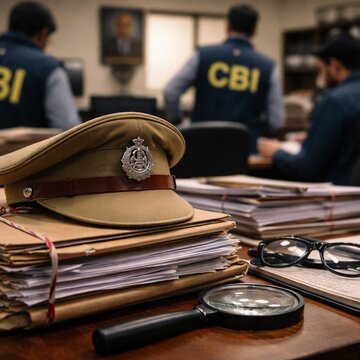
In a startling revelation, Union Minister of State for Finance Pankaj Chaudhary informed the Rajya Sabha that at least 20 candidates in the past three years were unable to join government bank jobs despite clearing all stages of recruitment, including prelims, mains, and interviews, due to poor credit scores.
The statement highlights a lesser-known but critical eligibility factor in banking recruitment that can derail careers at the final stage.
Credit history matters in IBPS recruitment
Responding to a query, the minister stated that candidates selected through the Common Recruitment Process (CRP) conducted by the Institute of Banking Personnel Selection (IBPS) are required to maintain a ‘good’ credit history at the time of joining.
While the minimum acceptable credit score varies across banks and may change periodically, candidates are advised to stay updated with the respective bank’s criteria.
Also Read | New Income Tax Act 2025 to roll out from April 1: Here’s what stays same and what changes for you
What is a credit score?
A credit score is a three-digit numerical summary of an individual’s creditworthiness, typically ranging between 300 and 900.
It is calculated based on several financial factors, including:
Number of active accounts
Loan amounts
Repayment history
Credit card usage and bill payments
This score plays a crucial role in determining eligibility for loans, credit cards, and now, even certain job roles.
Who calculates your credit score?
In India, four major credit bureaus provide credit scores:
CIBIL (Credit Information Bureau of India Limited)
Experian
Equifax
CRIF High Mark
Among these, the CIBIL score is the most widely accepted by banks and non-banking financial institutions.
How to check your credit score
Individuals can access their credit score through:
Free annual reports from CIBIL
Reports from Experian, Equifax, and CRIF High Mark
Users need to register with the respective bureau to obtain their credit report, which includes their credit score.
Understanding good vs bad credit scores
Financial institutions generally classify credit scores as follows:
300–599: Poor
600–699: Average
700–749: Good
750–900: Excellent
Higher scores improve the chances of loan approval and are considered low-risk by banks.
Also Read | SBI warns customers against fake bank messages and malicious app links
Why does a credit score drop?
Experts point to several factors that can negatively impact credit scores:
Missing EMI or credit card payments
High credit utilisation (above 30% of the credit limit)
Frequent credit checks by lending institutions
Consistent financial discipline is key to maintaining a healthy score.
Is credit score mandatory for bank jobs?
The minister clarified that a credit score is not mandatory for applying to government bank jobs.
Candidates without any credit history or bank accounts are not affected
However, those actively using credit cards or loans must ensure a good repayment track record
Failure to maintain a healthy credit profile can lead to disqualification even after clearing all recruitment stages.
Why this matters for aspirants
With banking institutions placing increasing emphasis on financial credibility, aspirants must treat their credit behaviour as seriously as exam preparation.
A strong credit score is no longer just about loans — it could determine your career entry into the banking sector.