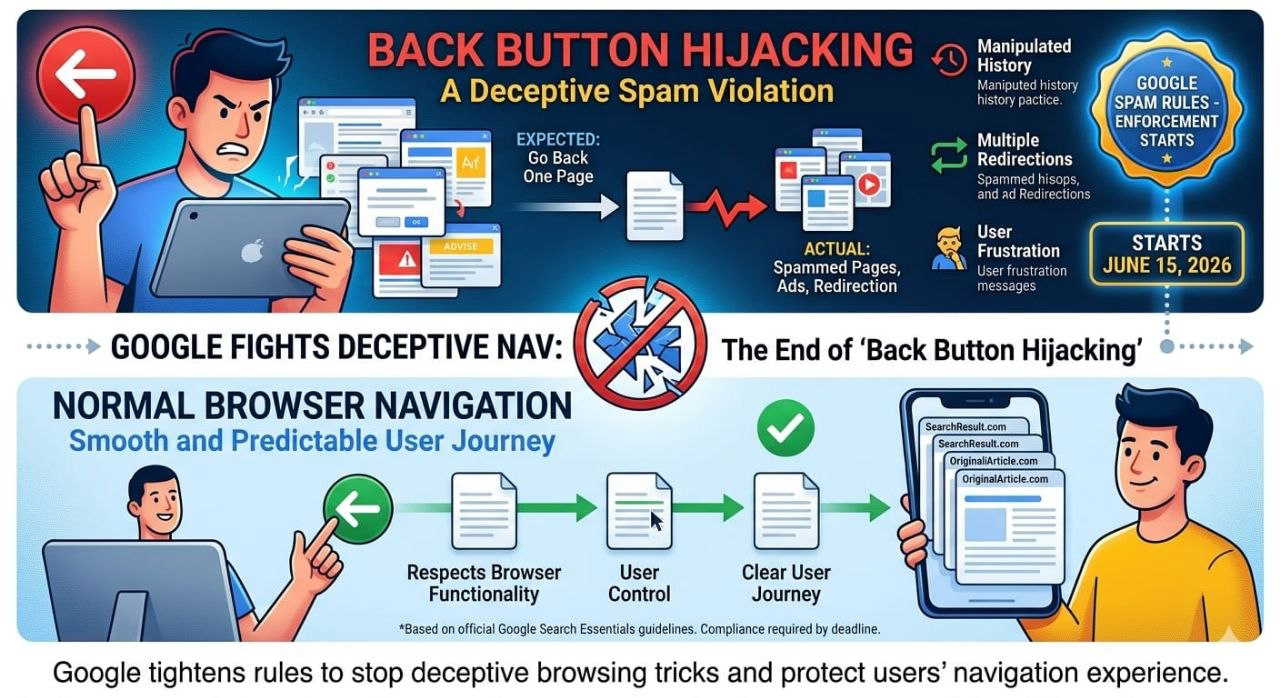
Google has announced a new policy that will classify "back button hijacking" as a spam violation, with enforcement beginning June 15, 2026. The Alphabet-owned company stated the move is aimed at improving user experience and stopping deceptive practices that interfere with normal browser navigation, as cited by Times Now Digital.
Back button hijacking occurs when a site interferes with a user's browser navigation and prevents them from using their back button to immediately get back to the page they came from. As Google defines it, when a user clicks the back button, they have a clear expectation: they want to return to the previous page. Instead, users may be redirected to pages they never visited, shown unsolicited recommendations or ads, or simply prevented from navigating normally.
What Google said
In a blog post, Google stated, "Today, we are expanding our spam policies to address a deceptive practice known as back button hijacking, which will become an explicit violation of the malicious practices of spam policies, leading to potential spam actions." The company added: "We believe that the user experience comes first.
Also Read | What is ‘personal intelligence’? Google Gemini unveils its latest update: here are the key details
Back button hijacking interferes with the browser's functionality, breaks the expected user journey, and results in user frustration. People report feeling manipulated and eventually less willing to visit unfamiliar sites. As we've stated before, inserting deceptive or manipulative pages into a user's browser history has always been against our Google Search Essentials."
Penalties for violating sites
As reported by Times Now Digital, websites found to be engaging in back button hijacking may face lower rankings in search results, manual spam actions, or automated demotions, all of which can negatively impact a site's performance in Google Search results. Google noted it has observed a rise in such behaviour, which prompted the decision to treat it as a clear violation under its malicious practices policy.
Also Read | Chatgpt safety alert: 5 questions you should never ask
According to Google, malicious practices create a mismatch between user expectations and the actual outcome, leading to a negative and deceptive user experience or compromised user security or privacy.
What site owners must do
Google has given site owners two months to make necessary changes before enforcement begins. Times Now Digital cited the company, "To give site owners time to make any needed changes, we're publishing this policy two months in advance of enforcement on June 15, 2026." Site owners should ensure they are not interfering with a user's ability to use the browser's back button or navigate their browsing history normally and should avoid any tricks, scripts, or ads that stop users from going back to the previous page. Google further noted: "If you're currently using any script or technique that inserts or replaces deceptive or manipulative pages into a user's browser history that prevents them from using their back button to immediately get back to the page they came from, you are expected to remove or disable it."