Rising temperatures do more damage to vehicles than most drivers realise. Heat accelerates wear on engines, drains batteries faster, increases tyre pressure, and degrades interior materials. In regions where summer temperatures cross 35-40C, these effects become severe. Timely maintenance can prevent most of these problems.
Checking fluids, servicing the air conditioning, and protecting the car from direct sunlight are among the most effective steps a driver can take during the hot season.
The hidden impact of summer heat on your vehicle
Heat impacts nearly every system in a vehicle simultaneously. It causes engine oil to break down faster, battery fluid to evaporate, and tyre pressure to rise beyond safe limits. Interior plastics and upholstery also deteriorate with prolonged sun exposure. Unlike winter damage, heat-related wear often goes unnoticed until a breakdown occurs.
Cooling system and engine oil
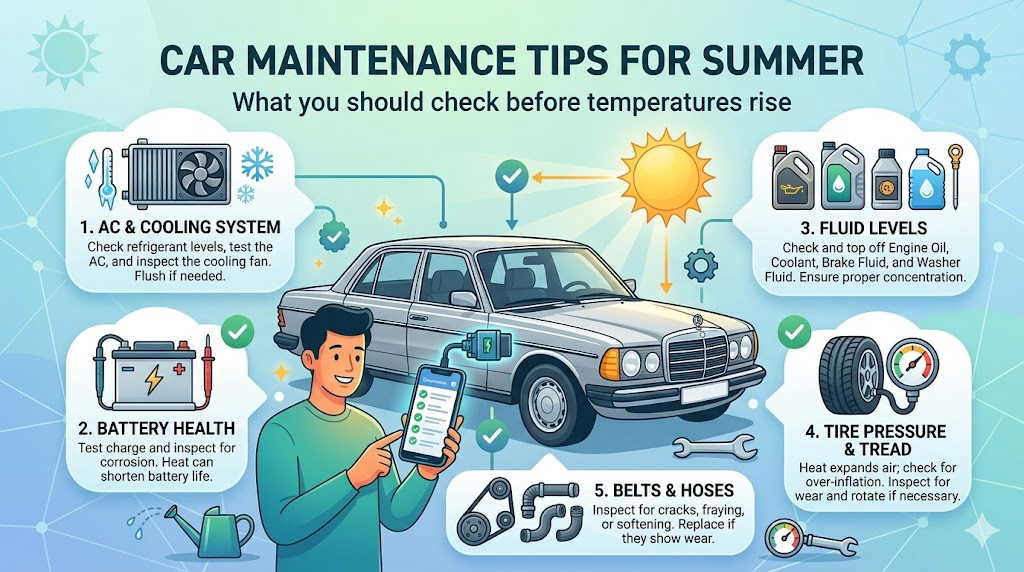
The engine cooling system is the first line of defence against heat damage. Coolant levels must be checked when the engine is completely cold. Here are some recommended steps that one can follow: Keeping coolant between the minimum and maximum marks. Use a 50:50 mix of coolant and distilled water. Checking hoses and radiator caps for cracks or leaks, Engine oil also thins out in high heat. Check levels monthly using the dipstick. Brake fluid, transmission fluid, power steering fluid, and windscreen washer fluid should also be checked regularly.
Tyre pressure and battery health
Heat causes air inside tyres to expand, raising pressure and increasing the risk of a blowout. Here are some important tips to follow: Inspecting tyres for bulges, cracks, or worn tread. Inspecting tyre pressure only when tyres are cold. Referring to the recommended pressure on the driver-side door frame. For batteries, clean corroded terminals and tighten loose connections. Batteries older than three years should be tested at a service centre.
Air conditioning and sun protection
Service the AC before peak summer. A clogged cabin filter or low refrigerant reduces cooling efficiency. Use recirculation mode in extreme heat. Park in shade, use windscreen sunshades, and wax the exterior to prevent UV damage to paint and dashboards.
Also Read | Is the Royal Enfield Meteor 350 a good bike for daily commuting?
Emergency kit for long drives
One should carry water, a first-aid kit, jumper cables, a flashlight, and a portable phone charger – especially on highways or remote routes.
Also Read | New Creta, Scorpio competitor secures 5-star safety rating ahead of India launch
Summer car maintenance does not require expensive repairs or technical expertise. Small, consistent habits, such as checking fluids, monitoring tyre pressure, and shielding the car from direct sun, can significantly extend a vehicle's life. A little preparation before the heat peaks saves time, money, and stress on the road.