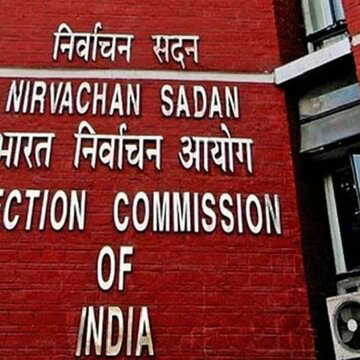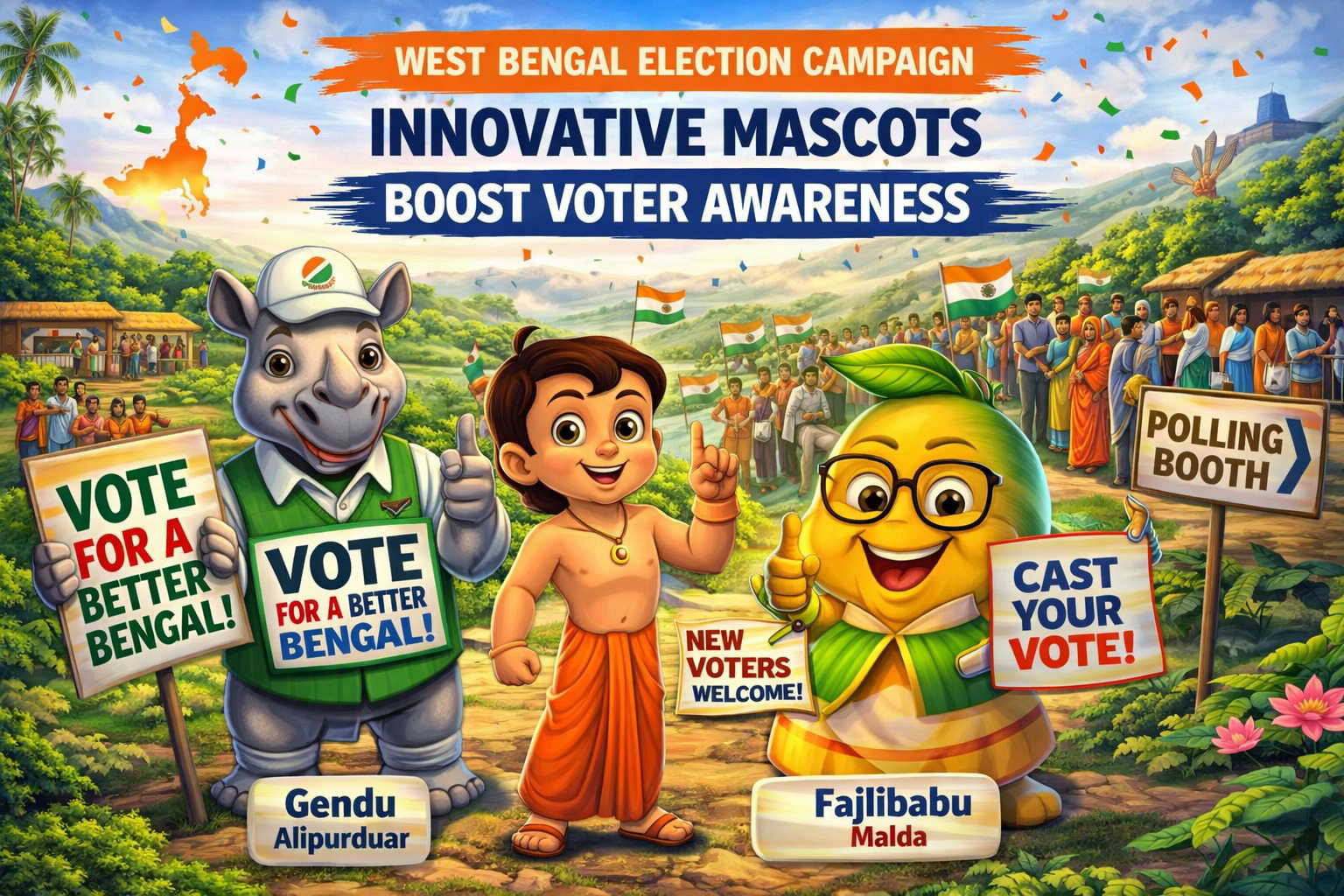
As West Bengal prepares for this year's assembly election, the Election Commission of India and district election sections are yet again bringing an unusual yet highly creative campaign strategy, like in the last Lok Sabha elections, introducing mascots. Across districts, local election authorities have introduced various mascots inspired by regional wildlife and cultural heritage to encourage voter participation. Mascots like ‘Fajlibabu’ in Malda, representing their famous Fajli mangoes, or ‘Gendu’ in Alipurduar, representing the famous one-horned rhino. These mascots, being locally linked, are being used as a relatable and engaging way to connect with voters and simplify election messaging.
The initiative reflects an effort to move beyond conventional awareness campaigns and adopt more culturally and locally rooted and visually appealing methods to reach a wider range of voters, especially first-time voters, and encourage them to exercise their right to vote and contribute towards the moving wheel of our democracy.
ALSO READ | TMC worker shot dead in Kolkata ahead of polls, four arrested
How the mascots are being used
Different districts in West Bengal have adopted different and unique mascots during various elections in the past, many of which are inspired by local biodiversity or culture. The 2026 assembly elections in West Bengal are knocking on the door, and this year is no less than any other election. Already, two assemblies have released innovative and local mascots to attract voters. Malda, which is highly famous for its Fajli mangoes, a variety known for extreme sweetness and juice, has introduced its mascot, named ‘Fajlibabu’. Similarly, Alipurduar, which is very famous for its one-horned rhinoceros, has named its mascot ‘Gendu’ from the local term for rhinoceros, genda. Moreover, to make young voters come out in more numbers, ECI has collaborated with Green Gold Animation to use their popular character ‘Chhota Bheem’ for the election campaign.
“We are working with the Election Commission of India to promote awareness of voting and also the significance of voting using the character Bheem. For such a purpose, we are organising a campaign wherein we have created comics that encourage awareness among voters,” Green Gold CEO Rajiv Chilaka stated as quoted by ANI.
ALSO READ | Meet 'Fajli Babu': Malda's mango mascot now urging people to vote
These mascots are being featured across posters, hoardings, social media campaigns, and even at polling booths, where they help guide voters and spread awareness about the voting process. The idea is to make election communication more accessible and less formal, using familiar symbols that resonate with local communities. Officials believe that such characters are more effective in grabbing attention and creating recall compared to traditional messaging.
Why this strategy matters
The use of mascots shows a shift in how election awareness campaigns are getting modernised. Instead of relying only on formal instructions, authorities are focusing on storytelling and visual communication to engage voters. Experts suggest that such initiatives not only promote voter turnout but also celebrate the cultural and ecological diversity of the state. By incorporating local symbols, the campaign reinforces a sense of belonging and encourages participation in the democratic process.
With elections often witnessing different levels of voter turnout across regions, especially in rural and remote areas, these mascots could play a key role in bridging communication gaps. They also help in making the process less intimidating, particularly for first-time voters. As campaigning intensifies, the use of these mascots is expected to expand further, turning them into a defining feature of West Bengal’s election outreach strategy. The approach underlines how creativity and local context can be effectively used to strengthen democratic participation.