There was a time when the name of the Birhor tribe was mentioned mostly in the context of poverty, forest life, backwardness and a vanishing culture. One of India’s oldest forest-dwelling communities, the Birhors had, for centuries, built their lives, economy and cultural identity around the forest and nature.
Today, the same community is back in the spotlight, but for a very different reason. Recent educational achievements, particularly the success of Birhor students in the Madhyamik examination, have sparked a new sense of hope across Jangalmahal. But to understand the significance of this change, one has to look back at the long and layered history of the Birhor people.
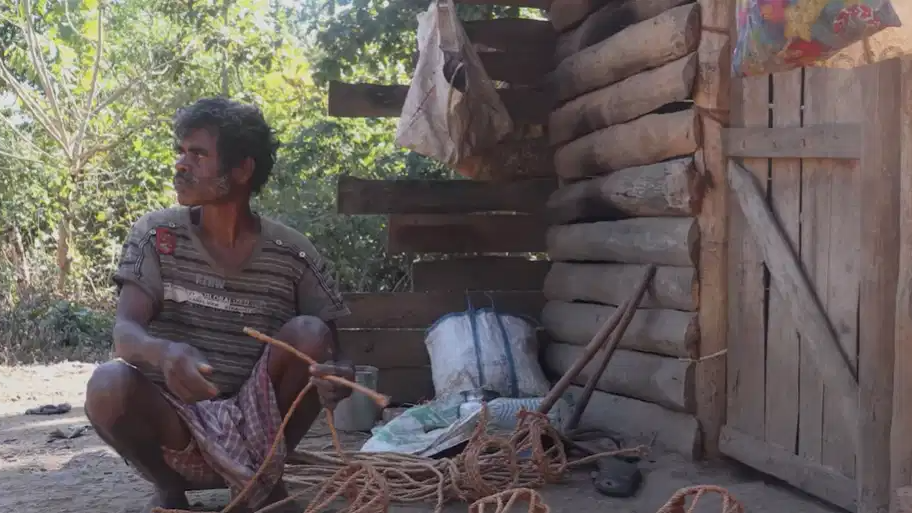 A Birhor community rope maker. Centre for Endangered Languages, CUJ
From forest dependence to social transformation
The history of the Birhors is ancient. Anthropologists consider them part of India’s old Austro-Asiatic or Munda-speaking population groups. It is believed that thousands of years ago, when vast parts of the Indian subcontinent were covered with dense forests, forest-dependent communities such as the Birhors had already begun shaping their way of life. Their name itself carries their identity. In the word “Birhor”, “bir” means forest and “hor” means people. In other words, they are the “people of the forest”. This is not merely a label but a reflection of their worldview.
Also Read | India-Bhutan, Bangladesh borders shut before vote counting to maintain law and order
Historically, the Birhors lived mainly in the forested regions of the Chotanagpur plateau, now largely associated with Jharkhand. Over time, they spread to the forest belts of West Bengal, Odisha, Bihar and Chhattisgarh. In West Bengal, their settlements are found especially in Purulia, Jhargram and Bankura.
Historians say they lived in small groups, built temporary settlements inside forests and moved from place to place as needed. This semi-nomadic lifestyle was one of the defining features of their society.
In earlier times, Birhor life was almost entirely forest-based. They hunted, gathered fruits and forest produce, collected honey and made ropes from plant fibres. They were particularly known for ropes made from siali and other forest creepers. These ropes were in demand among local farmers, cattle rearers and traders. Forest resources, therefore, formed the backbone of their economy.
The British period made life harder for the Birhors. As the colonial government began tightening its control over forests, the independent lifestyle of forest communities came under pressure. Forest laws imposed restrictions on hunting and the collection of forest produce. As a result, the traditional livelihood of the Birhors gradually weakened. Colonial records, too, described them as an extremely poor and isolated forest-dwelling group.
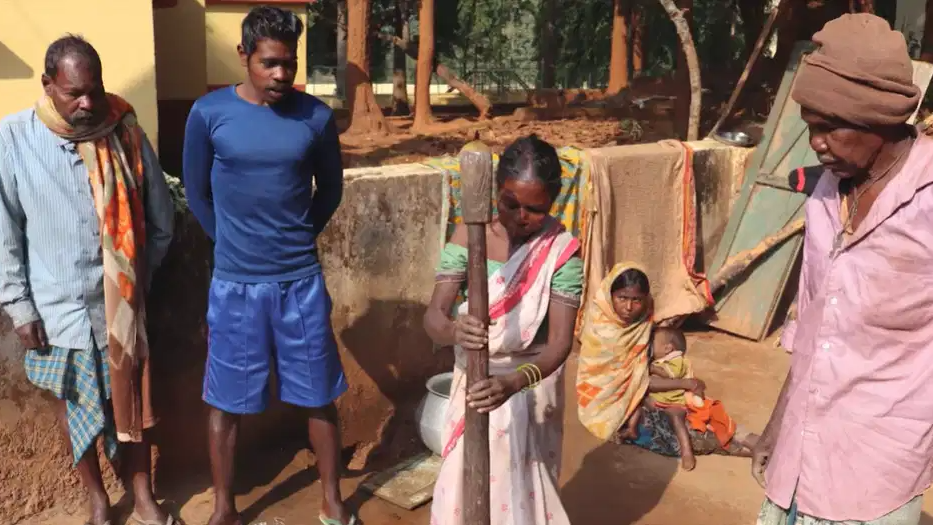 The Birhors see every element of nature as a living force. Centre for Endangered Languages, CUJ
Anthropologist Sarat Chandra Roy and several later researchers studied Birhor society in detail. Their work showed that Birhor society, despite its apparent isolation, had a well-organised social structure. Family, clan and elders formed the core of community life. Senior members usually took decisions related to marriage, social disputes and festivals. Mutual support and collective living were central to their social system.
Their religious beliefs, too, are deeply rooted in nature. The Birhors worship forests, hills, rivers, the sun and ancestral spirits. They see every element of nature as a living force. This animist belief system connects them with many ancient tribal cultures of India.
Before a hunt, while setting up a new settlement or during special festivals, they perform rituals. Dance, music, drums and folk songs remain important parts of their cultural expression.
Also Read | Jangalmahal students shine in Madhyamik 2026 as tribal candidates deliver strong results
The Birhors also have their own language, which belongs to the Munda language family. But because they remained cut off from mainstream society for a long time, the language survived only within a limited social space. With the spread of modern education and the growing influence of Bengali and Hindi, the language is now slowly moving towards extinction.
Linguists believe that preserving the Birhor language is crucial because it carries old words, folk memories and ecological knowledge that may otherwise disappear.
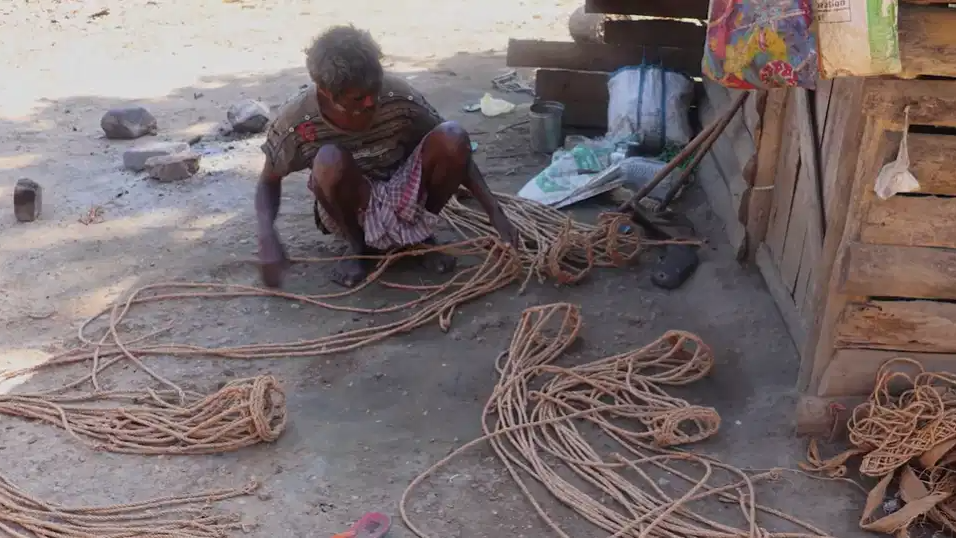 The Birhors hunted, gathered fruits and forest produce, collected honey and made ropes from plant fibres. Centre for Endangered Languages, CUJ
How education is changing Birhor society
After Independence, the Indian government launched several tribal development programmes. But for small and isolated communities like the Birhors, the benefits of development took a long time to reach the ground. Poverty, malnutrition, lack of education, child mortality and poor access to healthcare continued to weaken the community for decades.
It was for this reason that the government identified the Birhors as a Particularly Vulnerable Tribal Group, or PVTG, and brought them under special development schemes.
Over the past few decades, change has slowly begun to enter Birhor society. Government housing schemes, schools, health centres and the public distribution system have encouraged them to settle more permanently. This transition has reduced their nomadic lifestyle to a large extent, but their relationship with the forest and nature remains deep.
Also Read | Voting preparations expose water shortage, prompt quick fix at primary school in Medinipur
The biggest change, however, has come through education. There was a time when going to school was rare in Birhor society. Today, the younger generation is showing growing interest in studies. In 2009, two students from the Birhor community passed the Madhyamik examination for the first time.
That moment created a new sense of confidence within the community. Now, the success of four students from Baghmundi marks another important chapter in that long journey.
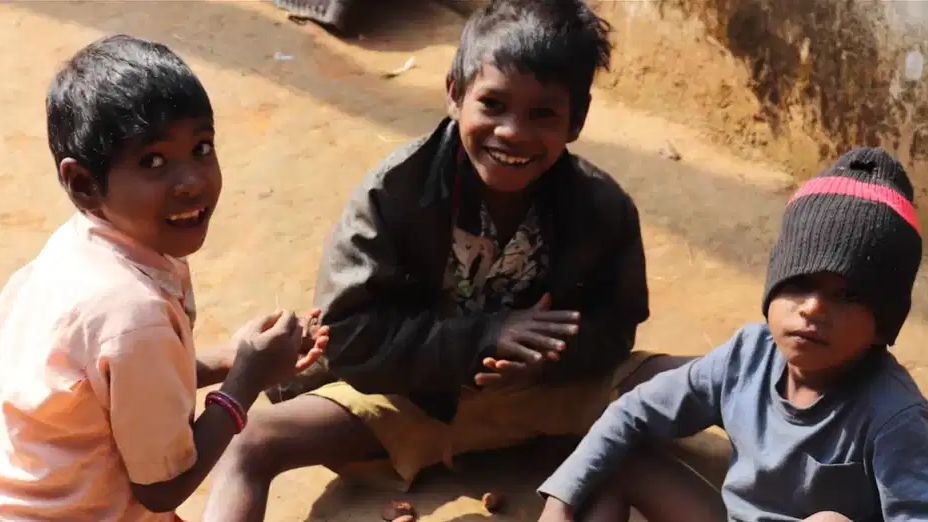
The achievement of Bobi Shikari, Shishupal Shikari, Bharati Shikari and Lakshmimoni Shikari is not just an examination result. It is a symbol of a deeper social transformation. A community that was once almost entirely forest-dependent and socially isolated is now seeing its children dream of a new future through education.
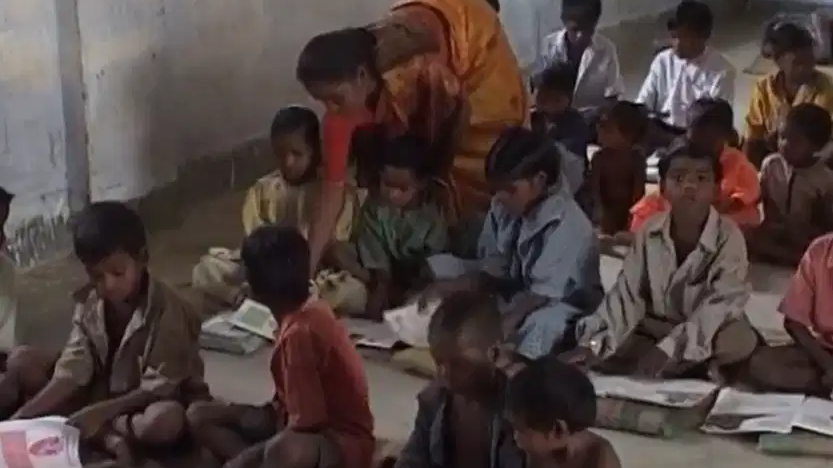 Today, the younger generation is showing growing interest in studies. Centre for Endangered Languages, CUJ
Preserving identity while embracing modernity
But the Birhor community today faces a double challenge. On one hand, it needs modern education, healthcare and employment opportunities. On the other, it must preserve its language, culture and heritage. Development often brings with it the risk of cultural erosion. Experts therefore argue that Birhor development must be shaped in a way that protects their identity while opening new opportunities.
Also Read | Industry bets big on new regime as double-engine government takes charge in Bengal
In an age of climate crisis, the Birhor way of life has acquired fresh relevance. Their values — coexistence with nature, limited use of resources and respect for the environment — offer lessons for modern society. The Birhors are not merely a tribal community; they are living carriers of India’s ancient ecological culture.
Once described as a vanishing forest tribe, the Birhors are today emerging as a symbol of hope in Jangalmahal. The light of education, a growing sense of self-confidence and a long history of struggle have brought the community to the threshold of a new chapter. That is why the name “Birhor” is no longer just the identity of a tribe. It is the story of survival, the sign of a quiet social awakening and the promise of a new future.