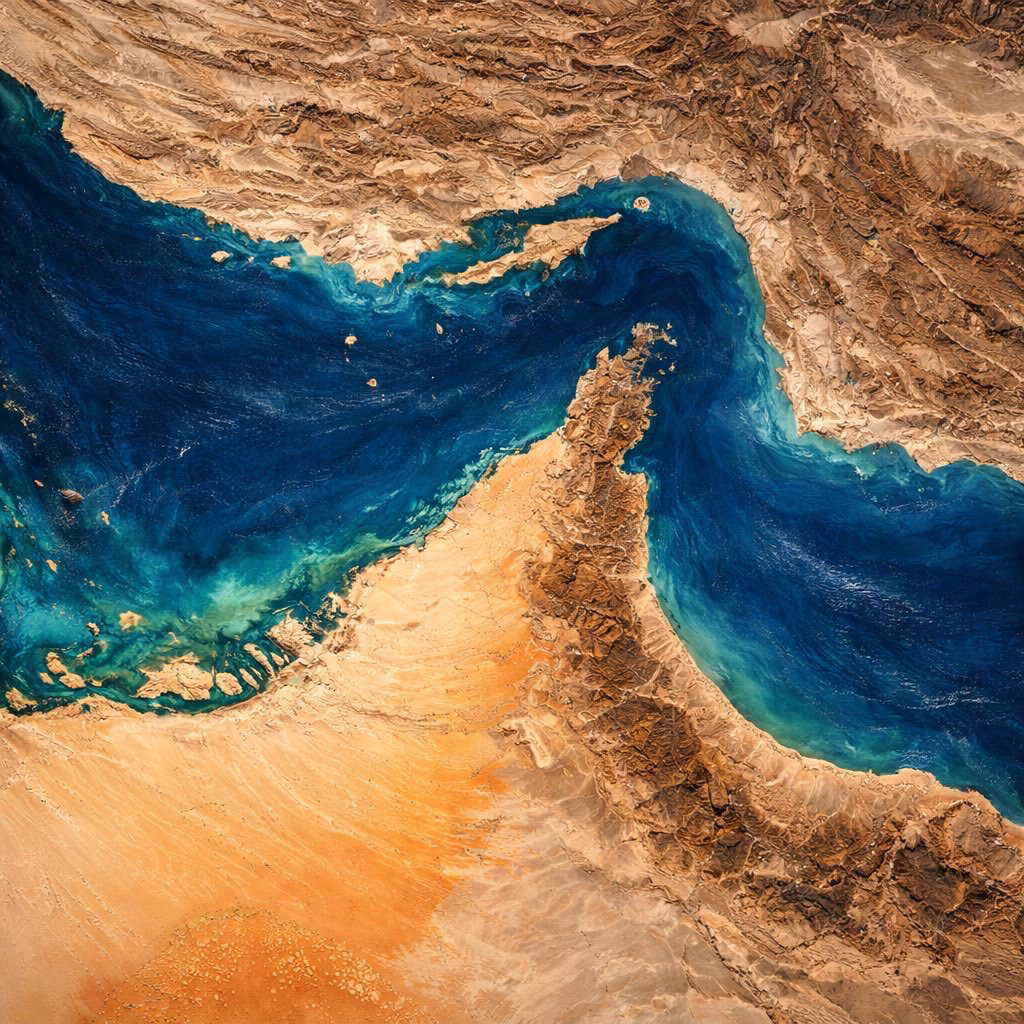
Iran on Saturday said it will enforce “new rules” over waters along its coastline in the Arabian Sea and the Strait of Hormuz, describing the waters as a source of “security and prosperity for the region."
The announcement came as US Treasury Secretary Scott Bessent reaffirmed that the US naval blockade of Iranian ports would remain in place until freedom of navigation in the waterway returns to “pre-February 27” levels.
🇮🇷🇺🇸Iran's peace proposal would reopen the Strait of Hormuz and end the U.S. blockade now, with nuclear talks pushed to a later stage.
— Mario Nawfal (@MarioNawfal) May 2, 2026
But Trump rejected it, at least for now.
That’s because kicking the nuclear question down the road is exactly what got everyone here in the… pic.twitter.com/C27155WBUK
Also Read | 12-year-old boy’s fate uncertain as father refuses DNA test in US deportation case
Iran draws the line
The Islamic Revolutionary Guard Corps (IRGC) Navy said it would exercise “control over nearly 2,000km of Iran’s coastline” and turn the waters into “a source of pride and power for the dear people of Iran,” per Al Jazeera.
Iran had earlier offered to reopen the Strait of Hormuz, the chokepoint that handles a fifth of global energy trade, if Washington lifted its blockade, while also suggesting that nuclear talks be deferred to a later phase.
Washington rejected that proposal.
🇮🇷🇺🇸 Iran just handed the UN a legal grenade on the Strait of Hormuz
— Mario Nawfal (@MarioNawfal) April 28, 2026
Tehran's new position:
We never signed UNCLOS, so we're not bound by it. No treaty obligations. No international maritime rules.
Any disruptions to global shipping? Blame Washington for provoking it. Not… https://t.co/unAAvoUJQI pic.twitter.com/i0RLDZFGx5
UNCLOS says no blocking—so where does Iran’s Hormuz play stand?
Under international maritime law, the Strait of Hormuz is not simply open water. It is a legally protected corridor. The United Nations Convention on the Law of the Sea, known as UNCLOS, establishes what is called a "transit passage" regime for straits used in international navigation.
In plain terms, this means ships and aircraft have an explicit right to pass through, that right cannot be blocked or suspended, and the states bordering such straits are legally prohibited from standing in the way.
Coastal nations do retain some authority. They can set rules around maritime safety, pollution control, and traffic management. But crucially, those rules cannot be used as a backdoor to choke off passage in practice.
The Strait of Hormuz, through which roughly a fifth of the world's oil flows, is precisely the kind of waterway UNCLOS was designed to keep open.
There is, however, a significant legal wrinkle. Iran signed UNCLOS on the day it opened for signatures. December 10, 1982, but UN Treaty Collection records indicate it has never formally deposited its ratification. That distinction matters more than it might appear. Ratification is what makes a treaty binding.
This means UNCLOS does not bind Iran with the same legal force it carries for the more than 160 states that have fully ratified it.
Also Read | India’s press freedom rank drops to 157 — what’s possibly driving the decline?
It is very difficult for rats in a sewer pipe to know what’s going on in the outside world. Some color for the Iranian Leadership as they literally sit in the dark:
— Treasury Secretary Scott Bessent (@SecScottBessent) May 1, 2026
1. The United States has complete control of the Strait of Hormuz.
2. There is a hard currency, i.e. U.S. dollar,… https://t.co/oNHVEvdNE4
Pay up or reroute
Any ships transiting the Strait are being targeted by IRGC fast attack boats, forcing them to move through Iran’s territorial waters and pay tolls.
A Lloyd’s List report last month said vessels were navigating around Iran’s Larak Island and that countries were paying as much as $2 million per ship to pass through safely.
Tehran has also sought US recognition of Iran’s sovereignty over the strait and proposed splitting tolls with Oman.
Tensions spike oil prices
The US response has been equally hardline.
While announcing the blockade in April, President Donald Trump said the Navy would “interdict every vessel” paying “an illegal toll,” and he also issued a “shoot and kill” order against small Iranian boats that deploy mines to choke traffic through the strait.
Crude prices have risen sharply amid the disruption, with Brent briefly topping $122 a barrel and earlier crossing $125.