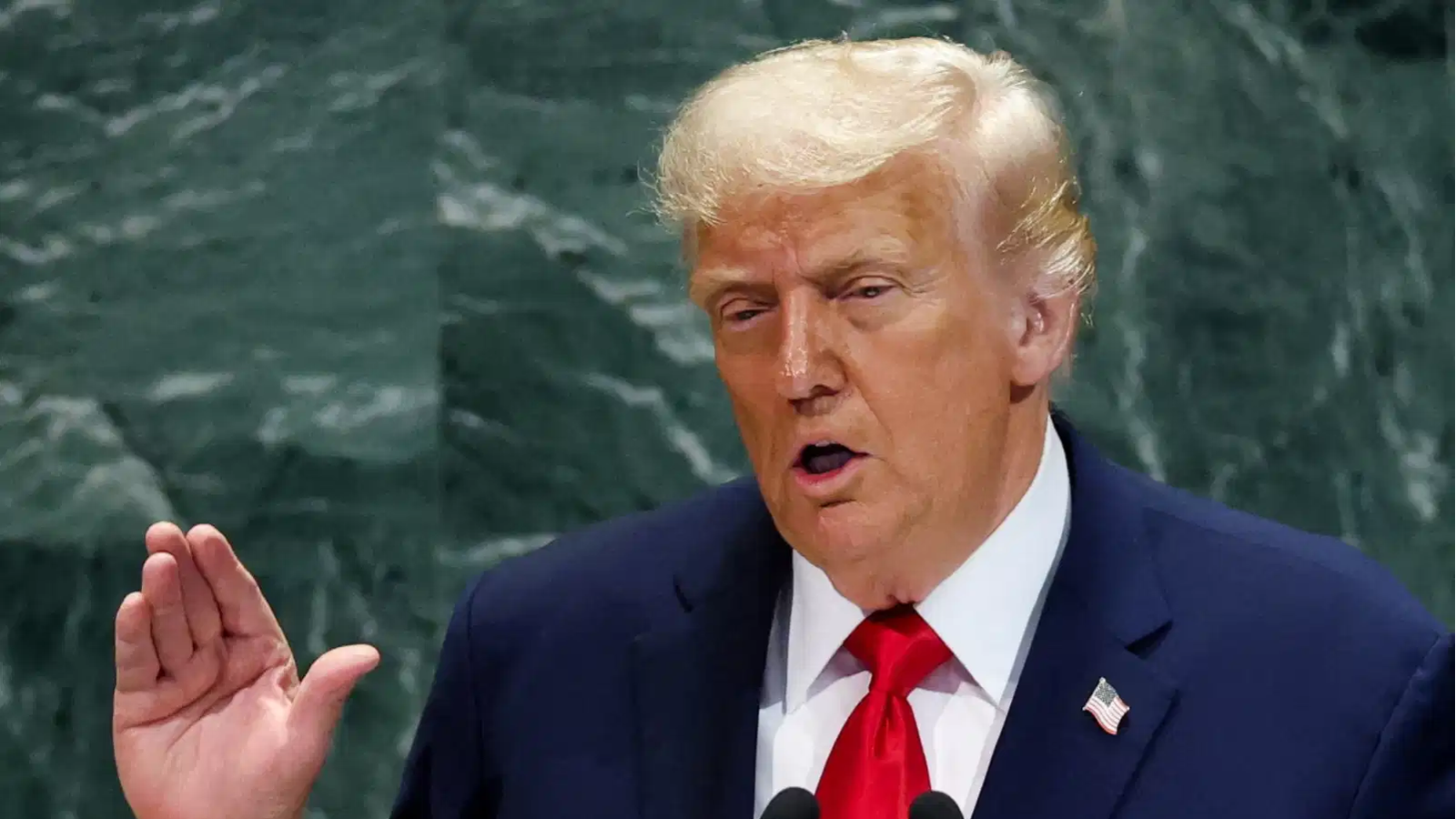
Donald Trump on Tuesday claimed that Iran has agreed not to develop nuclear weapons and had offered a “significant prize” linked to the Strait of Hormuz, even as Tehran firmly denied both assertions.
Speaking to reporters at the White House, Trump said Iran was now willing to “make a deal” following the recently concluded three-week conflict between the two countries. He suggested that senior officials, including Vice-President JD Vance, Secretary of State Marco Rubio, envoy Steve Witkoff and adviser Jared Kushner, were engaged in ongoing negotiations.
“They did something yesterday that was amazing… They gave us a present worth a tremendous amount of money,” Trump said, without disclosing details of the alleged offer.
Conflicting claims over deal and ‘regime change’
Trump also argued that Iran’s leadership had effectively changed following the conflict, describing it as a form of “regime change”. He maintained that US military action had significantly weakened Iran’s capabilities, including its nuclear programme.
“We obliterated their nuclear potential,” Trump said, adding that Iran had been close to acquiring nuclear weapons before US strikes.
Backing the president, US Defence Secretary Pete Hegseth said Iran’s military had been “rapidly and historically defeated”.
#WATCH | On those who are involved in the Iran negotiations from the US administration, US President Donald Trump says, "... JD (Vance) is involved. Marco is involved. Jared Kushner is involved... Steve Witkoff is involved, and I am involved... If Iran had a nuclear weapon, it pic.twitter.com/6uDhh3TZVi
— ANI (@ANI) March 24, 2026
However, Iranian authorities rejected these claims, stating that no agreement had been reached to abandon their nuclear programme. Officials reiterated that their nuclear activities remain within peaceful and sovereign limits and dismissed talk of regime change as “baseless”.
Tehran also denied offering any economic or strategic concession to the United States, particularly in relation to oil and gas routes through the Strait of Hormuz, one of the world’s most critical energy corridors.
Diplomatic signals amid continued tensions
The contradictory statements reflect the ambiguity that still surrounds any possible agreement between Washington and Tehran. Even though President Trump said that negotiations were already in progress, Tehran promised that any future talks with Washington would be transparent.
PRESIDENT TRUMP: Iran is going to make a deal. The new leadership gave us a significant present that showed me that were dealing with the right people. pic.twitter.com/abJ0TbdQpq
— Department of State (@StateDept) March 24, 2026
Also Read | Iran allows ‘non-hostile’ ships through Strait of Hormuz amid ongoing conflict
Meanwhile, President Trump mentioned a message he had received from Pakistan’s Prime Minister Shehbaz Sharif, who had offered to help facilitate talks between the two parties.
Despite the prospects for a breakthrough in the conflict, the specifics of the so-called “significant prize” remain unclear, reflecting the tensions that still exist even after the active conflict has ended.