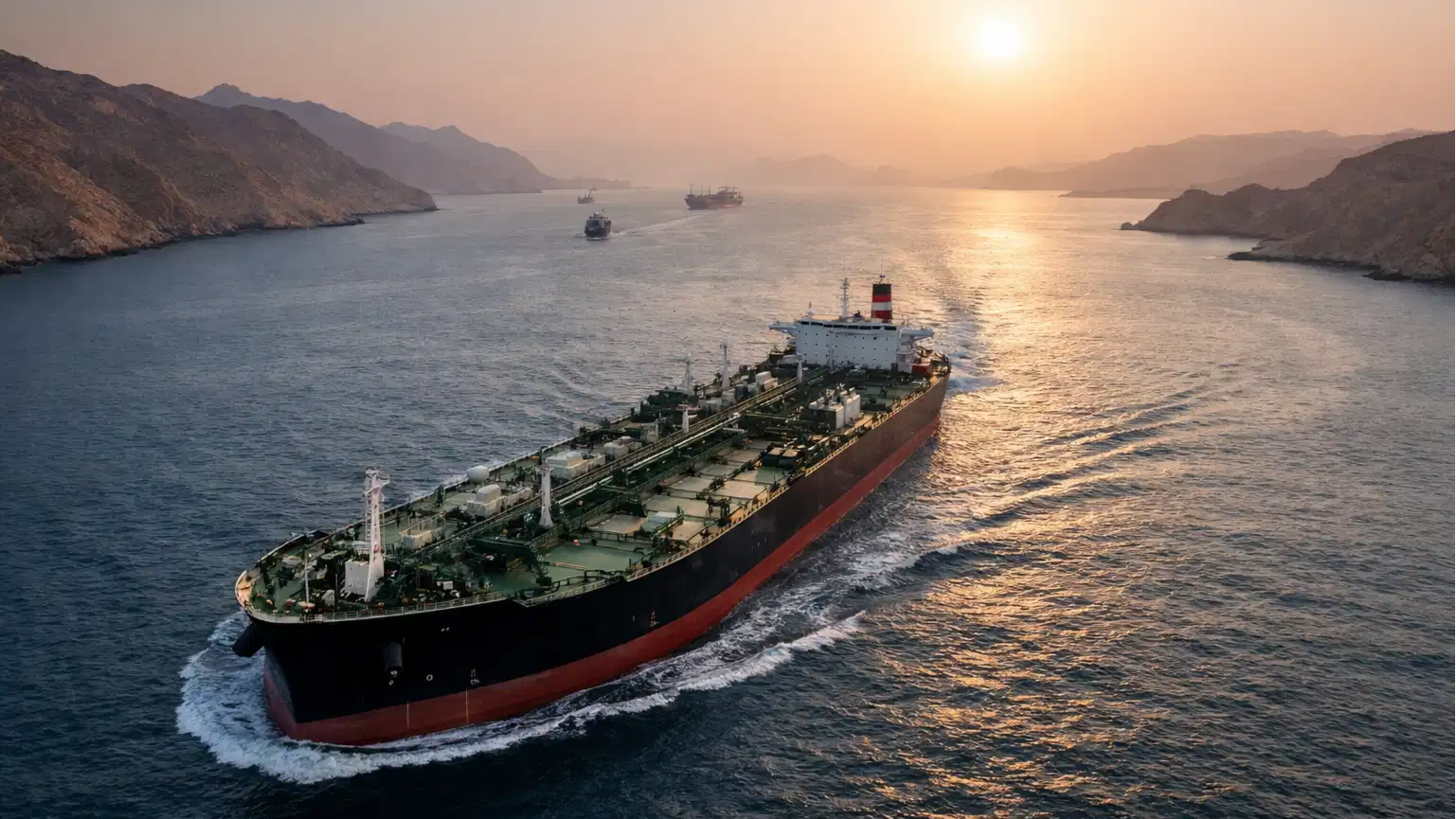
Iran has rejected reports claiming that it allowed India-flagged oil tankers to pass safely through the Strait of Hormuz amid rising tensions in the region and disruptions to global energy routes.
The response came after reports suggested that Tehran had eased restrictions for Indian vessels following diplomatic engagement between External Affairs minister (EAM) S Jaishankar and Iran's Foreign minister Abbas Araghchi.
Responding to the claim, a source in Tehran dismissed the report outright.
"No, it's not true," a source in Tehran told NDTV when asked about the reports.
Reports about Indian tankers
Earlier, a report by news agency IANS stated that at least two India-flagged tankers, Pushpak and Parimal, had passed safely through the Strait of Hormuz. The report suggested that these vessels were able to move through the waterway while ships linked to the United States, Europe and Israel continued to face restrictions.
The same report also mentioned that a Liberian-flagged tanker carrying Saudi Arabian crude oil, captained by an Indian national, cleared the strait two days ago. The vessel has since berthed at Mumbai port, becoming the first India-bound tanker to transit the route safely after maritime traffic slowed sharply following US and Israeli strikes on Iran.
What Iran previously said
Earlier, the commander of the Islamic Revolutionary Guard Corps (IRGC) Naval Force had warned that vessels wishing to cross the Strait of Hormuz would need Iran's approval.
According to the statement, ships sailing without permission could risk being targeted by Iranian forces.
Iran has also indicated that vessels not serving the interests of the United States and Israel could move through the waterway safely, even as restrictions on maritime traffic have intensified during the ongoing conflict.
Conflict enters second week
The US-Israeli military campaign against Iran has now entered its 13th day, with fighting continuing and no clear resolution in sight. The escalating conflict has significantly reduced shipping activity in the region and pushed global oil prices higher.
Iran has tightened monitoring and restrictions in the Strait of Hormuz as the conflict unfolds.
The Strait of Hormuz is a narrow waterway, around 55 kilometre wide, located between Iran and Oman. It connects the Persian Gulf to the Arabian Sea and is considered one of the most critical maritime routes for global energy supplies.
Also Read | Which countries have legalised euthanasia? Here’s the global list
Around 13 million barrels of oil pass through the strait each day, accounting for roughly 31 per cent of global oil shipments. The route is essential for major oil-exporting countries including Iraq, Kuwait, Saudi Arabia and the United Arab Emirates.
A large share of global liquefied natural gas shipments also travels through this corridor. Any disruption to traffic in the strait can quickly affect international energy markets, supply chains and fuel prices worldwide.