The Strait of Hormuz has of late become on the most closely watched waterways amid the rising tension in the Middle East. While it is widely known today for its strategic role in global energy supply, but its name traces back to ancient Persia.
"Hormuz" is believed to be derived from "Hormoz" or "Ormuz", linked to Ahura Mazda, the supreme god in Zoroastrianism. Over centuries, the name evolved through Persian, Arabic and European usage into its present form.
Also Read | Hidden mines? What's really blocking Hormuz shipping route?
Historians say the Strait itself takes its name from the nearby Kingdom of Hormuz, which once controlled this critical maritime passage.
A gateway of ancient trade
Long before modern borders, the region formed part of powerful Persian empires such as the Achaemenid Empire. It served as a major trade corridor linking India, Arabia, and Persia. Ships carried spices, textiles and other goods, making the strait a vital connection between East and West.
Its location naturally positioned it as a gateway for commerce, shaping its economic importance over centuries.
Rise of a maritime power
Between the 11th and 16th centuries, the Kingdom of Hormuz emerged as a dominant trading hub. Its capital, later based on Hormuz Island, became one of the wealthiest ports of its time. The kingdom thrived by taxing goods like silk and spices moving across Asia, the Middle East, and Europe.
Travellers such as Marco Polo described it as a key centre of global trade, reflecting its prominence during that era.
Colonial control and shifting power
In 1507, Portuguese forces led by Afonso de Albuquerque seized control of Hormuz. They fortified the region and imposed taxes on passing ships, dominating the sea route for over a century.
This control ended in 1622 when the Safavid Empire reclaimed the area with support from allies, restoring Persian influence over the Strait.
Also Read | Hormuz blockade could cost Iran $435 million a day—here's how the losses add up
Why Hormuz matters today
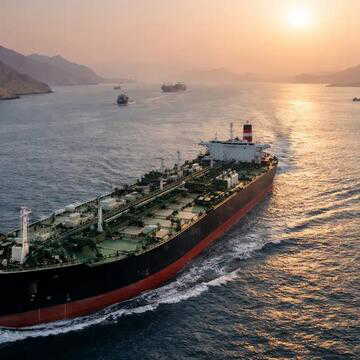
Today, the Strait lies between Iran and Oman and remains one of the world's most important shipping lanes. Nearly one-fifth of global oil and liquefied natural gas passes through its narrow waters, making it a crucial "energy chokepoint".
Recent tensions have disrupted traffic through the route. Maritime data shows crossings have dropped sharply, with activity remaining far below normal levels, highlighting the Strait's continued global significance.