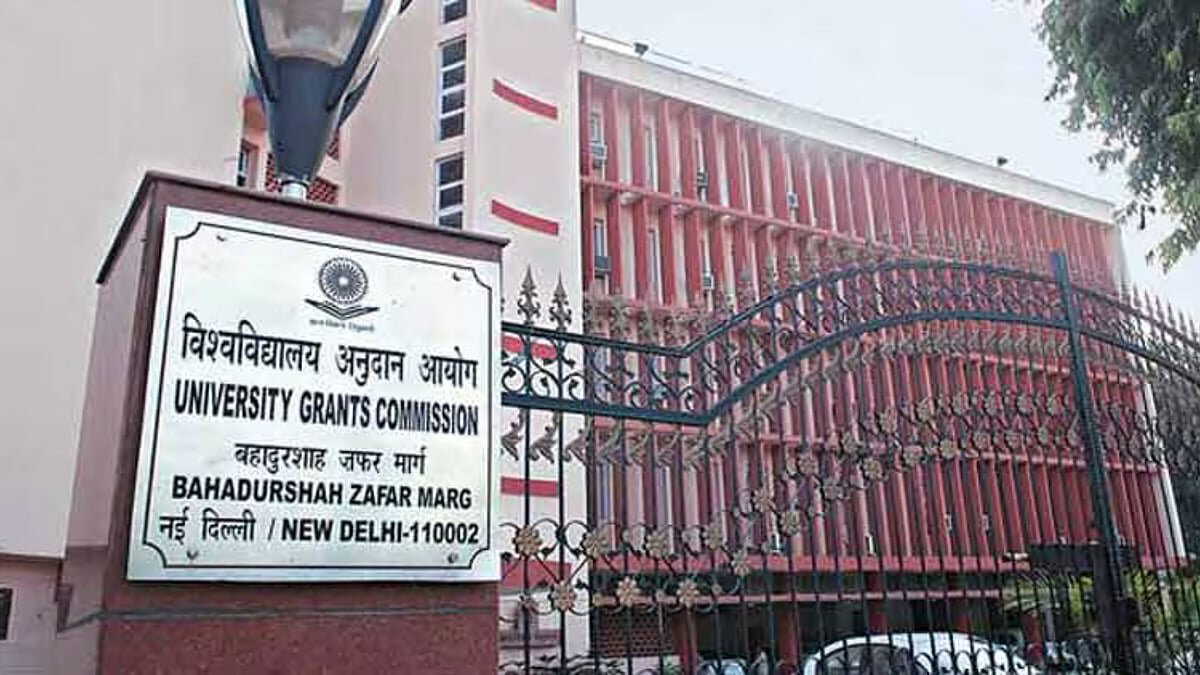
The University Grants Commission or UGC has recently issued a notification aimed at strengthening the digital infrastructure of all higher education institutions in the country. This initiative, however, belongs to the Telecom Regulatory Authority of India or TRAI. Its main objective is to assess the internet and network capabilities of educational institutions through a new framework called 'Rating of Properties for Digital Connectivity'. This step has been taken considering the indispensability of the internet in almost every aspect of daily life, according to sources.
TRAI reports that currently more than 70 percent of mobile internet data is used indoors, meaning inside homes. In this situation, especially with the rapid expansion of high-capacity networks like 5G, having consolidated digital connectivity infrastructure inside educational institutions is now considered a demand of the times.
Also Read | Union Budget 2026 signals shift from degree-based to skill-driven education
In this context, TRAI wants to know through this rating exactly how internet services are within educational institutions. That means, what the speed is like, how much time uploading takes, whether there are any problems with downloading, and during online meetings or classes, TRAI will examine the experience of teachers, staff, and students not only within educational institutions but also at home.
What the digital connectivity rating will examine
Under TRAI's new rating system, educational institutions will be able to assess their campus digital readiness, and this will be conducted through a specific guideline or 'Digital Connectivity Rating Manual'. This will examine fiber optic readiness, mobile signal strength inside buildings, and Wi-Fi capacity. In higher education institutions, an uninterrupted network plays an important role in digital learning, research, and innovation.
UGC also believes that through this rating system, educational institutions will be able to assess their digital infrastructure against an objective and comparative standard, which will ultimately ensure transparency about the quality of campus digital services for both students and teachers. Mousumi Pal, a student at Taldi College in the Sundarbans, says, 'The internet service inside the college is good. But where I live in the Sundarbans, I face severe problems with internet connection not only inside the house but also outside. During Corona, I couldn't even attend classes.'
Also Read | 'Content Creator Labs': Nirmala Sitharaman's new surprise for students during Union Budget speech
While there are no major complaints about Wi-Fi internet services, Debayudh Sanyal, a student at Jadavpur University, reports being troubled by slow mobile data speeds and network problems. Again, according to writer and Burdwan University staff member Riksundar Bandyopadhyay, 'Before rating like this, rural students need to be made aware of how to measure speed and what internet literacy is. Otherwise, this rating will have no effectiveness.' However, a section of the education community hopes that this initiative will pave new paths for future-oriented technology investment and research in higher education institutions. Institutions that need any special assistance in this regard can contact TRAI via email.