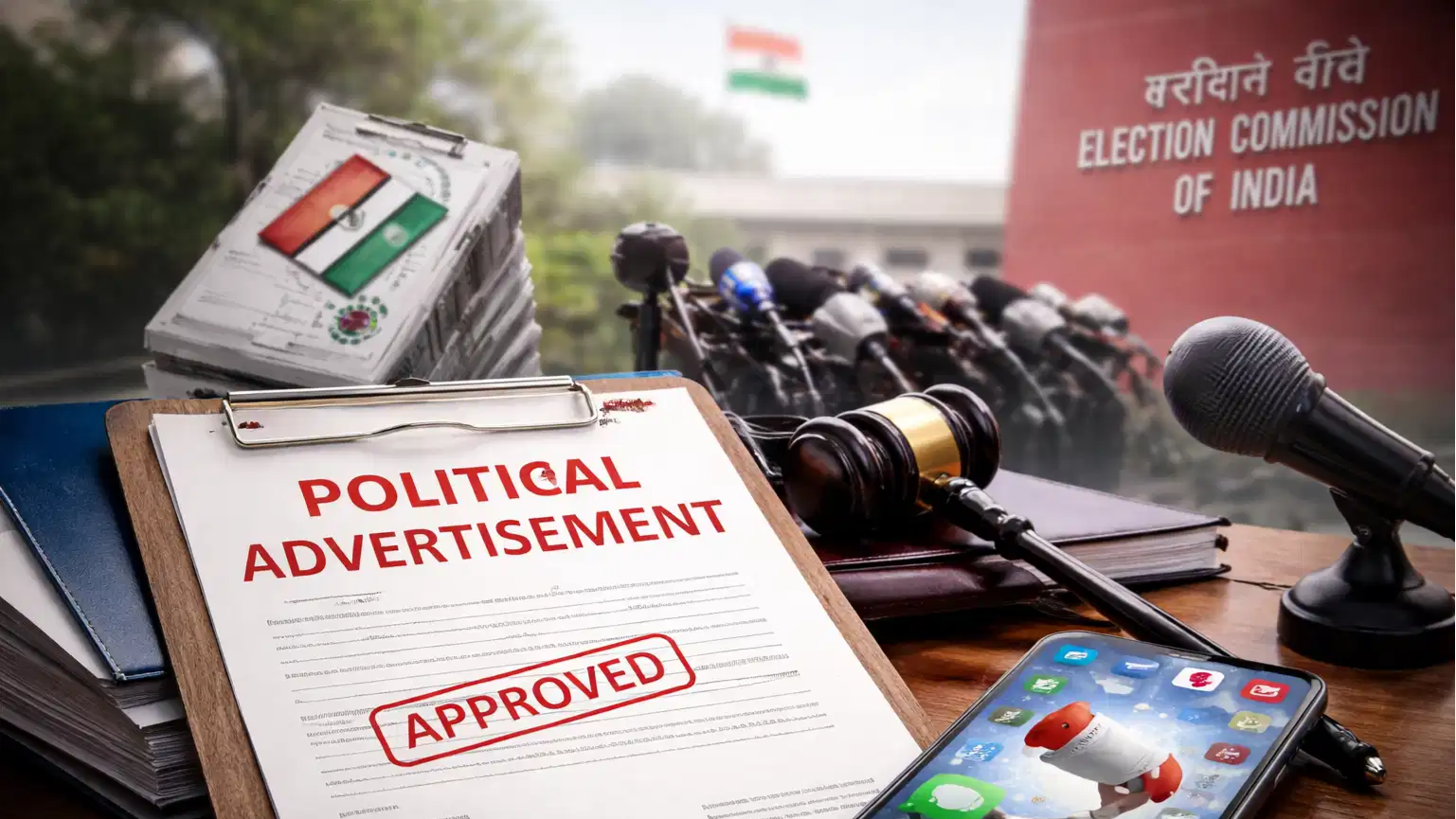
The Election Commission of India (ECI) has directed political parties and candidates to obtain prior approval for advertisements before releasing them on television, radio and digital platforms. The move comes ahead of Assembly elections in Assam, Kerala, Puducherry, Tamil Nadu and West Bengal, along with by-elections in six states.
No ads without prior clearance
In a press statement issued on Friday, the poll body said that all political advertisements must be cleared by the Media Certification and Monitoring Committee (MCMC) before being published or broadcast.
The directive applies to a wide range of platforms, including television, radio, audio-visual displays in public places, e-papers, bulk SMS or voice messages, as well as internet-based and social media platforms.
The Commission stated that no political advertisement shall be released on electronic or digital media without prior approval from the concerned MCMC.
Applies to parties, candidates and groups
The order makes it mandatory for all registered political parties, candidates, and even organisations or associations involved in campaigning to apply for pre-certification.
It further clarified that no political advertisements are to be released on websites or social media platforms without clearance from the respective MCMC. The committees will also monitor suspected cases of paid news and take appropriate action.
As part of the guidelines, candidates must provide details of their official social media accounts in their affidavit while filing nomination papers. This is aimed at improving transparency in online campaigning.
Spending disclosures required
Citing Section 77(1) of the Representation of the People Act, 1951, and Supreme Court directions, the ECI said that political parties are required to submit details of expenditure incurred on digital campaigning, including social media, within 75 days of the completion of elections.
Also Read | Shakira won't perform in India this April—here's what happened
To ensure compliance, a meeting was held on March 19, 2026, involving Chief Electoral Officers, police and IT nodal officers from poll-bound states, along with representatives of social media platforms.
The discussions focused on enforcing the rules strictly and addressing concerns related to misinformation, disinformation and fake news during the election period.