The government has introduced the Jan Vishwas (Amendment of Provisions) Bill, 2026, proposing wide-ranging changes to how minor civic violations are treated under Indian law. The legislation seeks to decriminalise hundreds of low-level offences, replacing the risk of arrest or prosecution with civil penalties, warnings and administrative action.
Introduced in the Lok Sabha by the Union Ministry of Commerce and Industry, the Bill proposes to decriminalise at least 717 minor violations across 80 Central laws. Instead of criminal cases, many offences would attract monetary penalties, with warnings issued for first-time violations in some instances. The Bill will become law only after approval by both Houses of Parliament and presidential assent.
Public nuisance rules to shift from criminal to civil penalties
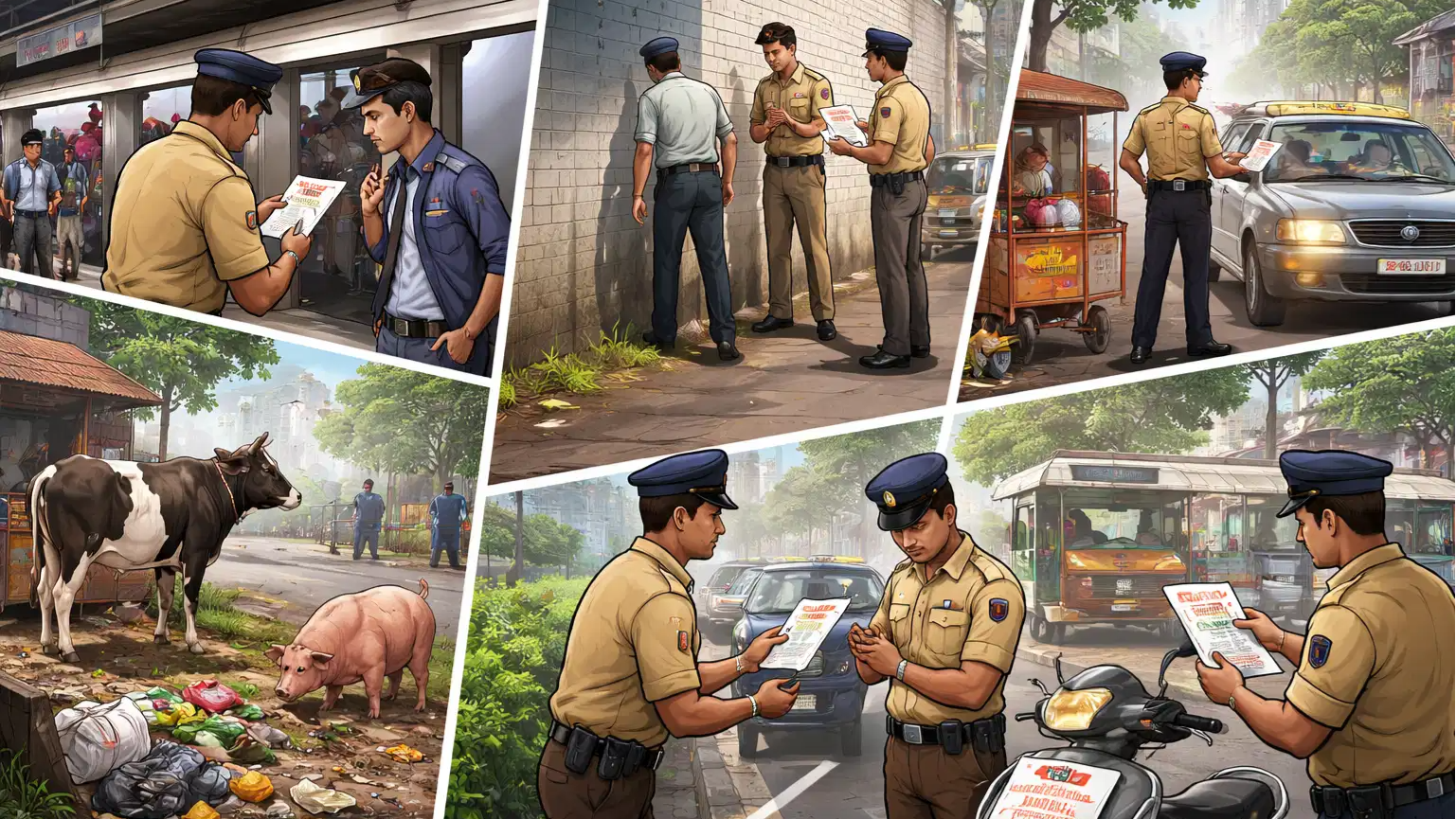
Under existing provisions of the New Delhi Municipal Council Act, acts such as public urination or defecation fall under "commission of nuisances" and are treated as criminal offences with small fines. The proposed Bill restructures this framework by replacing criminal punishment with civil penalties. Violations under this category would now attract a Rs 500 penalty.
Also Read | 'Raja is back': Year after honeymoon murder, Raghuvanshi family welcomes baby boy
The Bill also introduces a warning-first approach for certain offences. In addition, provisions that earlier allowed police to make arrests without a warrant for specific nuisance-related violations are proposed to be removed.
Smoking in Metro may no longer be criminal
The Calcutta Metro Railway (Operation and Maintenance) Temporary Provisions Act, 1985 currently treats smoking inside Metro compartments or stations as a criminal offence with a maximum fine of Rs 250.
The Bill proposes replacing this with a civil penalty of Rs 2,000 along with compulsory forfeiture of the passenger's pass or ticket. The offender may also be removed from the compartment. If the penalty is not paid, the matter may go to court, where a fine between Rs 2,000 and Rs 5,000 can be imposed. The violation, however, would no longer be criminal at the outset.
Honking and noise violations to follow warning-first model
Needless honking and noise pollution violations under the Motor Vehicles Act are currently treated as criminal offences. The proposed amendment introduces a graded response. A first violation would result in a recorded warning, while repeat offences would attract a civil penalty ranging from Rs 1,000 to Rs 2,000.
Similarly, vehicles breaching noise pollution standards would receive a warning initially, with penalties of up to Rs 10,000 for repeated violations.
Changes for animals, street activities, and trains
The Bill also modifies rules related to animals in public spaces. Milking cattle or tethering animals on streets would shift from a criminal offence to a civil penalty of Rs 1,000, with a warning issued first. Keeping a "ferocious dog" unmuzzled in public would also attract a civil penalty instead of a criminal case.
Under the Railways Act, begging and unlicensed hawking currently carry possible imprisonment. The Bill replaces this with civil penalties, Rs 2,000 for unlicensed hawking and Rs 1,000 for begging, along with removal from the train if required.
Also Read | PM Modi unveils ₹20,000 crore development push in Gujarat today on Mahavir Jayanti
Driving without insurance and other key changes
Driving without third-party insurance currently carries the possibility of imprisonment. The Bill removes jail terms and replaces them with higher monetary penalties. The first offence would attract three times the base insurance premium or Rs 5,000, whichever is higher. Repeat violations would cost five times the premium or Rs 10,000.
Overall, the proposed changes aim to reduce criminal prosecution for minor civic violations and shift toward civil penalties, warnings, and administrative enforcement. The Bill describes the approach as an effort to make India's regulatory system "predictable, transparent and fair".