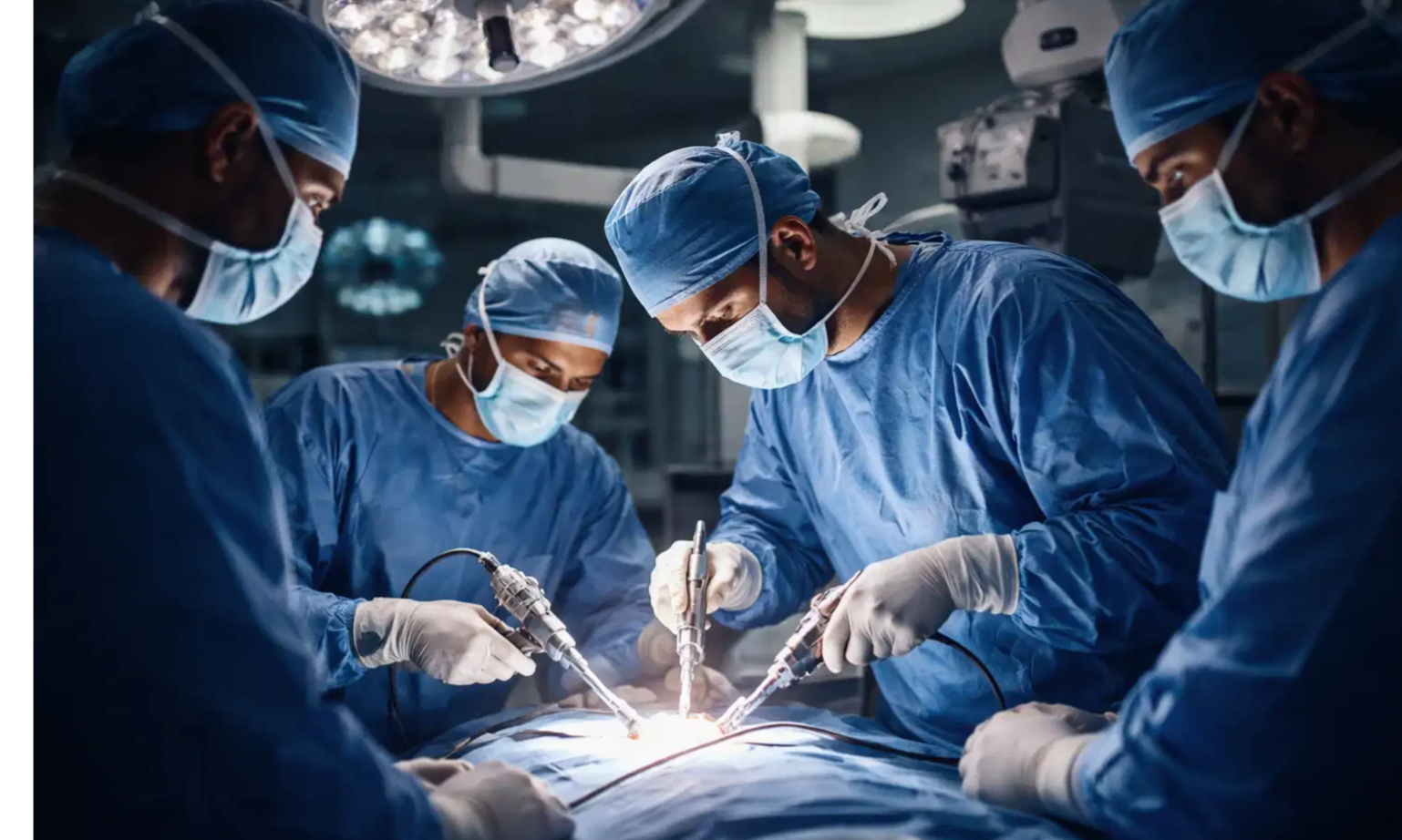
In a rare medical breakthrough, doctors in Bengaluru have performed what is claimed to be the world’s first robotic pancreatic surgery on a one-month-old baby, opening up fresh avenues in paediatric care.
Inaya, a one-month-old baby, was diagnosed with Congenital Hyperinsulinism (HI), a rare genetic disorder of the pancreas where insulin is overproduced, resulting in abnormally low blood sugar levels.
Rare condition triggered life-threatening episodes
Inaya began experiencing repeated hypoglycaemic episodes within weeks of birth. Despite being administered high concentrations of intravenous glucose, her blood sugar levels continued to drop, prompting doctors to refer her for specialised care.
Also Read | IRCTC launches Bharat Gaurav Train for South India pilgrimage tour
“In newborns, the brain depends almost entirely on sugar for energy. Repeated low blood sugar can cause permanent damage affecting learning, movement and development,” said Dr Kavitha Bhat, Consultant – Pediatric Endocrinology, Manipal Hospital Whitefield in a conversation with Hindustan Times.
Further genetic analysis confirmed a focal form of congenital hyperinsulinism, a condition that can potentially be cured through surgery.
Precision surgery chosen over traditional approach
Advanced PET/CT scan using 18F-DOPA revealed a 0.5 cm tumor in the pancreas, while the rest of the organ was healthy. Doctors then had to decide whether to conduct open surgery or robotic surgery. Open surgery in young children carries a higher risk of removing healthy pancreatic tissues, which may lead to complications like diabetes in the future. Considering the criticality of the situation, the medical team decided to conduct robotic surgery, as this type of surgery is seldom conducted in infants of this age group.
World-first robotic surgery in an infant
The surgery was conducted by Dr. Manjunath Haridas, Consultant – Colorectal, GI & Robotic Surgery, and Dr. Arvind Sabharwal, Consultant – Pediatric Surgery, supported by NICU, anaesthesia and endocrinology teams. Using high-definition robotic surgery, the doctors were successful in removing the tumor.
Also Read | Did you know this Karnataka city is India’s ice cream capital?
Following the procedure, Inaya’s blood sugar levels stabilised immediately, eliminating the need for further glucose infusion. She was monitored in the NICU for nine days before being discharged on oral feeds with minimal medication.
Doctors say the case highlights how advanced technology and coordinated medical care can significantly improve outcomes, even in high-risk neonatal conditions.