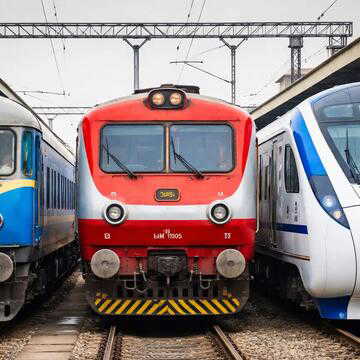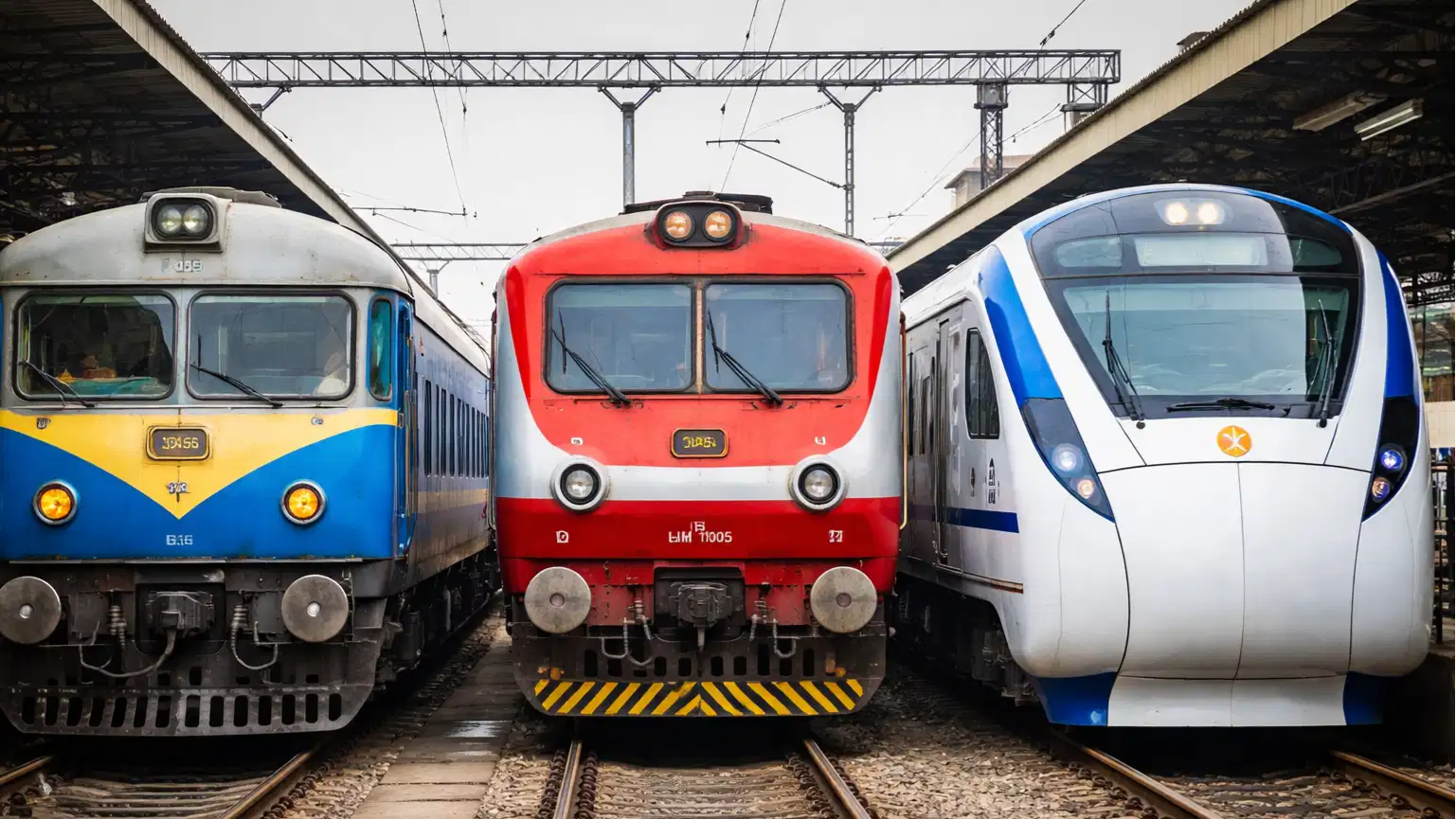
Walk into any Railway station in India and one thing stands out immediately — the myriad-coloured trains. From deep blue coaches to red ones and sleek white trainsets, the variety is hard to miss. While it may seem like a simple design choice, these colours often hint at the type of train, its features and even its generation.
Blue coaches
The most common trains across India are the blue ones. These are Integral Coach Factory (ICF) coaches, which have been in service for decades. They are typically used in mail and express trains and form the backbone of long-distance travel.
Also Read | Does cooking on induction oven make your food feel less tasty? Here are some reasons why
For passengers, blue trains usually mean a familiar and widely accessible travel experience. They are reliable and economical, though many are gradually being replaced by newer designs.
Red coaches
In recent years, red or maroon coaches have become more common, especially on major routes. These are LHB (Linke Hofmann Busch) coaches, introduced to improve safety, speed and comfort.
For travellers, a red train often signals a newer setup. These coaches offer smoother rides and are designed to be safer in case of accidents. They are now widely used in premium and superfast trains.
White trains: A new generation
White-coloured trains, particularly the Vande Bharat Express, represent a newer approach to rail travel. These are trainsets, where the engine and coaches function as a single unit.
For passengers, white trains are associated with speed, modern design and a more premium experience. Their appearance marks a clear departure from traditional coach-based trains.
What colours don't tell you
While colours offer clues, they are not a complete guide. A red train does not automatically mean it is faster than a blue one, and a blue train is not necessarily slower.
For accurate details, travellers should check:
Also Read | What is IDIOT Syndrome? Here’s why internet-based self-diagnosis can do more harm than good
The type of train (Express, Superfast, Rajdhani)
The coach category (Sleeper, 3AC, Chair Car)
Timings and ticket information
Colours can still be useful, especially on crowded platforms. A quick glance can help identify whether a train is older or newer, give a sense of expected comfort, and distinguish premium services.
Beyond function, these colours add to the experience of travelling through Indian Railways, offering small visual cues in a vast and busy network.