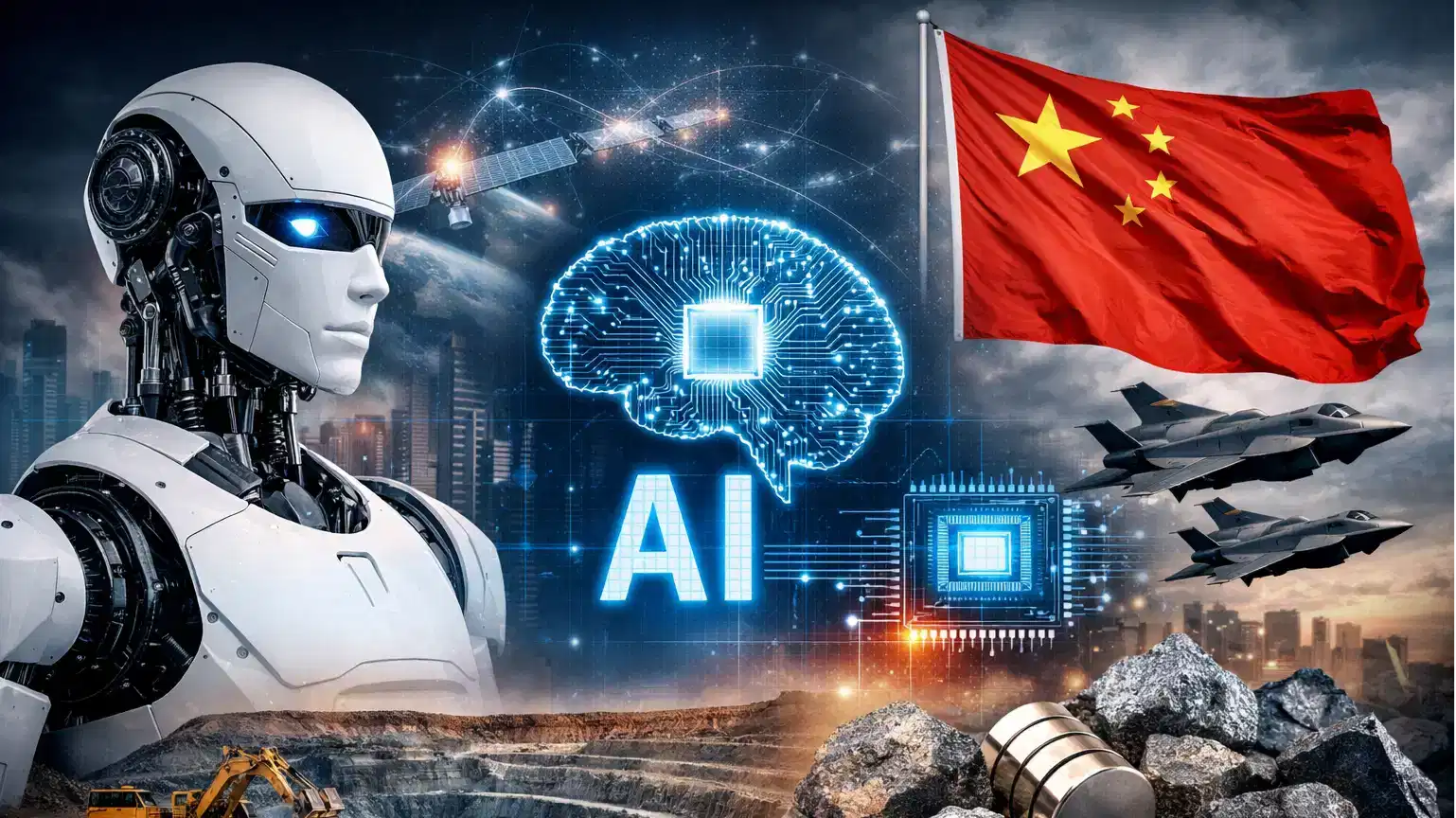
China has outlined an expansive technological and industrial roadmap that analysts say could reshape the balance of power between Beijing and Washington. The strategy, detailed in China’s 15th Five-Year Plan, places heavy emphasis on artificial intelligence, robotics, advanced manufacturing and control over key raw materials needed for modern defence systems.
The document was presented during the annual session of the National People's Congress on March 5. While formally an economic planning document, analysts say it highlights Beijing’s intent to build long-term technological and industrial strength.
Also Read | Coded ‘operational trigger’ message from Iran raises sleeper cell fears in US: Report
Investment analyst Shanaka Anslem Perera, commenting on the plan in a social media post, argued that the blueprint reads less like routine policy planning and more like a strategic effort to shape future global power.
Rare-earth minerals at the heart of China’s leverage
One of the key areas of focus in this strategy is China’s dominance in the global market for rare earth materials, which are used in high-tech electronics, defense equipment, and renewable energy technologies.
China accounts for most of the world’s processed rare earth materials, which are vital for high-tech defense equipment such as Lockheed Martin’s F-35 Lightning II fighter jets. These aircraft need large quantities of these materials for their engines, sensors, and defense systems.
Recently, China introduced strict regulations on the export of these materials and associated technologies. These new regulations include licensing requirements and enhanced compliance measures to help China exert greater control over global supplies of these materials for defense production in countries such as the U.S.
Technology push spans AI, robotics and quantum research
China’s plan also outlines large-scale investment across emerging technologies expected to shape future economic growth.
Artificial intelligence is expected to be integrated across industries ranging from manufacturing to services. Humanoid robotics has been identified as a key industrial sector, with production targets set to double within five years.
The plan also highlights research into space-based quantum communication networks, nuclear-fusion technology and brain-computer interfaces. Officials estimate that industries linked to artificial intelligence could exceed 10 trillion yuan in economic value during the plan period.
Washington’s response focused on semiconductors
The United States has responded to China’s technological advancement with the recently enacted legislation known as the CHIPS and Science Act of 2022, which directed $52.7 billion to increase local chip production through grants, incentives, and tax breaks.
So far, the policy has spurred huge investments in chip production facilities in the United States.
However, experts say China’s plan includes other sectors such as raw materials, robotics, as well as artificial intelligence, as opposed to focusing on a single industry.
Also Read | PM Modi could end Iran-Israel conflict with just 'one phone call'? UAE Envoy makes bold claim
In addition, US military procurement rules are likely to exclude Chinese rare earth materials used in military equipment starting in 2027, which might force suppliers to find alternatives in the coming years.
However, experts say opening new mines as well as processing facilities outside China might take a long time, putting pressure on global supply chains in the short term.