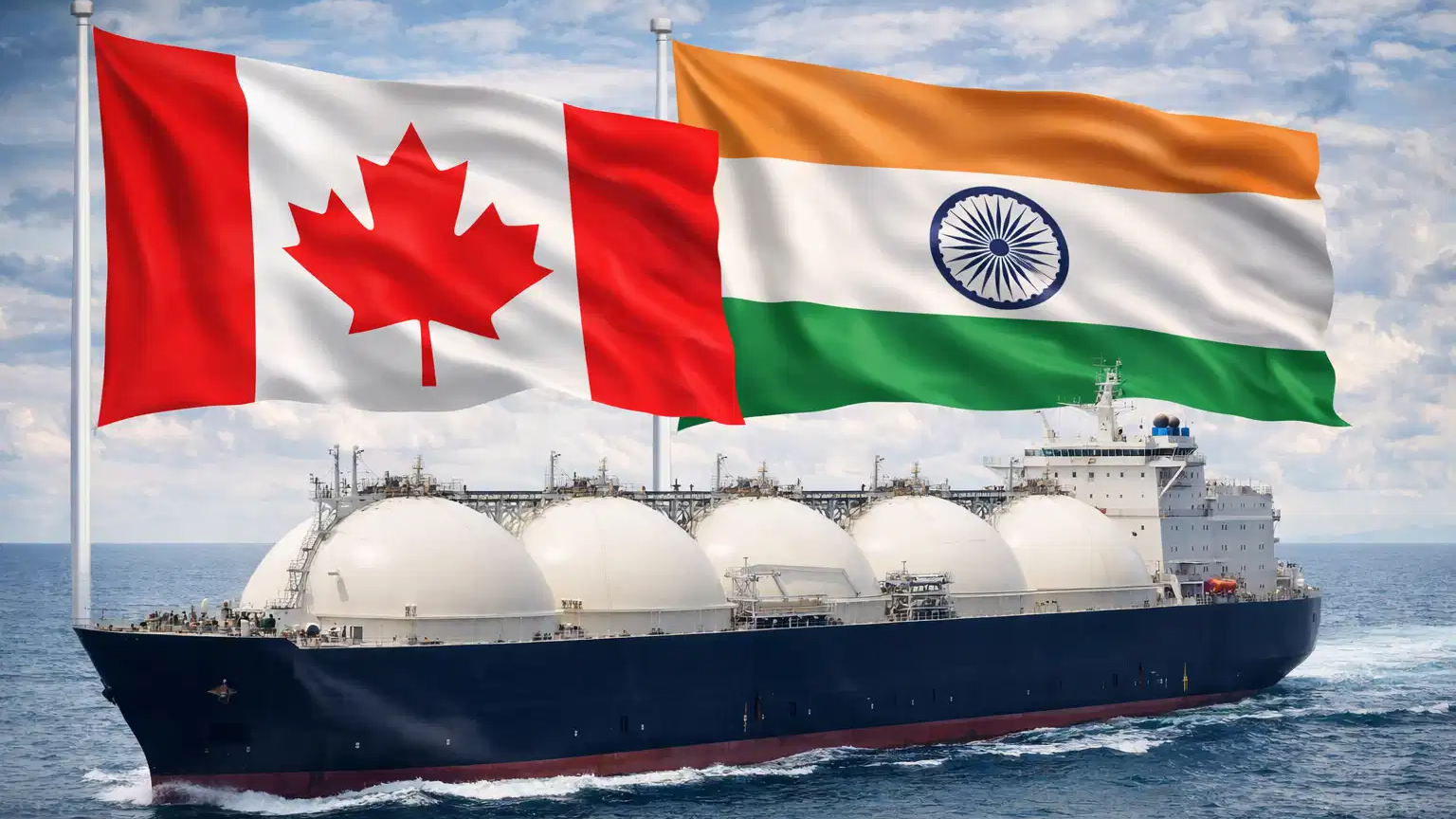
Canada has agreed to provide India with liquefied natural gas as tensions are running high in West Asia, affecting global energy markets.
Mark Carney, in a video message, called Canada an “energy superpower” and announced that Canada is ready to provide India with liquefied natural gas (LPG) to meet India’s ever-increasing demand for energy.
Also Read | California a target for Iranian drone strikes? FBI warns police agencies along West Coast
The announcement comes at a time when India is facing a crisis due to the conflict between Iran and Israel. India is ranked fourth in the world as an importer of LPG. About 60 percent of India’s liquefied natural gas is imported from West Asia.
Why LNG is crucial for India’s energy needs
Liquefied natural gas is a very important part of the energy mix in India. It is a major source of energy for electricity production, industrial processes and manufacturing of chemicals, fertilisers, and paper, among others.
LNG is increasingly being used as a clean and environmentally friendly alternative for heavy transportation and sea routes.
India generates approximately 2900-3000 million metric standard cubic meters of gas per month from offshore fields off Mumbai and the Krishna-Godavari Basin. This domestic production accounts for half of the total gas consumption, while the rest is supplied through imports from Gulf nations and the USA.
Analysts have indicated that diversification of sources will help India avoid any geopolitical tensions that may arise due to a single source of energy import.
Strategic energy cooperation between India and Canada
Earlier in 2026, India and Canada signed a joint statement to strengthen cooperation in the energy sector.
Experts say LNG imports from Canada could help India bypass the Strait of Hormuz, a critical chokepoint through which a large portion of global oil and gas shipments pass. Avoiding this route would reduce the risks associated with regional conflicts and provide greater stability to India’s energy supply.
Canada is also planning to expand its LNG production capacity to 50 million tonnes per year by 2030, which could open opportunities for long-term supply agreements with countries such as India.
Such agreements typically offer more predictable pricing and supply security compared with the global spot market. In addition to LNG exports, Canada has also pledged to supply $2.6 billion worth of nuclear fuel for Indian reactors between 2027 and 2035 as part of a broader $5.5 billion energy partnership, according to officials familiar with the plan.