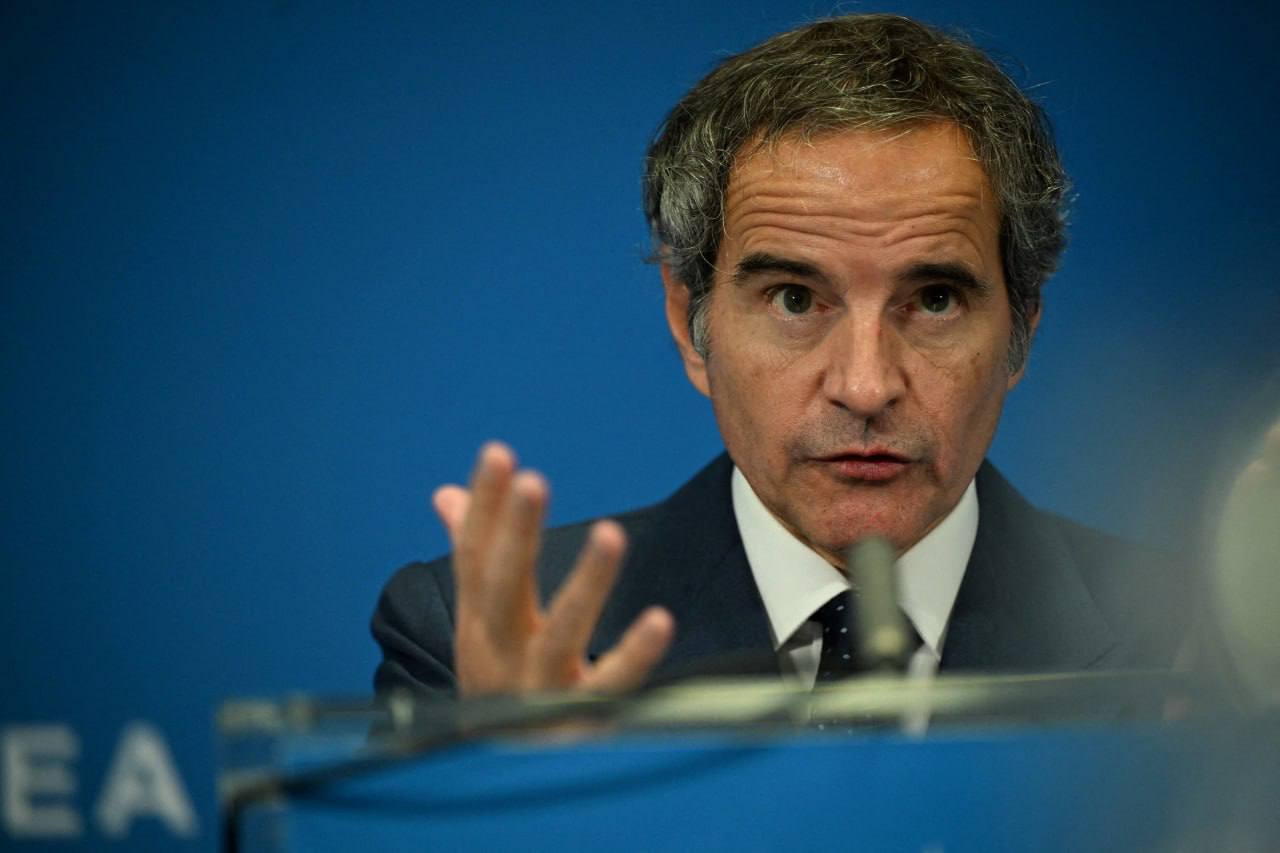
The head of the International Atomic Energy Agency, Rafael Grossi, has said Iran’s promise not to develop nuclear weapons must be backed by “very strong” verification, underlining that the agency cannot rely on political assurances alone as talks continue over a US-Iran understanding.
Speaking in Tokyo on Friday, Grossi said the IAEA would need access to Iranian sites to carry out inspections and verify the status of nuclear material in a dispute that has become one of the most sensitive issues in the negotiations.
Also Read | From India to Europe: Who is sending aid to Venezuela after the deadly earthquakes?
IAEA Director General Rafael Grossi on whether inspectors will be allowed in Iran as part of the MoU:
— Tabz (@TabzLIVE) June 26, 2026
In order to supervise, we need to inspect. There is no other way.
There is an agreement, and to comply with that agreement, the IAEA will have to have access and inspect.
I am… pic.twitter.com/TpScjOWBiM
A promise is only half the tale
Grossi said Iran’s declared intentions were not enough to establish confidence. “The government of Iran has affirmed quite clearly that [developing nuclear weapons] is not their intention, but of course, intentions are not enough,” he told reporters, adding that “in order to have certainty, we need to have a very strong system of verification as soon as practicable.”
He said, “There is an agreement, and to comply with that agreement, the IAEA will have to have access and inspect.”
An excellent exchange with Prime Minister @takaichi_sanae in Tokyo on the growing role of nuclear energy in supporting energy security and economic development, Japan’s interest in fusion, progress in the long-term work at Fukushima Daiichi NPS, as well as developments in Iran… pic.twitter.com/xdtJhgY1My
— Rafael Mariano Grossi (@rafaelmgrossi) June 26, 2026
Between pledges and practicalities
The latest remarks come as the United States and Iran try to build on a memorandum of understanding signed last week, which opens a 60-day period of talks aimed at resolving broader disputes, including the future of Iran’s nuclear program.
Iranian Deputy Foreign Minister Kazem Gharibabadi said on Wednesday that there were no plans to grant access to inspectors at this stage. Tehran wants the issue of access to attacked sites and materials to be addressed “within the framework of a final agreement.”
Grossi described the atmosphere as “a war of statements,” noting that the memorandum indicates the nuclear component will be overseen by the IAEA.
Every gram demands an answer
The monitoring question is especially fraught because Iran has not said how much of its enriched uranium survived the US and Israeli attacks last year or where any remaining stockpile is located.
The IAEA has estimated that Iran held 440.9 kg of uranium enriched to up to 60% before the conflict, a quantity that could be enough for 10 nuclear weapons if enriched further, using the agency’s yardstick.
Iranian officials have rejected the accusations and insist the program is peaceful, while also warning that access to bombed nuclear sites remains unresolved. For Grossi, the immediate priority is not political messaging but on-the-ground verification. “We must verify everywhere,” he said.
Also Read | Can AI stop wildfires sooner? Greece launches four 'fire-hunting' satellites
FAQs
Q1: Why is the IAEA demanding stronger verification of Iran's nuclear programme?
Ans: The IAEA says Iran's pledge not to develop nuclear weapons must be backed by inspections and a robust verification system to independently confirm compliance.
Q2: What role does the IAEA play in monitoring Iran's nuclear activities?
Ans: The IAEA is the United Nations' nuclear watchdog responsible for inspecting facilities and verifying that Iran's nuclear programme remains peaceful.