A major international relief effort was taking shape in Venezuela on Friday after two earthquakes struck the country on Wednesday, leaving widespread death and destruction in their wake.
Authorities said the death toll had climbed to 235, while 4,300 people were injured, as rescue teams and humanitarian supplies began arriving from multiple countries and organisations.
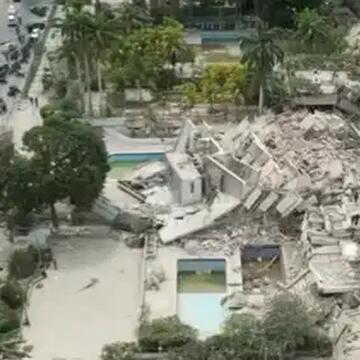
The first quake measured magnitude 7.2 and struck about 160km west of Caracas, followed less than a minute later by a magnitude 7.5 tremor, which the US Geological Survey said was the strongest in the country since 1900. Venezuelan officials also said about 200 people were trapped and 250 buildings were damaged or destroyed nationwide.
Also Read | US citizenship application fee may jump 75%; here's how Indian immigrants could be affected
🚨🇺🇸🇻🇪 Washington is rushing $150 million and military muscle to earthquake-shattered Venezuela.
— Mario Nawfal (@MarioNawfal) June 25, 2026
The State Department announced it will mobilize the aid and stand up a task force to coordinate distribution after the twin quakes that flattened buildings near the coast.
The… pic.twitter.com/Kd3rl1jVwc
Global aid begins to pour in
The United Nations and several governments across the Americas moved quickly to support the response.
UN aid chief Tom Fletcher said, “To the Venezuelan people, to those whose loved ones are under the rubble, know that we are determined that help gets to you,” as the world body joined the search-and-rescue effort.
Venezuela’s acting president, Delcy Rodriguez, said UN-certified rescuers would help search for survivors. In the region, the United States said it was mounting what it described as a “whole-of-government response", with plans to deploy warships, transport planes and helicopters, alongside $150 million in aid.
US Secretary of State Marco Rubio said the response would be “big… fast and… effective". Brazil’s President Luiz Inacio Lula da Silva said his government would send a humanitarian search and urban rescue mission in a KC-390 plane, along with firefighters, specialists, nine tonnes of equipment and a later flight carrying an open-field hospital, water purifiers, medicines and medical supplies.
El Salvador said it had readied 300 rescuers and paramedics, plus 50 tonnes of equipment and supplies, while Cuba said its health workers were already “fully mobilised and providing medical services to the affected population". Mexico said it was dispatching a military team of rescuers and medical personnel, and Colombia said it would send more than 60 rescuers and 12 tonnes of humanitarian aid.
Operation Amistad underway!
— Dr. S. Jaishankar (@DrSJaishankar) June 26, 2026
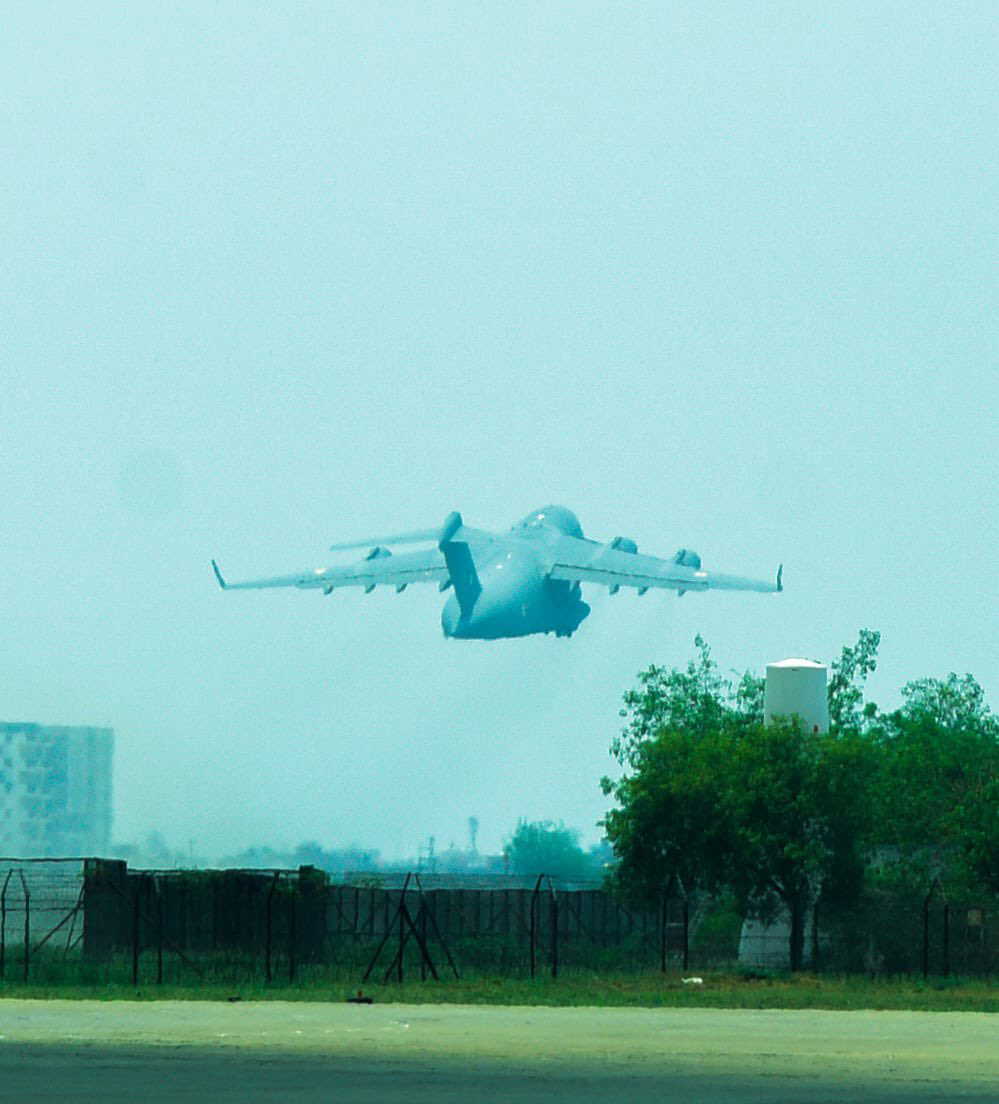
Two @IAF_MCC C17s took-off today for Venezuela with urgent assistance to support their post-earthquake relief efforts.
The assistance contains an Indian Army @adgpi Field Hospital Unit and over 35 tons of relief supplies, medicines and medical… pic.twitter.com/Dcq8P065tp
Europe and Asia join the rescue effort
Help was also coming from Europe and other parts of the world. The International Federation of Red Cross and Red Crescent Societies said it had released $2.5 million to support recovery efforts. The Vatican announced “initial” emergency aid of 100,000 euros.
Türkiye said a 67-member team of search-and-rescue experts, medics and aid workers was due to leave Istanbul on Friday morning, while Spain said it was sending a plane with two government-sponsored search-and-rescue teams and other aid workers to assess needs on the ground.
Germany promised six military transport planes. Switzerland mobilised 80 personnel, rescue dogs and 18 tonnes of equipment. France said 85 rescue workers specialising in search and clearance operations were “being deployed immediately” to Venezuela, and the Netherlands announced a 2 million-euro aid package to fund a search and rescue team.
The Czech Republic said it had assembled a team and was preparing to fly it in. India said it had sent two Indian Air Force aircraft carrying a 41-member medical team, including critical care specialists, trauma management specialists and surgeons, along with 35 tonnes of urgent supplies, a modular field hospital and medical equipment.
China said the government and the Red Cross Society of China would provide emergency humanitarian aid, as well as a rescue team and medical relief.
The scale of devastation comes into focus
The scale of the international response underscored both the severity of the disaster and the strain on Venezuela’s own emergency systems.
The country had already been grappling with frequent power outages, weak public services and hospitals operating below capacity even before the quakes hit. The reporting also noted that sanctions and years of underinvestment have complicated relief work, especially the flow of funds and payments to aid organisations.
Initial assessments released on Thursday estimated the economic damage from the earthquakes at between 1 and 7 per cent of Venezuela’s $111 billion gross domestic product. As rescue crews continued to deploy, officials said the immediate priority remained finding survivors, treating the wounded and getting aid into badly affected areas.
FAQs
Q1: Which countries have pledged aid to Venezuela after the earthquakes?
Ans: The United States, Brazil, India, Mexico, Colombia, France, Germany, Spain, China, Turkiye, Switzerland, the Netherlands, Cuba, El Salvador and several international organisations have announced aid or rescue support.
Q2: How severe was the Venezuela earthquake disaster?
Ans: The twin earthquakes killed at least 235 people, injured around 4,300 and caused widespread damage to buildings, prompting a large international humanitarian response.