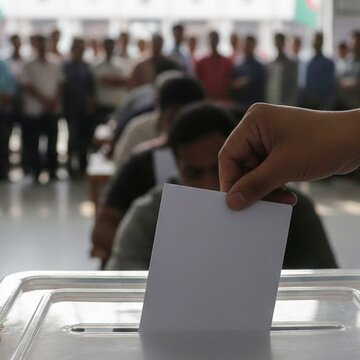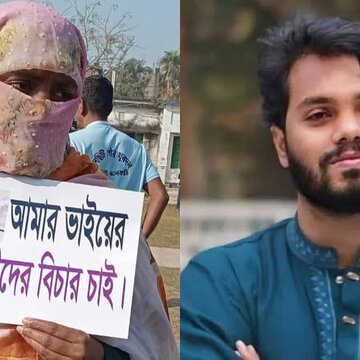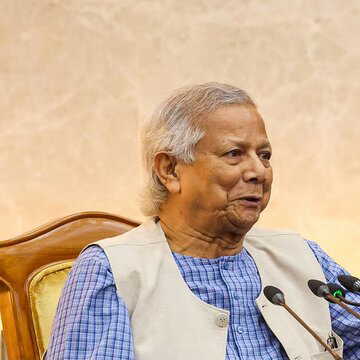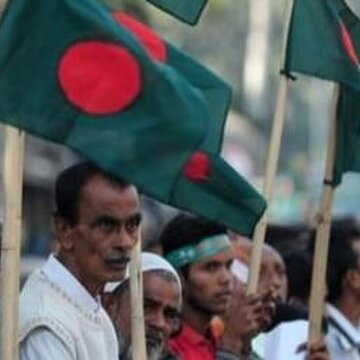
Bangladesh has begun its polls today, on February 12, 2026, marking the first general election in the country in over a year and a half since the violent protests that led to the ousting of former Prime Minister Sheikh Hasina. Since then, the country has been ruled by an interim government headed by Muhammad Yunus, who is currently serving as the Chief Advisor.
In addition to the election, Yunus is presiding over a referendum on the July Charter. Based on the 2024 protests, the July Charter is based on the recommendations of the Constitution Reform Commission, which has recommended anti-corruption policies, electoral reforms, and other policies to eradicate the “autocratic structures” of politics in Bangladesh.
When is voting scheduled?
Approximately 127 million registered voters are expected to cast their votes for 1,981 candidates. Voting has already started from 7.30 am and will continue till 4.30 pm today. Vote counting will begin at 4 pm on the same day, with the Election Commission announcing the results in the early hours of February 13.
Also Read | Bangladesh Elections 2026: What do opinion polls suggest for Yunus?
How many seats are at stake?
The Jatiya Sangsad, or the Parliament of Bangladesh, has 350 seats, with a five-year term. Of these, 300 are directly elected. The remaining 50 seats are reserved for women and allocated to parties and alliances based on their electoral performance.
The majority mark stands at 151 seats. Any party or alliance of parties meeting the threshold will get the power advantage.
Key parties and alliances
The election is centred around two main blocs. The Bangladesh nationalist party, under the leadership of Tarique Rahman, is at the head of a ten-party alliance. On the other hand, Jamaat-e-Islami Bangladesh (JIB), under the leadership of Shafiqur Rahman, is at the head of an alliance of eleven political parties, including the National Citizen Party (NCP), formed from the July protests.
Other major players include Islami Andolan Bangladesh, which separated from JIB, and the Jatiya Party, which is operating independently. Its president, GM Quader, presides over the 18-party front known as the National Democratic Front (NDF).
The Democratic United Front (DUF), led by Kazi Sajjad Zahir Chandan, includes the Communist Party of Bangladesh and the Socialist Party of Bangladesh.
The seat allocations have placed the BNP at 288 seats, the alliance formed by the JIB at 298 seats, and Islami Andolan at 253 seats. A survey carried out by the International Republican Institute based in the US has shown that the BNP is narrowly ahead, with 33 per cent of respondents voting for them, just a hair’s breadth ahead of Jamaat.
Also Read | Bangladesh Election 2026: Voting today, timings, voters, parties and results - here's all you need to know
Key constituencies to watch
BNP Chief Tarique Ahmed Rahman is contesting from Dhaka-17 after a 17-year exile. BNP Secretary General Mirza Fakhrul Islam Alamgir has filed his candidacy for the Thakurgaon-1 seat.
JIB chief Shafiqur Rahman is also in the run from Dhaka-15, while Mia Golam Porwar, who is the General Secretary of JIB, is running from Khulna-5. A Hindu contestant sponsored by JIB, Krishna Nandy, has entered from Khulna-1.
The Jaitya Party chief GM Quader is contesting Rangpur-3, and Secretary Barrister Shamim Haider Patwary is contesting Gaibandha-1 and Gaibandha-5.
Among constituencies, Dhaka-12 tops the list with 15 candidates, while Ghazipur-2 has the highest number of voters at 804,333. Traditionally, the areas of Gopalganj-3 and Faridpur have voted for the Awami League. The Parbatya Chattogram Jana Samhati Samiti is contesting in all the Chittagong Hill Tracts constituencies.