As Bangladesh is set to conduct its first-ever elections since the ousting of then-Prime Minister Sheikh Hasina and her Awami League party in 2024, the country’s neighboring nations of India, Pakistan and China are taking a keen interest.
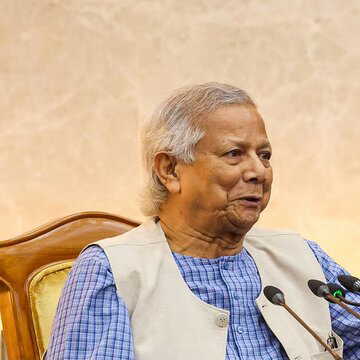
Currently, Bangladesh is being ruled by an interim government headed by Nobel laureate Muhammad Yunus. The two leading political parties vying for power in today's elections are the Bangladesh Nationalist Party (BNP) and the Jamaat-e-Islami (JIB), both of which kicked off their campaigns in late January.
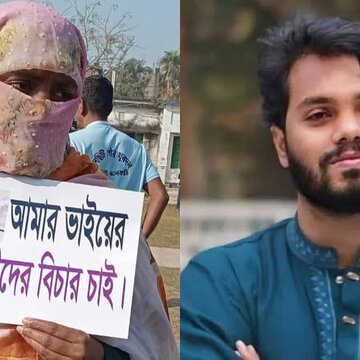
The Awami League, which has traditionally enjoyed strong links with India, has been banned from contesting in these elections for its brutal crackdown on student-led protests in 2024. Hasina, 78, who is currently in exile in India, was found guilty of allowing the use of deadly force against the protesters, of whom 1,400 were killed in the violence.
Also Read | Bangladesh elections 2026: 7 game-changing factors in the high-stakes polls you should know
Hasina was tried in absentia by the International Crimes Tribunal (ICT) in Bangladesh in November last year and was given the death sentence, but India has thus far refused to extradite her. Since her removal, political analysts say Bangladesh's geopolitical positions have changed significantly.
"Bilateral relations with India have witnessed a historic low in contrast to a warm rapprochement with Pakistan. Furthermore, strategic ties with China have deepened significantly," Khandakar Tahmid Rejwan, lecturer of global studies and governance at the Independent University, Bangladesh, was quoted as saying by Al Jazeera.
"Hasina's 15-year tenure was marked by several key features that defined the foreign and security policy of Dhaka in terms of external engagement. Significant among these features were developing a close and holistic bilateral tie with India; strategic negligence and diplomatic isolation in terms of bilateral relations with Pakistan; and maintaining a strong but calculated defence, trade, and infrastructure development partnership with China," he added.
"This predictive and patterned alignment of Dhaka has now been reversed with respect to India and Pakistan or revised with respect to China," he said.
India-Bangladesh relations
Until the fall of Hasina, India had a significant perception of Bangladesh as an important strategic partner and ally in the context of ensuring security in South Asia.
India is also the biggest trading partner of Bangladesh in Asia. During the period from April 2023 to March 2024, until the fall of Hasina, India supplied goods such as textiles, tea, coffee, auto parts, electricity, agriculture, iron and steel, and plastics to Bangladesh to the tune of $11.1 billion and imported readymade garments, leather, and leather products, among other commodities, to the value of $1.8 billion.
However, since Hasina fled to India, both nations have imposed curbs on each other's exports, from land and sea routes, owing to the tension between them.
Also Read | Bangladesh Elections 2026: After Hasina's ouster, Bangladesh faces crucial test at ballot
Michael Kugelman, senior fellow for South Asia at the Atlantic Council, told Al Jazeera that when Hasina was ousted, India bore the brunt of a strategic loss and has been very uncomfortable with the interim government.
"New Delhi felt that it [Bangladesh] was heavily influenced by Jamaat and other religious actors that, in India’s view, threaten its interests," he stated.
How does India view these polls?
According to Kugelman, "India is hoping that this upcoming election will produce a government that is willing to engage with India and will not be influenced by the types of actors that India feels threaten its interests."
"Any government coming to power in Dhaka will find it difficult to neglect its largest neighbour and a regional power like India for the sake of mutual interest regarding nontraditional security threats, trade and food security, cultural and human ties," he added.
"It is easy to give inflammatory and popular rhetoric against India when you are competing for votes, but when you are in government, the populist posture ultimately changes while dealing with a powerful and influential neighbour."
Kugelman said India will probably worry about political and security issues if JIB wins the election. However, India would feel "comfortable" with a BNP-led government.
"Today's BNP no longer has an alliance with Jamaat, and the party has expressed its interests about wanting to engage with India," he noted.
"I think that India will be ready to pick up the pieces of what has been a shattered relationship with Bangladesh. … It obviously would have preferred the Awami League to be leading the next government. But India also recognises that the Awami League is not going to be a political factor for quite some time and is not going to try to push for ways to bring the Awami League back into the mix. It would accept a government led by the BNP and would be willing to work with it," Kugelman added.
China and Bangladesh
The influence of China in South Asia has been increasing in recent years, and the country has been trying to enhance its military and economic relations with Bangladesh.
Also Read | Nahid, Tasnim, Sarjis: Where are the Gen-Z protest leaders as Bangladesh votes tomorrow?
Although China supported Pakistan during the Bangladesh liberation war in 1971, since 1975, the two countries have been diplomatic partners, and China has been maintaining good relations with Bangladesh regardless of the political regime in place.
During the Hasina regime, several economic agreements were signed between the two countries. This has continued in the Yunus regime, which has been able to attract around $2.1bn in Chinese investments, loans, and grants and has urged more investment from the second-largest economy in the world in Bangladeshi infrastructure.
China has also promised to help Bangladesh cope with the entry of refugees into Cox's Bazar, where hundreds of Rohingya refugees have escaped persecution in Myanmar, putting pressure on Bangladeshi infrastructure.
"China has been pragmatic and realistic about Hasina's ouster," Independent University's Rejwan was quoted as saying by Al Jazeera. "Beijing warmly welcomed the formation of the interim government and was one of the first external partners to extend all kinds of support under the new political realities in Bangladesh."
"Due to this Chinese charm offensive, the interim government in Dhaka further bolstered the existing bilateral cooperation with Beijing," he added. "Indeed, it can be said that the Sino-Bangladesh relations were strong during Hasina's regime and even stronger under the current interim administration, and are perceived to remain as so irrespective of whoever comes to power in Dhaka after the election," he added.
China taking active interest in polls
According to an Al Jazeera report, China seems to be showing significant interest. Over the past year, Chinese leaders have been engaging with leaders from Bangladesh's political parties in preparation for the elections.
In April last year, a senior delegation from the Chinese Communist Party met with a group from the Jamaat. In June, Chinese Vice Minister of Foreign Affairs Sun Weidong met BNP secretary-general Mirza Fakhrul Islam Alamgir. The upcoming elections were a topic of discussion in both meetings.
Kugelman noted that China will closely observe the elections, seeing Bangladesh as an important partner for trade and investment. "For Beijing, political stability in Dhaka is key due to its investments in the region. Beijing wants to ensure that the law-and-order challenges and other security concerns in Bangladesh would not impact Chinese interests on the ground," he said.
Also Read | Bangladesh Elections 2026: First vote after Sheikh Hasina’s ouster, what’s at stake?
Rejwan said the upcoming elections are important for China. Bangladesh has strategic influence over South Asia, which has long been viewed as India's area of influence.
"Unlike India, China has not interfered in Bangladesh's domestic politics. It has historically kept close ties with political parties like BNP and JIB, even during the height of Hasina’s rule," he said.
When it comes to the election results, Rejwan mentioned that China does not have any clear favorites. "Whoever wins the majority, it will give its full support to that regime and, side by side, will maintain interaction with other major political parties. Beijing prefers inclusive rather than exclusive interactions with all the political players in Bangladesh," he said.
Pakistan-Bangladesh relations
Since Hasina’s ousting, Pakistan’s relationship with Bangladesh has become warmer.
In 2024, Pakistani Prime Minister Shehbaz Sharif met Yunus twice to strengthen military and diplomatic ties. In September of last year, Pakistani Foreign Minister Ishaq Dar visited Dhaka to rebuild a relationship that had been damaged since Bangladesh's 1971 war of independence with Pakistan.
"Pakistan primarily wants to develop closer bilateral ties by extending its defense and cultural diplomacy with Bangladesh," said Rejwan from Independent University.
"This is because, in reality, given its own economic challenges, it has very little to offer to Bangladesh in terms of trade and investment. By doing so, it wants to raise India's security concerns to its east by developing close strategic ties with Dhaka."
'Pakistan would most prefer a Jamaat government'
According to Kugelman, Pakistan will be pleased with either of the two main parties winning in the upcoming elections. However, a JIB victory would be the best outcome.
"Pakistan would clearly be the only regional player that would most prefer a Jamaat government," he said.
"If we see a BNP-led government, I think Pakistan would be okay with that," he said.
But he warned that Islamabad would be eager to ensure that the BNP does not try to repair Bangladesh’s ties with India.
"That would reduce Islamabad's recent efforts to build a better relationship with Bangladesh."
Also Read | Bangladesh elections: Half of voting centres marked 'high-risk' ahead of polls
Still, Rejwan pointed out, "If Jamaat comes to power, there is a high chance that, despite having close ties with Islamabad, they might also seek to understand New Delhi for their own interest rather than being openly confrontational," he said.
"BNP, in contrast, will keep all channels of cooperation open with Pakistan but will not heavily favor Islamabad. BNP's policy is straightforward; it's Bangladesh first, meaning national interest comes first. This means avoiding alignment with a foreign power and, instead, balancing relationships with a range of external partners," he added.