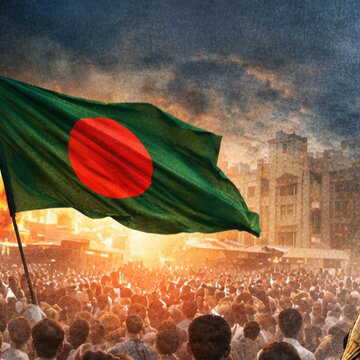
Since 1971, Jamaat-e-Islami has long been regarded as a taboo name in Bangladesh’s political landscape. In the aftermath of the 2024 mass uprising, however, the once anti-Independence force appears to be re-emerging as a significant political reality.
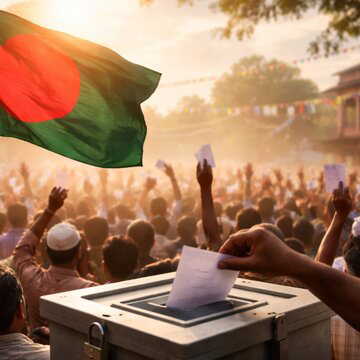
As Bangladesh heads into its 13th national election, a pressing question weighs on many observers at home and abroad: Is Jamaat-e-Islami poised to come to power? Regardless of the electoral outcome, can its growing influence be overlooked?
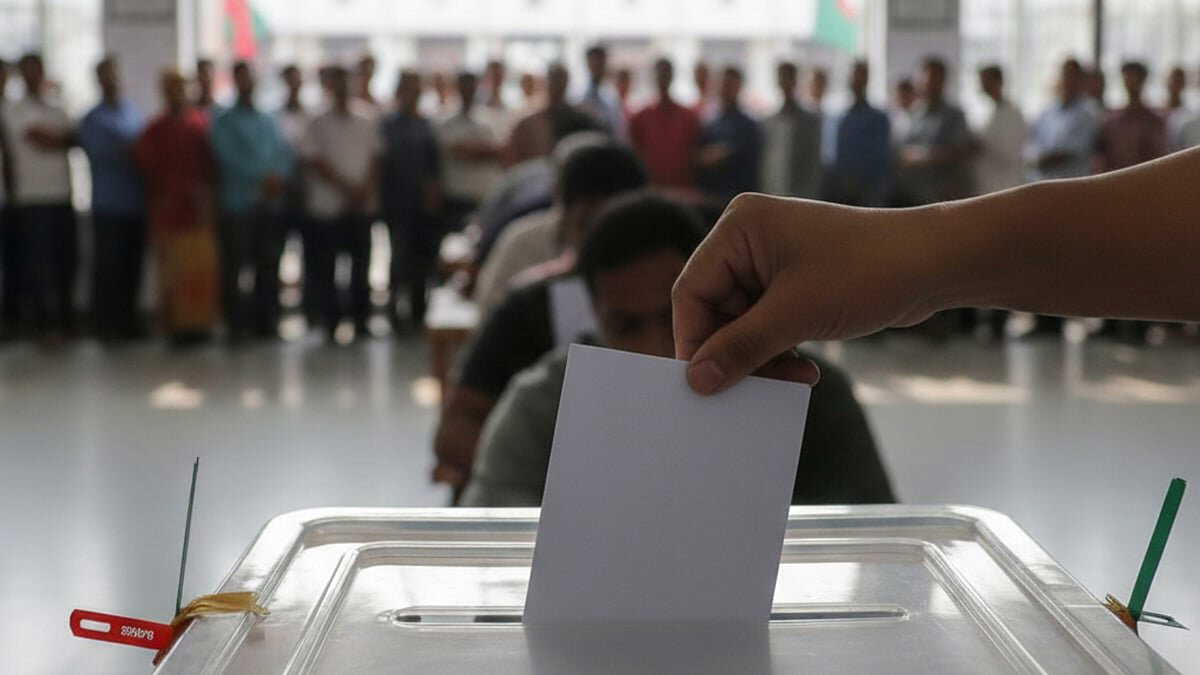
Thursday’s national vote will also coincide with a referendum involving pink ballots. Should the ‘Yes’ vote prevail, the 1972 Constitution, rooted in the ideals of the Bangladesh Liberation War, could undergo sweeping changes, reportedly through at least 84 proposed amendments.
A Liberation War historian, currently in hiding with 14 allegedly false murder cases filed against him and who requested anonymity, described Thursday as a decisive and ominous turning point. A respected intellectual who says he has fought communalism throughout his life, he warned, “Thursday marks the twilight of a critical historical moment. On one side, pro-Pakistan extremist forces are preparing to seize power, cloaked in gentle, civilised, people-friendly masks. There should be no misplaced doubt about how much, or how long, the BNP, which has historically compromised with Jamaat, will be able to resist what could become a profound national setback. And under the guise of a referendum, we stand on the verge of losing our proud Constitution. People understand they are being misled, yet feel powerless to stop it.”
ALSO READ | Bangladesh Election 2026: Voting today, timings, voters, parties and results - here's all you need to know
Even two years ago, speaking in favour of Jamaat-e-Islami in Bangladesh was uncomfortable. In that same Bangladesh, on Wednesday before the vote, at Dhaka's 'Secretariat' metro station, which evoked memories of COVID-era shutdowns due to the government's order to stop vehicle movement, a woman was heard telling her young companion, "A Jamaat government would be right to compete with India. We have seen the BNP. They talk a lot but don't keep a single promise." The young man said in a low voice, "But Jamaat was opposed to the liberation war, a pro-Pakistan party." With a gesture of shooing away a fly, the woman said, "1971 has long passed. We need Pakistan now to keep India in check." The young man said, "Speak softly, everyone is listening." The couple quickly moved away.
The behaviour of Jamaat's senior and mid-level leaders now shows signs of responsibility. At a press conference on Wednesday morning, a foreign journalist asked, "Who will be the Prime Minister?" In response, party spokesperson Ehsanul Mahbub Jubayer pointed to the sky and said, "Allah knows." Concerns about women's safety under a Jamaat government arose in one journalist's question. Jubayer's assurance, "Unnecessary apprehension. We will ensure maximum security for women."
Relations with India... The Jamaat spokesperson intercepted the question and floated an answer, "We want peaceful and harmonious relations with all countries in the world, including India. No one is our enemy. Everyone is a partner on the path of development. But there must be due dignity in that friendship." Coming out of the press conference, an Italian journalist laughingly asked, "Weren't all the answers quite arranged? Didn't it seem like memorised recitation?"
Bangladesh markets eye BNP vs Jamaat outcome
Distinguished investment banker Debabrata Sarkar explained, "Jamaat considers the stock market haram. Investment in shares is a sin. There is no mention of the stock market in their manifesto. But the BNP has said that if they come to power, they will bring the market under rules and discipline. They have also announced several industry-friendly measures. So the market wants BNP's victory."
Debabrata, a former CEO of a commercial bank, says, "Looking closely at all parties' manifestos, I noticed something strange. Many things in Jamaat's manifesto remind me of Narendra Modi's manifesto."PM Modi had said, "Na-khaunga, na khane dunga" (Won't eat, won't let others eat). Jamaat's Amir Shafiqur Rahman, opposing corruption and extortion, said, "Won't take bribes, won't let others take them either!" The development blueprint that Jamaat's Amir has given in the manifesto, if they come to power, clearly bears the shadow of the BJP-this is Debabrata's opinion.
While talking, Debabrata's face lit up reading a notification on his phone. He says, "Dhaka University's Vice-Chancellor is resigning. There's no bigger clue for the stock market! Do you understand anything?" Removing expensive goggles from his eyes, Debabrata clarifies, "He is known as a Jamaat insider. No doubt he made this decision sensing the wind."
ALSO READ | Bangladesh elections 2026: How India, China and Pakistan view the high-stakes vote
A series of incidents on the final day of campaigning has put Jamaat-e-Islami on the defensive, denting its claims of anti-corruption and integrity. On Wednesday, several Jamaat leaders were detained on allegations of distributing large sums of money.
In Saidpur, Belal Uddin Pradhan, Amir of Thakurgaon district Jamaat, was reportedly held at the airport with Tk 74 lakh in cash. In Sylhet, a male Jamaat worker was allegedly caught distributing money while wearing a burqa. Similar allegations surfaced in Sirajganj and Noakhali, where local Jamaat leaders were detained for allegedly handing out cash to voters.
Later in the evening, the BNP claimed that money was also distributed at a centre linked to the Jamaat Amir in Dhaka. Following this, residents reportedly detained Jamaat’s Naib-e-Amir Mohammad Habib at Sutrapur police station on accusations of distributing cash. A mobile court subsequently sentenced him to two days in jail.
At an urgent press conference, Jamaat spokesperson Jubayer dismissed the allegations as baseless. Regarding the Saidpur incident, he claimed the seized cash was business-related and accused the administration and the BNP of conspiring to obstruct Jamaat. The BNP, however, countered that the incidents exposed what it described as Jamaat’s “true character,” alleging that its claims of honesty were merely a facade.