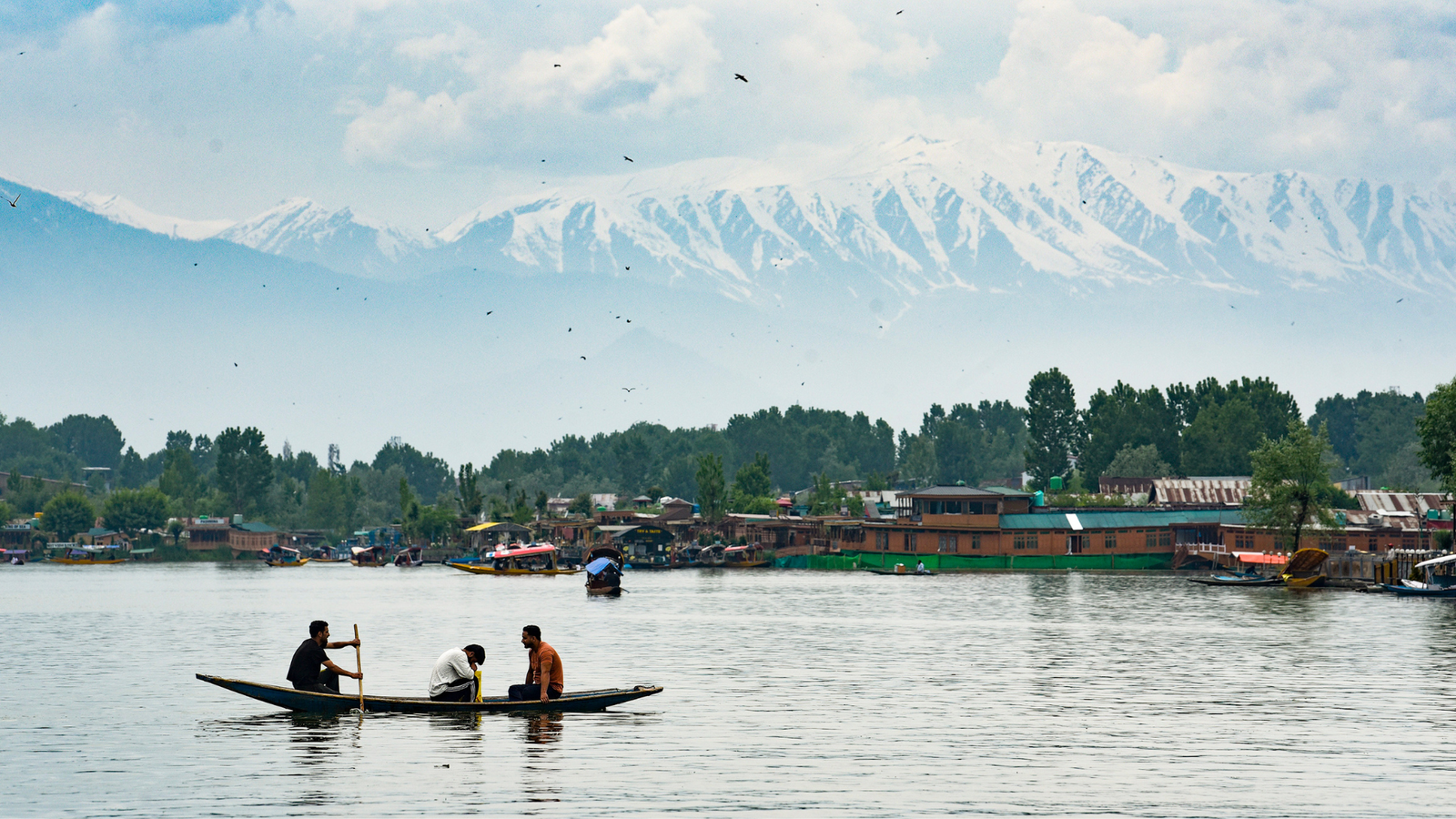
Kashmir’s natural landscape has undergone a major change over the past six decades. Official records from 1967 listed 697 natural lakes across the region. A recent report by the Comptroller and Auditor General (CAG) of India shows that the number has now dropped to 282, indicating a steep decline.
The findings point out that 315 lakes have completely disappeared. In addition, 518 lakes have suffered serious degradation, with many losing their ecological balance. According to geologists, nearly 3,000 hectares of water bodies have been lost due to encroachment, administrative gaps, and a lack of coordination at multiple levels.
Iconic lakes face growing risks
Several lakes that are central to Kashmir’s tourism identity are also under pressure. These include Dal Lake, Wular Lake, and Manasbal Lake, along with Gangabal Lake, Vishansar Lake, and Gadsar Lake. Researchers say that none of these lakes can be considered entirely secure at present.
Also Read | Why are snake sightings rising in Kerala? Here's what you need to know
Widespread shrinkage highlights extent of lake loss
The audit, covering 2017 to 2022, details the scale of the damage. The lakes that have vanished accounted for 1,537 hectares. Meanwhile, 203 lakes have reduced in size, together losing 1,314 hectares. Overall, the affected lakes have seen a reduction of 2,851 hectares.
The report notes that this decline has impacted biodiversity, ecosystem stability, and the services these water bodies provide. At the same time, 150 lakes have shown some increase in size, while 29 have remained unchanged.
Researchers flag growing risks to Kashmir’s lakes
Scientists from the Wadia Institute of Himalayan Geology have highlighted a key concern. According to the audit, 63 lakes in the Kashmir Valley have already lost more than half of their water area, placing them close to disappearance.
Most lakes fall under multiple departments, including forests, land and revenue, and agriculture. Of the lakes that have vanished, a large share was managed by land, revenue and agriculture departments, with the rest under forest authorities. Experts have pointed to weak coordination and limited conservation focus as major issues.
Also Read | Why El Niño could trigger heatwaves, weaker monsoon and water stress in India this year?
Limited conservation push leaves many lakes unprotected
Protection measures have largely been confined to a small number of lakes such as Dal, Wular, Hokersar, Manasbal, Surinsar and Mansar. Lakes like Gangabal, Vishansar and Gadsar are still outside the conservation framework.
Between 2017 and 2022, only about 1 per cent of Jammu and Kashmir’s budget, amounting to ₹561 crore, was allocated for these lakes. The report indicates that key aspects such as monitoring water capacity, biodiversity checks, pollution control, desilting, weed removal, and public awareness did not receive adequate attention.
The findings underline growing pressure on Kashmir’s water bodies. With several lakes shrinking or disappearing, the region’s ecological balance and biodiversity face increasing challenges, raising concerns about the long-term sustainability of these natural resources.