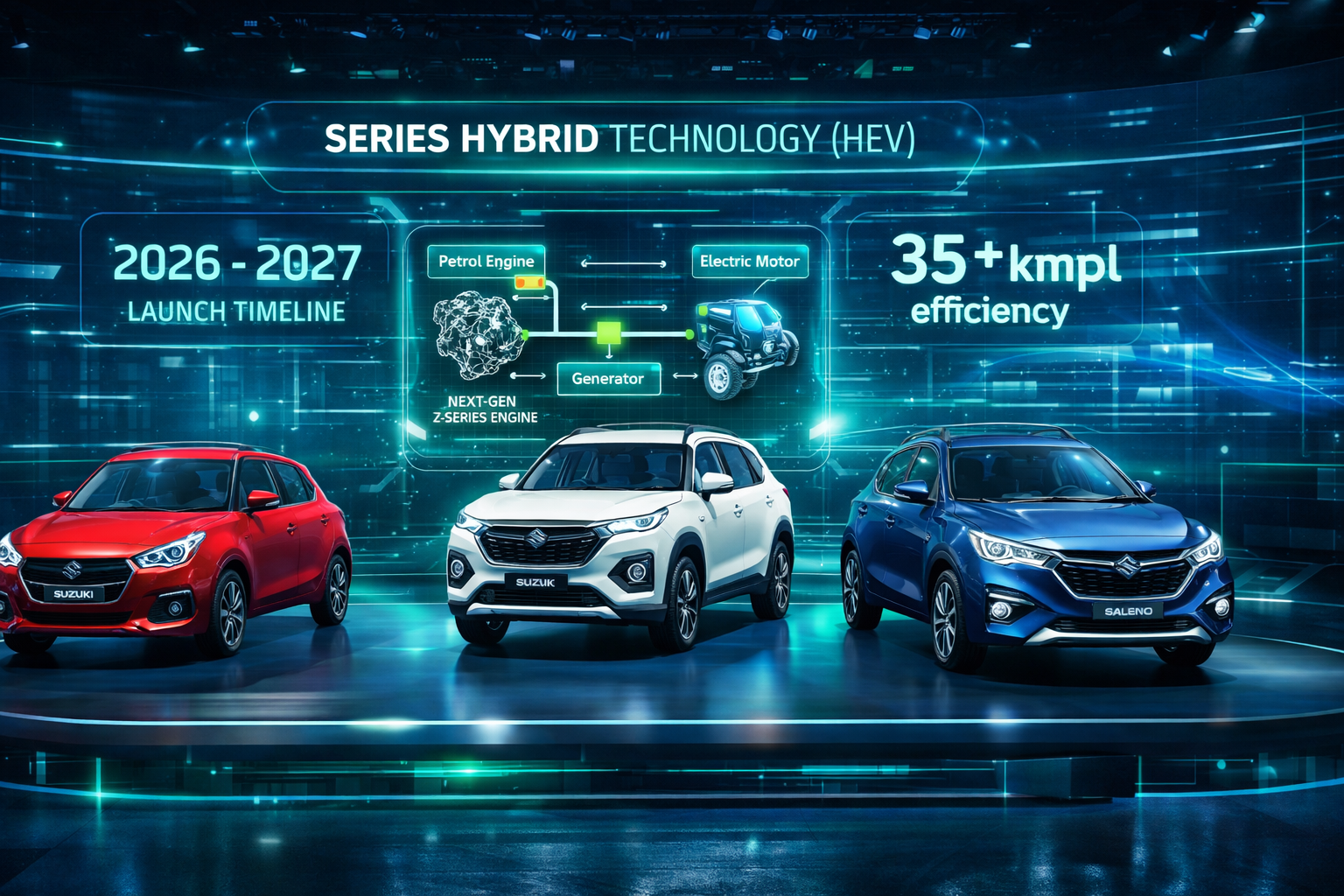
Maruti Suzuki is developing a new series hybrid (range extender) technology, which is different from its current strong hybrid systems. In this setup, the wheels are powered only by an electric motor, while the petrol engine acts as a generator to charge the battery.
Fronx to debut new hybrid tech, rollout begins soon
The first car to get this technology will be the Fronx, which is expected to launch with the series hybrid system very soon, possibly within the current phase of rollouts. This will mark the beginning of Maruti’s large-scale push into affordable hybrid mobility. This new system is expected to deliver very high fuel efficiency (around 35 kmpl) along with smoother and quieter driving, similar to an electric vehicle.
Also Read | Lamborghini to launch two new cars in 2026, electric plans see major shift
More models to follow between 2026 and 2027
After the Fronx, Maruti Suzuki plans to expand this technology across its popular models. Cars like the Swift, Dzire, Baleno, WagonR and Ignis are expected to receive the series hybrid system in the next phase. Most of these launches are likely to happen between 2026 and 2027, as part of a wider strategy to shift towards hybrid and electric mobility.
Also Read | Royal Enfield Himalayan 450 ‘Phantom’ revealed: Rally-ready beast built to go further and harder
The Swift, Dzire and Baleno are expected to get this technology around 2027, while other small cars could follow depending on market demand and production readiness. This rollout shows that Maruti is focusing on hybrids as a more practical alternative to fully electric vehicles in India, especially for mass-market buyers. The company aims to offer better mileage, lower emissions and an EV-like driving experience without the need for charging infrastructure.