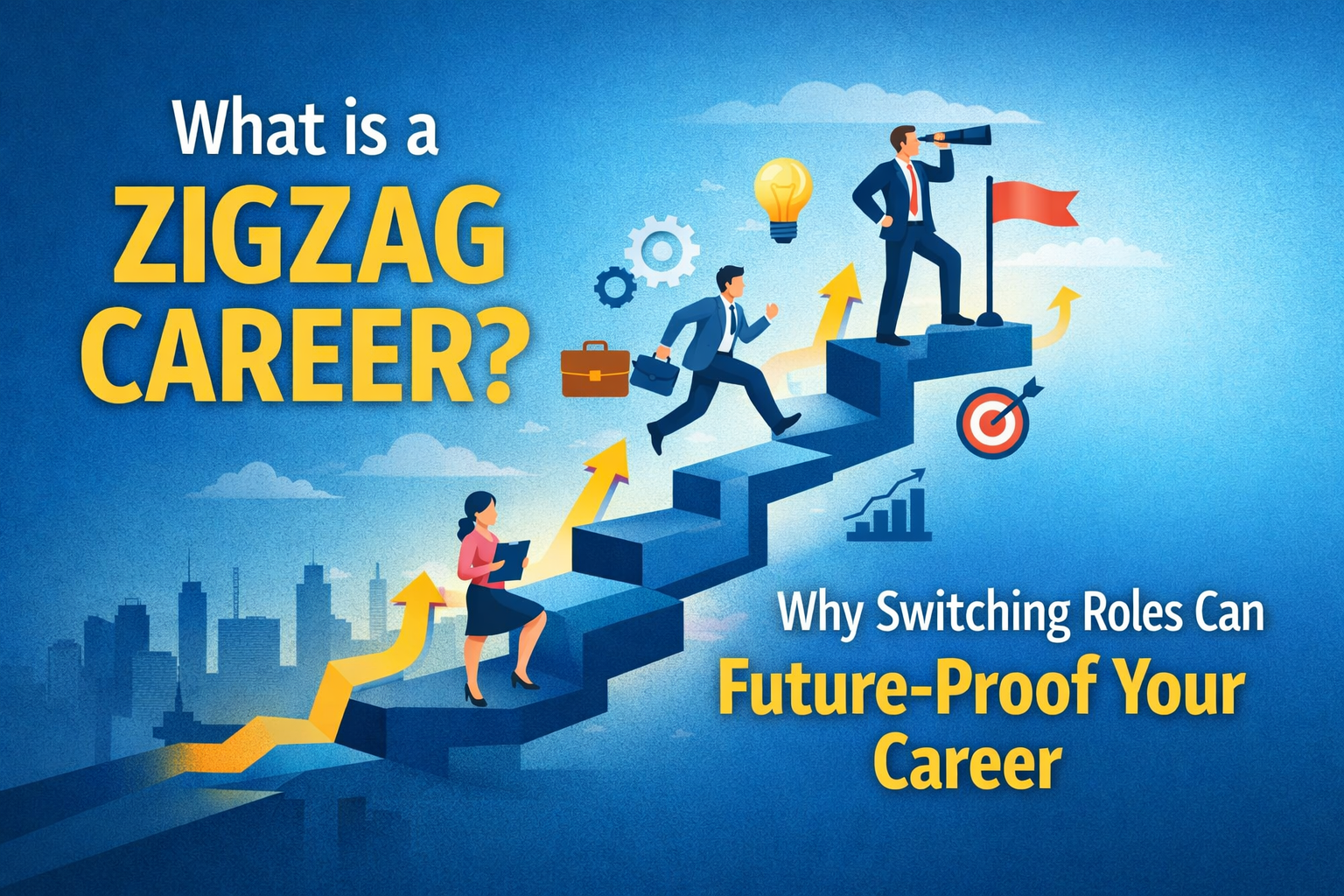
The notion of a linear, single-track career is gradually becoming less applicable as workplaces change with the advent of automation and AI. Instead, a more flexible model, referred to as a “zigzag career,” is gaining popularity. A zigzag career, in essence, is a career where an individual moves across different fields or skill sets, as opposed to a linear career where they move forward in a single field. For example, an individual could move from an engineering career to a writing career, or from a design career to a product management career. This trend is a part of a larger paradigm shift in terms of how careers are being created in an economy where job roles are constantly in a state of flux.
Why traditional career paths are weakening
Traditionally, the dominant model encouraged deep specialisation and long-term stability in one field. But this model is being challenged. In the current context of automation replacing routine jobs and companies undergoing structural changes with greater frequency, even established positions, especially at the junior and middle levels, are no longer as secure. Moreover, skills that were considered to ensure long-term job relevance can turn obsolete in no time. This is where the importance of adaptability comes in. Those with narrow specialisation in one particular field can find themselves becoming redundant if the field changes or disappears.
Range becoming more valuable than specialisation
Professionals who have worked in different fields tend to have the ability to connect ideas and transition from one role to another easily. Experts have indicated that zigzag careers are difficult to replicate in an automated work environment. While a machine may be able to do a number of specialised tasks efficiently, it is not able to think contextually based on different experiences. Professionals with different skill sets are considered essential in a changing work environment.
Also Read | Is your lifestyle raising your blood pressure? This small change could make a big difference
Growing trend in India’s job market
This is because the rise of the gig economy and project-based hiring in the country has further fueled this change. Professionals in the country can now take up several roles and projects in addition to their main jobs. This is changing the way people view careers, with many people now being able to change domains as opposed to being confined to one path. This change is not planned, with many people finding themselves “zigzagging” as they take up new roles, tools, and skills.
Also Read | Are dating apps losing charm? Study shows Indian youth growing tired of swiping
A shift in the way careers are defined
A zigzag career is not the same as being directionless. It is actually the opposite. It is the willingness to change with the times. This is because, with the changing nature of industries, the stability of careers is no longer about being in one role, but about being able to learn and change with several domains.