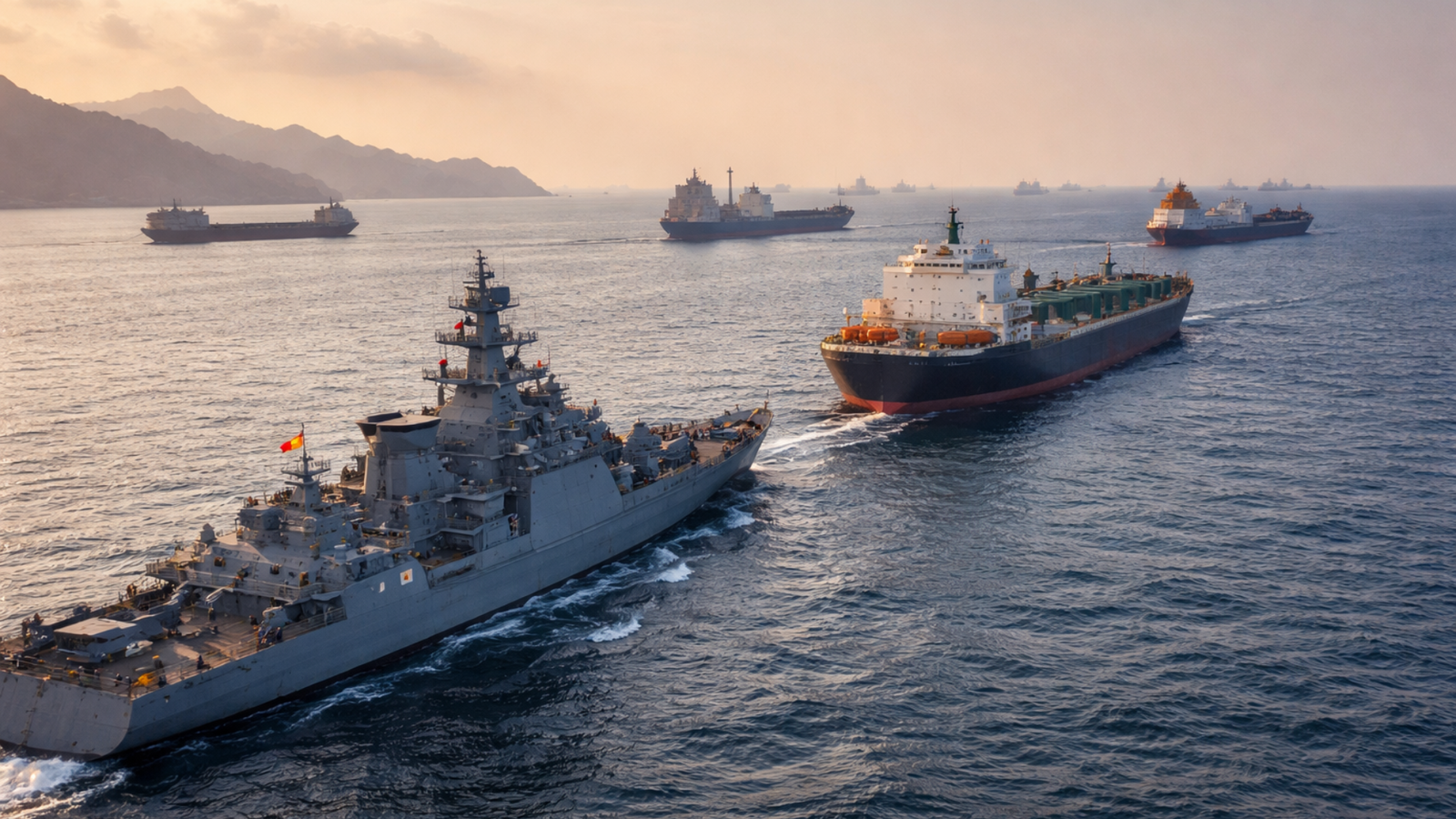
India is considering options to safely escort its merchant vessels out of the crisis-hit Strait of Hormuz due to the rising tensions between the US-Israel alliance and Iran, which has disrupted maritime traffic through one of the world’s most vital oil routes.
A senior maritime regulator said discussions are underway at the highest levels to ensure the safety of Indian ships currently stranded in and around the region.
According to officials, 36 Indian-flagged vessels are currently present in and around the Strait of Hormuz and adjoining waters. While all of them remain safe and well-supplied, none has been able to transit the narrow passage so far due to the security situation, PC Meena, deputy director general (crew) at the Directorate General of Shipping, who heads the government’s core response team monitoring the situation, said.
Government reviewing escort options
PC Meena also said that the authorities are actively exploring ways to assist the vessels.
Also Read | What is the 'WTF' moment between the US and Israel amidst its conflict with Iran?
“Discussions are on at the highest level on various options to help them navigate out of the region safely, including the option to escort India-flagged assets out of the area. Nothing has been finalised so far,” Meena added.
Iranian forces have threatened to attack tankers in the Strait of Hormuz, a strategic waterway that carries roughly a quarter of the world’s seaborne crude trade. The warnings have slowed movement through the route and raised concerns among shipping operators.
Ships following enhanced safety protocols
Officials said all Indian vessels in the area are following enhanced safety protocols introduced by the government. These include frequent reporting to authorities and strict compliance with maritime security procedures.
According to a shipping ministry order, the core group has been directed to submit situational reports every three hours, detailing “developments observed and the condition and location of affected seafarers”.
As per a report by the Hindustan Times, a senior official said that there have been “no confirmed instances of casualty, detention, or boarding involving any Indian-flagged vessels”, adding that monitoring and verification remain the key focus of efforts to maintain the safety at sea.
The protocols apply not only to the Strait of Hormuz but also to the Gulf of Oman, the Persian Gulf and nearby sea areas, according to a notification from the Directorate General of Shipping.
Also Read | What is ‘black’ acid rain? Science behind Iran’s critical atmosphere amid escalating West Asian conflict
Mandatory drills and reporting
Under the measures that came into effect around midnight of February 28-March 1, Indian-flagged vessels must conduct ship-shore security drills in line with International Maritime Organisa tion guidelines.
These drills include live communication with nearby port terminals and mock exercises dealing with threats such as piracy, unauthorised access and bomb threats.
Captains operating in the region must also submit daily online ship reporting forms to the Information Fusion Centre-Indian Ocean Region.
“This measure is critical for maintaining a comprehensive and up-to-date vessel database, which will facilitate easier tracking and coordination at the centre if the Indian Navy is required to respond to the incident,” a notification issued in 2024 during the Houthi attacks in the Red Sea and reactivated on March 2 states.
In addition, the crisis group’s March 2 advisory to shipping companies states that if Indian merchant ships face any attack, they must “contact the nearest Indian Navy vessel and coalition warship using VHF Channel 16.”