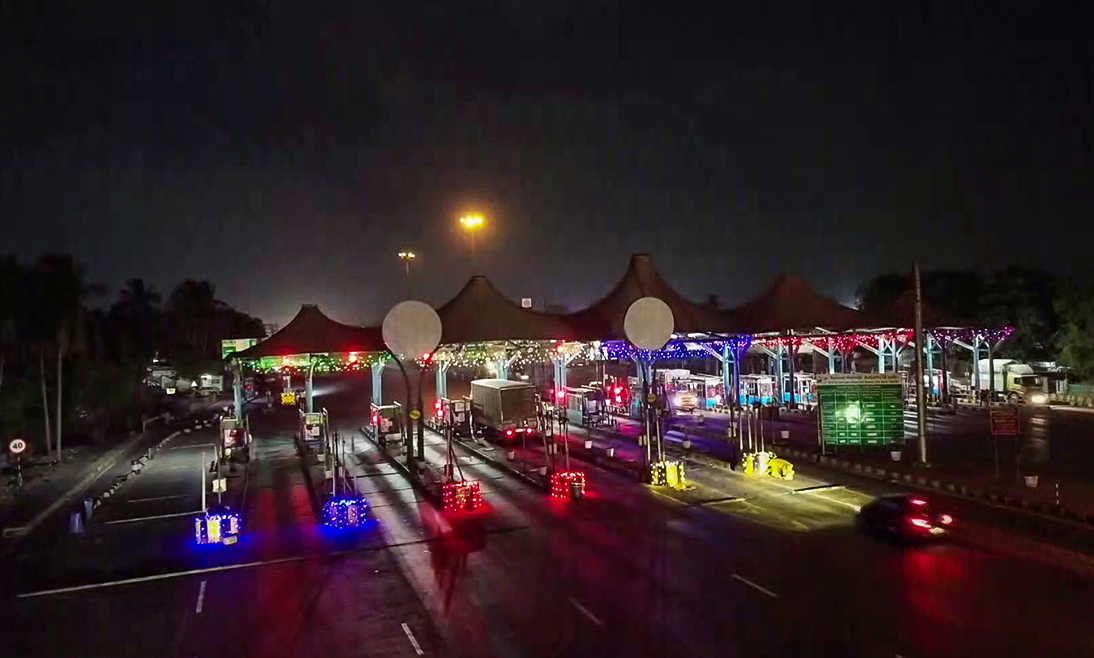
India’s highway travel experience could soon undergo a major transformation as the National Highways Authority of India (NHAI) begins rolling out barrier-less toll collection systems designed to let vehicles pass through toll plazas without stopping.
The first live deployments of the Multi-Lane Free Flow (MLFF) tolling infrastructure are now operational at Manoharpur in Rajasthan and Hyderabad in Telangana, marking the beginning of India’s shift towards no-stop tolling on national highways.
The technology uses LiDAR-based real-time vehicle detection and classification systems to identify and process vehicles while they remain in motion. The infrastructure is being implemented through a collaboration between NHAI and Cron AI’s senseEDGE platform.
According to officials, the system can currently process an estimated 30,000 to 35,000 vehicles daily under full highway conditions.
How the barrier-less tolling system works
The MLFF system works by assigning each vehicle a unique tracking ID while simultaneously capturing licence plate details through Automatic Number Plate Recognition (ANPR) technology.
It also determines vehicle classification based on axle count and dimensions. The infrastructure is designed to integrate with FASTag-linked RFID systems as part of the broader toll collection network.
In contrast to conventional toll booths where vehicles have to halt or slowdown, MLFF technologies do not impede vehicle movement at all, thereby cutting down on congestion and delay.
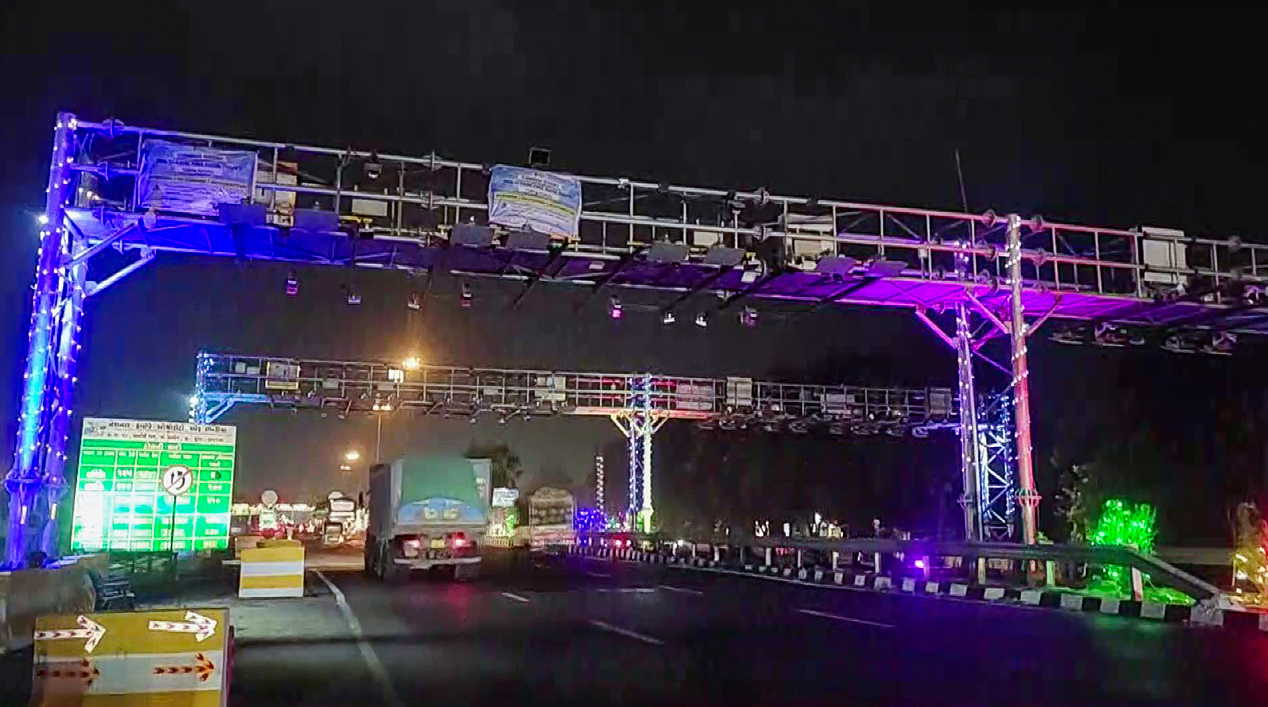 National Highway Authority of India (NHAI) launched India's first barrierless tolling system at the Choryasi Toll Plaza ANI
 It has been designed to cope with Indian traffic conditions such as inadequate lane discipline, overlapping of vehicles, light problems, darkness, and erratic traffic.
An official from NHAI, quoted in Business Today, pointed out that the shift would be key in upgrading India’s growing highway infrastructure.
“Technologies that enable accurate real-time vehicle detection and classification will be critical to this transition, particularly in traffic environments as dense and diverse as India’s,” he stated.
Push towards nationwide smart tolling
This follows fast on the heels of massive expansions of India’s highways system. As per official statistics, the National Highways system has increased in size from 91,287 kilometers in 2013-14 to well over 1,46,000 kilometers as of March 2025.
The government has already mandated that over 1,100 toll booths will have to be converted to MLFF system.
The government believes that the decision will help save fuel, reduce carbon emissions, and increase traffic efficiency in some of the most used roads. As it stands, FASTags are already used by more than eight crores of people with a penetration rate of over 98%.
Also Read | Which city recorded India’s highest murders, kidnappings and thefts in 2024? Here’s what NCRB data reveals
Manoharpur in Rajasthan and Hyderabad in Telangana are currently among the first operational locations where vehicles can move through toll infrastructure without stopping, signalling the beginning of a broader nationwide rollout of barrier-less tolling systems.