"Bhebe dekho kishey labh,
Bhebe dekho kishey khoti,
Bhebe dekho kishey hobey,
Agotir shadgoti."
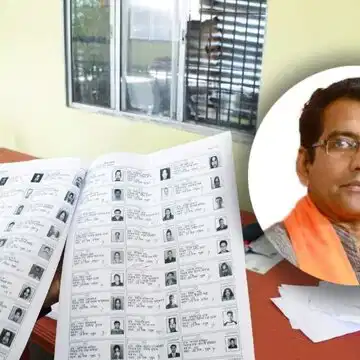
These lines from the song Ananda Sen by the popular Bengali band Chandrabindoo are surely familiar to many. Right now, political battles are heating up in West Bengal over the Special Intensive Revision (SIR) of the voter list. Since the notification for SIR was issued in October 2025 in West Bengal and 12 other states and Union Territories, 135 days have passed. The Election Commission is expected to announce the election schedule for Bengal very soon.
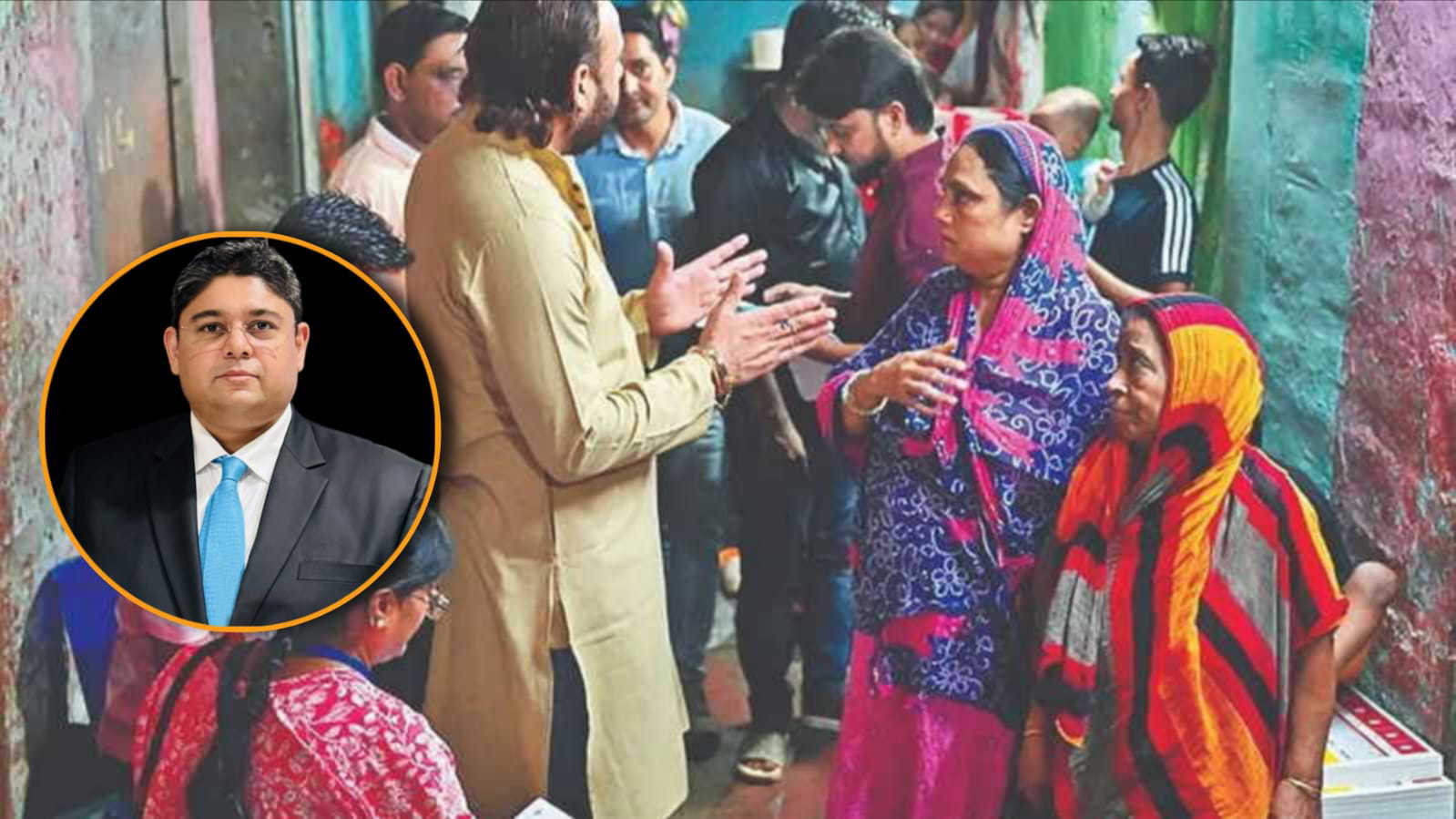
In these four and a half months, there has been considerable turmoil over SIR in Bengal. Now, both ruling and opposition parties have started calculating how the net result of these four and a half months will reflect in the ballot box, in whose favour or against whom will go the verdict of Bengal's nearly seven crore voters. And the concern of ordinary people like you and me is just one- will my name or my family members' names remain on the list? Won't I end up becoming a non-citizen? And if someone's name gets struck off, then what will happen?
The SIR exercise in West Bengal
There was a time when the saying was, 'What Bengal thinks today, the entire country will think tomorrow.' But what is happening in Bengal regarding SIR is undoubtedly exceptional. Why am I saying this? The last Special Intensive Revision in the country was conducted in 2001-03. In West Bengal, it was done in 2002. This time, after almost 24 years, SIR has started in all states, phase by phase. Last year, SIR was conducted in Bihar before the assembly elections. There was no shortage of uproar about it. Allegations of showing living voters as 'dead' or many valid voters' names being dropped were not uncommon. Cases even reached the Supreme Court. But ultimately, SIR was completed, and elections were held. After Bihar, the SIR notification was issued in October last year for 12 states and union territories, including West Bengal. Among the states where SIR was conducted, along with West Bengal, opposition-ruled states like Kerala and Tamil Nadu also went to the apex court. From Gujarat and Uttar Pradesh to Tamil Nadu and Kerala- in all states, allegations have been raised of panic among ordinary voters about becoming non-citizens and incidents of illness, death, and suicide among BLOs due to unprecedented work pressure.
ALSO READ | As Bangladesh votes, its neighbours are paying attention
But nowhere has a situation like Bengal been created, where, completely unprecedented and exceptionally, the Supreme Court has had to assign the responsibility of determining the fate of 60 lakh voters who are merely 'under adjudication' to judicial officers or judges. More than 500 judges from West Bengal and about 200 more from neighbouring Jharkhand and Odisha are still scrutinising these documents. Again, those whose names are dropped there can appeal to the Appellate Tribunal. That tribunal will be formed, comprising former judges and judicial officers. How many of these 60 lakh voters will retain their voting rights is as uncertain as which way their votes will go- this won't be understood before the results are declared. But when has anyone seen such an exceptional incident of current and former judges verifying voters' documents? Perhaps even when SIR is conducted in other states of the country in the future, such incidents will remain elusive there. That is, Bengal is exceptional.
What is the argument in favour of Special Intensive Revision? The Election Commission says it's for creating a transparent and error-free voter list. Addition or deletion of names in the voter list continues every year. But Special Intensive Revision means that Booth Level Officers, as representatives of the commission, will go house to house to verify whether these voters actually exist or not. And then it will be verified through documents whether only valid Indian citizens' names are on the voter list. There should be no problem with this. How can we accept that someone from another country illegally enters India, makes identity documents here, gets their name on the voter list and enjoys government facilities, again depriving legitimate Indian citizens? That should indeed be desirable. Then where is the problem? Why did such exceptional situations arise as ruling-opposition debates or the proposal for impeachment of the country's Chief Election Commissioner being presented in Parliament?
'Millions of ordinary voters cannot be systematically excluded'
Trinamool's declared position on SIR from the beginning was like this— let a voter list be prepared by removing names of voters who are dead, permanently relocated, or have names in multiple places. But millions of ordinary voters cannot be systematically excluded from the list by labelling them as Bangladeshi or Rohingya. Alongside this, Trinamool's top leadership has questioned why the SIR initiative was implemented in such a short time, and that too before the assembly elections. Then, as SIR progressed, allegations of death processions due to panic and illness have repeatedly surfaced in the state. Even though district magistrates have not sent any report to the commission about how many of these are officially caused by SIR panic, Trinamool claims that about 200 people have died since SIR began. During the SIR hearing phase, allegations have been raised of attempting to remove more than one crore voters' names on the pretext of 'logical discrepancy'. Now the debate mainly stands on two issues— first, why have 60 lakh 'valid' voters been put in uncertainty as 'under adjudication'? And second, many valid voters are also on the 'deleted' list.
ALSO READ | The right to vote begins with the right to belong
On the other side, the BJP has consistently demanded from the beginning that elections cannot be held in Bengal before completing the Special Intensive Revision. Bengal BJP leaders have been saying from the start that more than one crore people's names will be removed in SIR. If elections are held after removing illegal Bangladeshi and Rohingya infiltrators, no one can save Trinamool. Even then, the BJP leadership is not completely satisfied with SIR. Their allegation is that a large section of BLOs, EROs, and AEROs have worked under the patronage of the state's ruling party. Therefore, it cannot be said that all impurities have been completely removed from the voter list. For this reason, Bengal BJP leaders have repeatedly said that Chief Election Commissioner Gyanesh Kumar must come to Bengal and observe SIR on the ground, not sitting in Delhi.
SIR statistics in West Bengal
Amid this extensive tug-of-war for almost four and a half months, the final voter list was published in the state on February 28. Before publishing the supplementary list after verifying documents of 'under adjudication' voters as per the Supreme Court directive, let's review the statistics of SIR in Bengal once—
1) Before the SIR notification in Bengal on October 28, the number of voters was 7 crore 66 lakh.
2) In the draft voter list, about 58 lakh names of dead, multiple registrations, permanently relocated, and absent voters were dropped.
3) The number of voters in the draft list was 7 crore 8 lakh.
4) In the final list on February 28, the number of voters is 6 crore 44 lakh (of which 5 crore 46 lakh names were newly dropped from the draft list, and 1 crore 88 lakh were newly added through Form-6).
5) Under adjudication 60 lakh 6 thousand 675.
6) Among these under adjudication listed people, 50 percent are mainly in four border districts- Malda, Murshidabad, North and South 24 Parganas. Where the BJP's existence in the assembly is virtually nil.
So it's difficult to say right now whose benefit this arithmetic brings and how much benefit. Naturally, if a large portion of 'under adjudication' voters in these districts ultimately cannot vote, then arithmetically BJP might have a slight advantage. But the calculation that many are not grasping is— the voters who have suffered tremendously due to SIR for the past four and a half months, like the Matua vote bank in North 24 Parganas, much of which belonged to the BJP in the last Lok Sabha and assembly elections, the aftermath of so many deaths and panic should go against the BJP. Trinamool Congress chairperson Mamata Banerjee has made this very issue a weapon, staging a five-day dharna at Dharmatala. She herself was exceptionally rushed to the Supreme Court. Again, how much the BJP can capitalise on the immediate removal of about 62 lakh names from the voter list is being calculated. But one thing should be said openly— the final word will be spoken by the people.
Have past SIRs altered election results?
In this context, a statement by late Prime Minister Atal Bihari Vajpayee comes to mind. The wise politician Vajpayee had said, "Box mein kya hai koi nahi janta." That is, which way the public mind is leaning cannot be understood before the results. And it's good to provide another piece of information. The last SIR in Bengal was conducted in 2002. Then Bengal had a CPI(M) government. Trinamool was in opposition. And Atal Bihari Vajpayee's government at the centre. The then-ruling party did not make such a fuss about SIR. However, Trinamool was hopeful that with about 28 lakh names being dropped from the voter list, CPI(M)'s defeat was certain. That didn't happen. After 2002, Lok Sabha elections were held in Bengal in 2004, where Trinamool's MP count came down to 1. Only Mamata Banerjee won. And in the 2006 assembly elections, it was 235-30. Change came to Bengal almost a decade after SIR in 2011. Trinamool came to power by ending 34 years of Left rule.
There's no similarity between the context of 2002 and now. The problem of cross-border infiltration was not so acute then. A large portion of Hindu refugees from the other side of Bengal came to West Bengal after 2002. The state's demographics and socio-economic situation have changed. What will happen this time, both sides are still tense. Even more tense is a large section of the public. What will happen to the jobs, rations, and children's future of those voters whose names ultimately didn't make it? If valid voters' names also remain on the deleted list, if living voters' names are also marked as 'dead', whoever comes to power after the elections, will they think about them? Or what will the 60 lakh 'under adjudication' voters who ultimately won't have voting rights do— will someone look into that too? Will leaders still rush to the homes of the dead in the panic of becoming non-citizens? Will there ever truly be 'good fortune for the unfortunate'?
The questions are simple. The answers are also known.