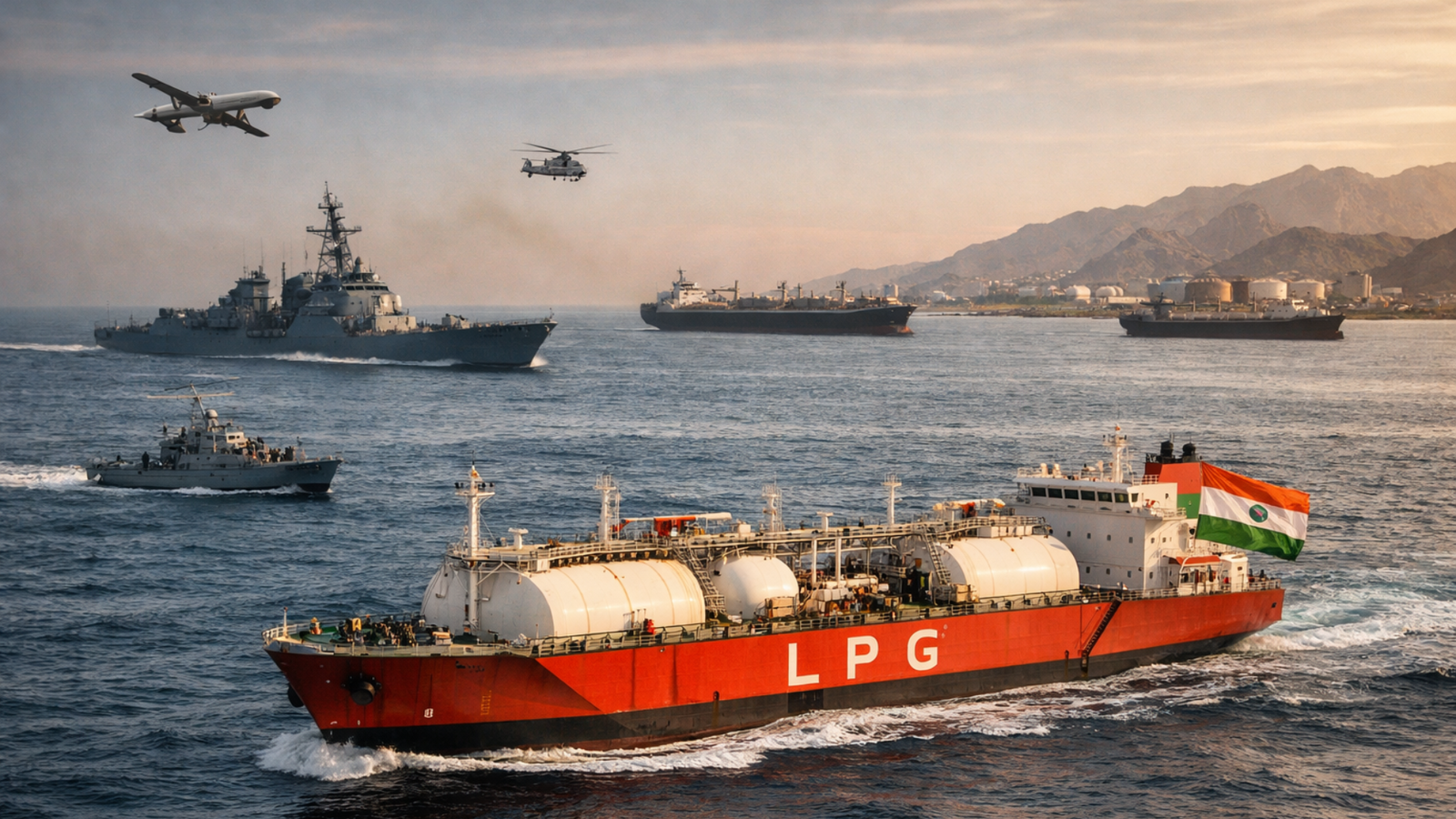
India is maintaining close contact with countries in West Asia to ensure the safe transit of Indian-flagged merchant vessels through the Strait of Hormuz, a crucial shipping route for the country’s energy supplies. The move comes amid the ongoing Iran-US conflict that began on February 28.
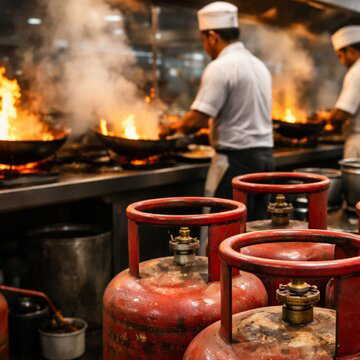
Officials said two LPG carriers, Shivalik and Nanda Devi, carrying a combined 92,700 metric tonnes of liquefied petroleum gas, successfully crossed the strategic waterway early on Saturday. The vessels are expected to dock at Mundra and Kandla ports next week.
India pushes diplomatic engagement for safe transit
External Affairs Ministry spokesperson Randhir Jaiswal said India has been engaging with all key stakeholders in the region to prevent disruptions to energy shipments.
Since the start of the Iran-US conflict on February 28, India has called for de-escalation, emphasised the need to ensure the unimpeded transit of goods and energy, and urged all sides to avoid the targeting of civilian infrastructure, including energy infrastructure, across the region, he said.
Also Read | Amid West Asia tensions, two Indian LPG vessels carrying 92,700 tonnes cross Strait of Hormuz safely
India’s leadership has reached out to several interlocutors, including members of the Gulf Cooperation Council (GCC), Iran, Israel and the US, while highlighting the country’s energy security concerns.
“As a result of these multiple contacts with all concerned, some ships destined for India have been able to cross through the Strait of Hormuz,” Jaiswal said.
Iran confirms permission for some vessels
Iran’s ambassador to India, Mohammad Fathali, confirmed that Tehran allowed some Indian-flagged vessels to transit the strait after diplomatic engagement between the two countries.
“Yes, we have allowed (the vessels) but let me not tell you how many,” Fathali said. He declined to go into details and said he would continue following this issue so that more vessels could cross the strait. “As the ambassador, I did my best, of course, there was some delay, but it happened,” Fathali said at the India Today Conclave.
He said the decision followed contacts between President Masoud Pezeshkian and Prime Minister Narendra Modi, as well as between foreign ministers S Jaishankar and Seyed Abbas Araghchi.
“As the ambassador, I did my best, of course, there was some delay, but it happened,” he said.
Fathali added that India and Iran share common interests and warned that “any rift or gap” between them could be exploited by “enemies”.
Also Read | ‘Petrol and diesel are adequately available’: Oil ministry warns against storing fuel in loose containers
“As the ambassador, I did my best, of course, there was some delay, but it happened”, he said.
Vessels waiting in the Gulf region
Officials said 22 Indian-flagged merchant vessels are currently in the Persian Gulf awaiting safe passage. These include six LPG carriers, one LNG carrier and four crude oil tankers.
Shipping ministry special secretary Rajesh Kumar Sinha said Shivalik is expected to dock at Mundra port on March 16 and Nanda Devi at Kandla port on March 17. Authorities have issued instructions for priority berthing of LPG carriers to maintain energy supplies.
The vessels in the region also include a chemical products tanker, three container ships, two bulk carriers, a dredger, one merchant vessel without cargo and three undergoing repairs in dry dock.
“Several of our ships remain on standby in the Gulf region. We propose to continue to remain in touch and coordinate with all concerned countries to ensure a safe and unimpeded transit for them in an effort to ensure our energy security,” Jaiswal said.
Indian sailors safe; evacuation efforts continue
According to Sinha, all Indian seafarers in the Persian Gulf, including 611 sailors on the 22 Indian-flagged vessels, are safe.
Since Friday, 30 Indian sailors have returned home, bringing the total number repatriated to 253.
Additional secretary (Gulf) Aseem Mahajan said 172,000 Indians have returned to the country from West Asia since February 28, as air connectivity has improved.
Also Read | Need an LPG refill? Here's the fastest way to book your cylinder
Officials are also assisting Indians in countries such as Bahrain, Kuwait and Iraq, where direct flights are unavailable, by helping them obtain transit visas or visa extensions.
Mahajan said that Indian authorities are helping 10 nationals injured in a drone strike at Sohar in Oman on Friday and facilitating the return of the bodies of two Indians killed in the same incident.
Efforts are also underway to bring back 15 Indian crew members of the merchant vessel Safesea Vishnu, which was attacked near Basra in Iraq, along with the body of an Indian who died in the attack.
Fertiliser stocks remain adequate
Respondig to concerns about fertiliser supplies, Jaiswal said India currently has comfortable stock levels.
"Our stocks of urea are more than what they were at this point last year; our DAP stocks are double what they were last year; our NPK stock position is similarly much higher today in comparison to last year. Insofar as our domestic production of urea is concerned, our current production will be more than our nominal consumption, especially as the rabi season is coming to an end,” he said.
Also Read | From cooking gas to restaurant bills: Here's what's getting costlier in India as West Asia tensions rise
He added that domestic urea production is expected to exceed consumption as the rabi season concludes.
Authorities have advanced maintenance schedules at some fertiliser plants and issued global tenders in anticipation of supply disruptions. The government expects most of the ordered quantities to arrive by the end of March.
“All our international partners have assured us of uninterrupted supplies, and we hope to attain and maintain comfortable stocks of fertilisers by the time kharif demand peaks by May 15,” Jaiswal said.
BRICS position still evolving
On calls by Iranian leaders for BRICS to play a role in regional stability, Jaiswal said efforts to build consensus within the grouping have been complicated as some members are directly involved in the conflict.
India has facilitated discussions among BRICS members through the Sherpa channel, including a virtual meeting on March 12.
“We are trying our best to develop a position, but because of differing positions, it has been difficult…We will continue to remain engaged with BRICS member countries so that we can arrive at a position on this particular conflict,” he said.