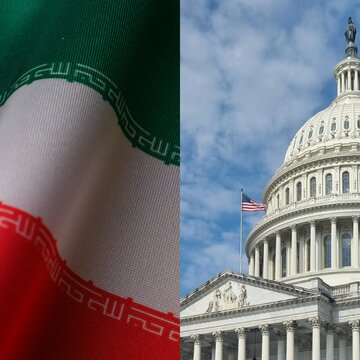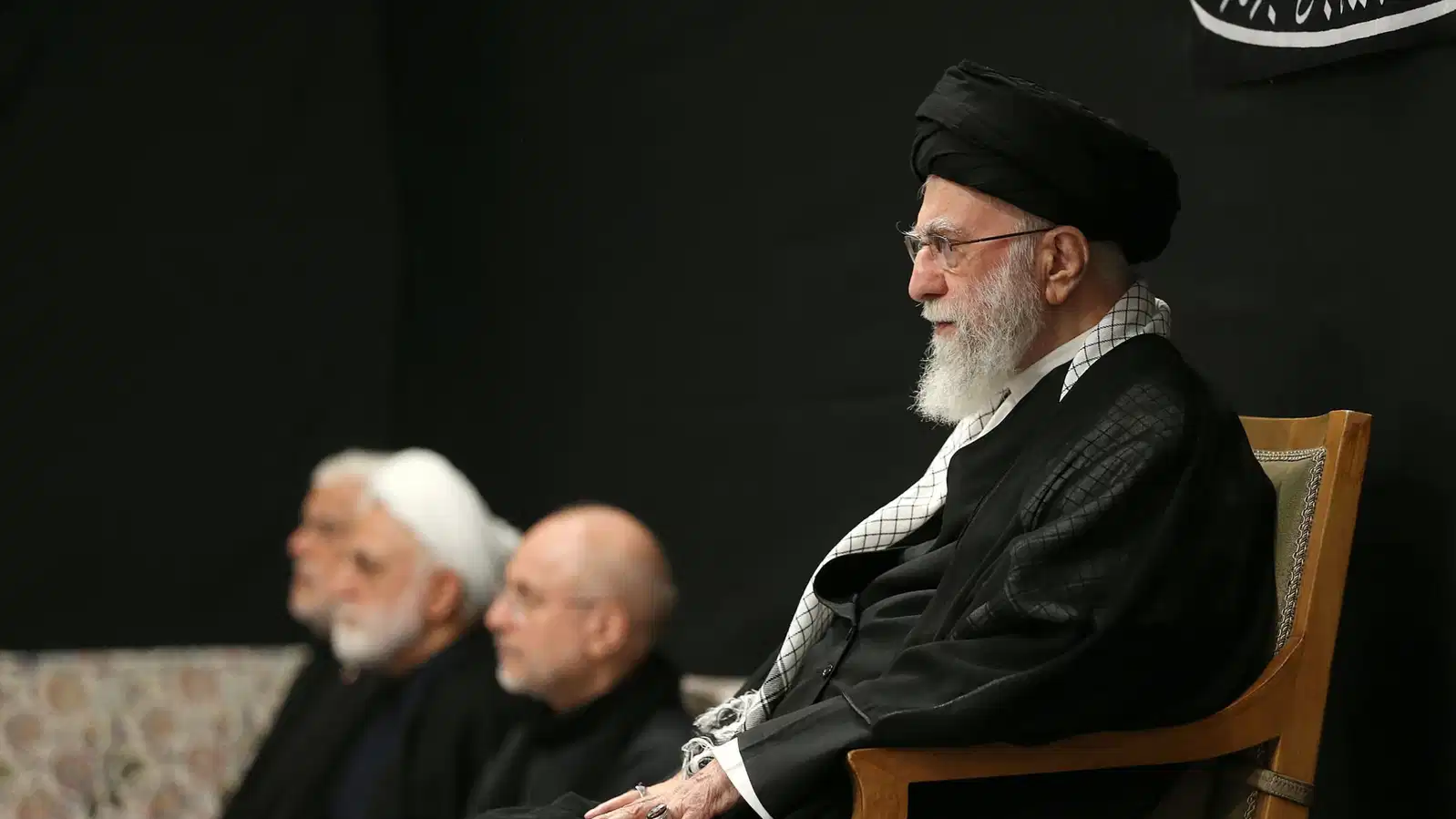
With the death of Ayatollah Ali Khamenei, the supreme leader of Iran, the crisis in West Asia has escalated further.
Global trading routes are impacted, strategic geopolitics are taking distinct shape every second, and the associated destruction of lives and property has put the world at a critical juncture in its history.
These instabilities have further raised a pertinent question: How would the next supreme leader of Iran be selected?
Amidst such rising tensions and the probabilities of a large-scale geopolitical conflict, it would be essential for us to see how leaders of the respective states are acting on this crisis.
The architecture of the Iranian Polity
After ending the monarchical rule with the revolution in 1979, Iran adopted a hybrid blend of political institutions and a clerical religious authority. The chief architect of this structure was Ayatollah Ruhollah Khomeini, a religious scholar, professor of Philosophy and an antagonist of the Monarchical rule of the Shah.
Since then, with several changes and amendments, the base of the political structure has remained a mixture of religious authority and elected institutions.
ALSO READ | US–Iran tensions deepen after Mojtaba Khamenei’s rise; what lies ahead for the Middle East?
Elections for the positions of President and Parliament are held, but they operate within limits set by religious authorities.
The guiding ideology is “Velayat-e Faqih” (Guardianship of the Islamic Jurist), which gives clerics( religious leaders) ultimate authority over the state.
At the top of the political hierarchy is the supreme leader of Iran, who has both religious and political authority.
But despite the sole powerful authority, the Iranian Polity is not fixated on a single individual. And this explains why, despite the death of their previous supreme leader, Ali Khamenei, Iran has not crumbled due to a lack of leadership, guidance and resolve.
It is a network of multiple institutions with jurisdictions of its own kind that hold Iran together. Primary here would be the role of the Assembly of Experts and the Guardian Council.
The Guardian Council is a powerful body that decides on the candidates for elections and also reviews the laws passed by the parliament to ensure they comply with Islamic law and the constitution.
The assembly of experts is the elected body of 88 clerics that elects or removes the supreme leader. They are elected by the public but vetted by the Guardian Council. Given how multiply mediated and entrenched the system in Iran is, its case for survival is quite strong.
ALSO READ | What is ‘Mother of Satan'? Cops seize lethal IED thrown during NYC protest, arrest two
Electing a new supreme leader
In the history of the Iranian Republic, this war provided for the second transition after the death of Ayatollah Khomeini, who was succeeded by Ali Khamenei in 1989.
In order to deal with the situation, a three-member Interim Leadership Council has been created in Iran, which is granted by Article 111 of the Iranian constitution.
President Masoud Pezeshkian, Chief Justice Gholam-Hossein Mohseni-Eje'i and Ayatollah Alireza Arafi, a member of the Guardian Council and assembly of Experts, have constituted the interim council in the absence of a supreme leader.
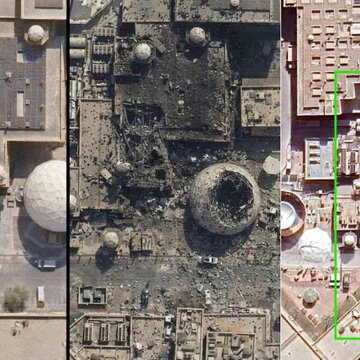
Constitutionally, it is the duty of the assembly of experts that chooses the supreme leader. At present, with the interim council in place, the Assembly of experts is in due session to select their new supreme leader. Notably, the USA-Israeli counterpart has even bombed the first session of the assembly of experts that was due to take place on the 3rd of March in the city of Qom.
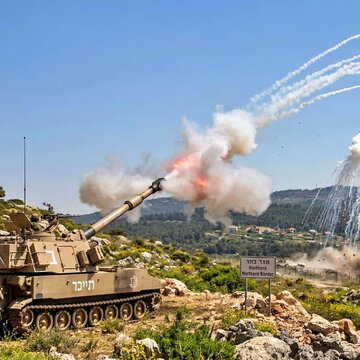
However, amidst the situation of conflict, repeated bombings, death and destruction and a leadership vacuum, the Iranian Polity has showcased considerable resilience. Unlike the other topplings of leaders in the region, the Iranian state didn't crumble owing to geopolitical pressure and leadership lacuna. Its deeply entrenched mechanism of the political institutions alongside the clerical authority has enhanced its bargaining power in this conflict. Thus, given such an arrangement of affairs, it is heavily anticipated that the task of choosing a new supreme leader would be dealt with considerable ease. However, the case for the war remains ambiguous as newer equations and balances appear in such situations of conflict that have the potential to create a conflict of global scale. Adding to this is the range of adversaries Iran has faced till now owing to the two and a half frontal attacks in its territory, since the US and Israel joined the wagon.
In terms of the new supreme leader, various names have come up in the public sphere. Mojtaba Khameini, son of the late Ali Khameini; Alireza Arafi, member of the Assembly of Experts and the interim council; Ayatollah Mohammad Mehdi Mirbagheri, an Islamic philosopher and a member of the Assembly of Experts; and Ayatollah Hashem Hosseini Bushehri, deputy chairman of the Assembly of Experts, are currently leading the speculations of the new supreme leader of Iran.
However, despite such well-structured institutional mechanisms, the debate on how the virtues of democracy and free will are echoed in these mechanisms remains a question we all ponder over. Iran’s theological roots and institutional resilience will certainly choose a successor, and that would be crucial to analyse how the global geopolitics would be framed.