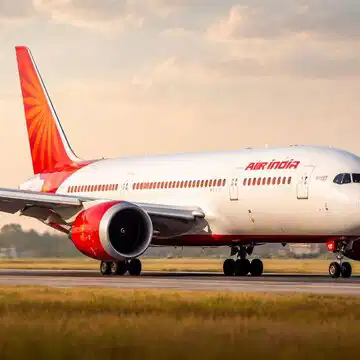
The Centre has lifted the temporary cap on domestic airfares, thus ending the pricing limit that was introduced in December. The Ministry of Civil Aviation stated that the conditions that led to the capping have stabilised, thus allowing the airlines to set their own prices depending on the market conditions.
This comes at a time when airline officials met with government officials to raise concerns over the operational challenges that have been experienced due to the ongoing war in West Asia. This has seen fuel prices rise sharply, thus affecting the operation of several international flights.
Industry flags losses, seeks flexibility
The Federation of Indian Airlines (FIA), comprising IndiGo, Air India, and SpiceJet, had written to the government seeking the removal of the fare caps. The body had cautioned the government of possible route withdrawals and delays in fleet expansion if the fare caps are not removed.
Also Read | Air India, IndiGo, SpiceJet push back on free seat mandate, flag fare hike risk
The FIA had written to the government stating that the Indian carriers are losing substantial revenue as well as facing increased costs, as reported by Reuters. The fare caps, ranging between ₹7,500 and ₹18,000, are based on distance for economy-class tickets.
New order effective from March 23
The Ministry's notification declares that the fare caps would continue to be withdrawn from March 23. At the same time, the Ministry has asked the airlines to ensure that the ticket prices remain reasonable and market-related.
Also Read | Petrol, diesel prices unchanged despite crude surge: Check fuel rates in your city
The order directed airlines to keep fares “reasonable, transparent and commensurate with market conditions,” while ensuring passenger interests are not adversely affected. It warned that any “excessive or unjustified surge in fares,” especially during peak demand, disruptions or exigencies, “will be viewed seriously.”
The fare caps were introduced on December 6 after IndiGo cancelled flights on a large scale, resulting in disruptions. The move was intended to shield the passengers during the uncertain times faced by the local airlines.