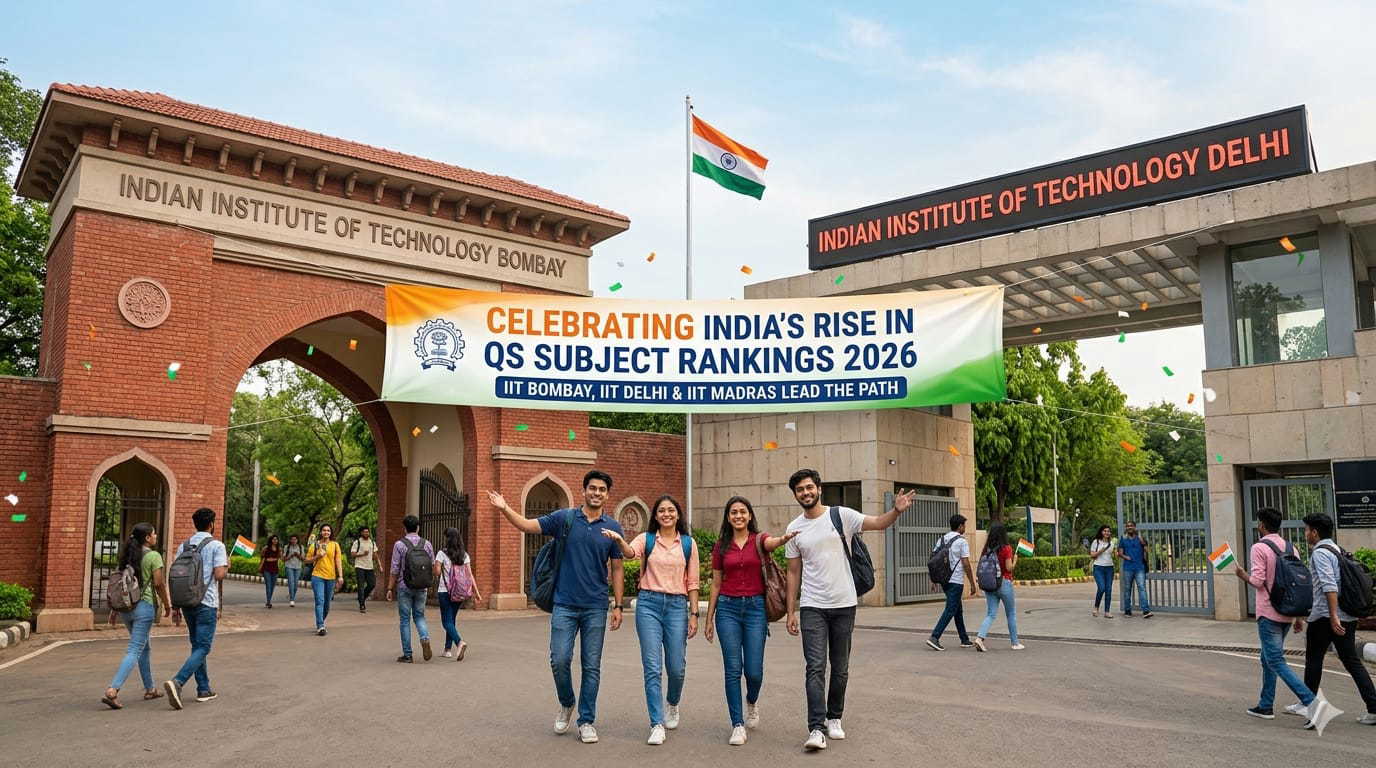
India is one of the fastest-growing countries in the QS World University Rankings by Subject 2026. It has improved in both the number of universities and subject entries, showing its growing global presence.
According to QS Quacquarelli Symonds, this year, India added 20 new institutions, taking the total to 99 ranked universities. It also added 120 new subject entries, making it one of the top contributors globally after the US, China and the UK.
Also Read | Sonia Gandhi is stable now: Delhi Hospital shares health update
India’s global rise and rankings data
According to QS, India had 599 subject entries in 2026, up from 533 in 2025.
About 44% of these improved in rank, with 265 going up and only 80 going down. Globally, the US has the highest entries at 3,645, followed by China and the UK.
But India stands out for its improvement, doing better than countries like the UAE, UK, Indonesia and Colombia.
Engineering and tech drive growth
Engineering remains India’s strongest area, with entries growing 65% over five years. Several institutions now rank in global top 100 and top 50 across fields like chemical, mechanical and mining engineering.
Computer science has also surged, with six Indian institutes in the top 100, up from two last year. IIT Bombay and IIT Delhi entered the top 50.
Also Read | Govt tightens gas policy: Three-month deadline—switch to PNG or lose LPG supply
Performance in different subject areas
Natural Sciences is growing the fastest with the newest entries. Engineering & Technology is the most stable, with no colleges dropping out. Social Sciences and Life Sciences are also growing steadily. Arts and Humanities are weaker, with most rankings going down.
India’s top universities shine
IIT Bombay leads India with 30 subject entries, followed by IIT Kharagpur and University of Delhi. IIT Madras, IIT Delhi, JNU, IISc Bangalore, and others also perform strongly across different fields. IIM Ahmedabad made a big impact, entering global rankings in business and marketing. Overall, more Indian universities are included, their rankings are improving, and India is becoming more globally competitive.
Engineering and technology are still leading, but fields like business, pharmacy and natural sciences are also growing and shaping the future.