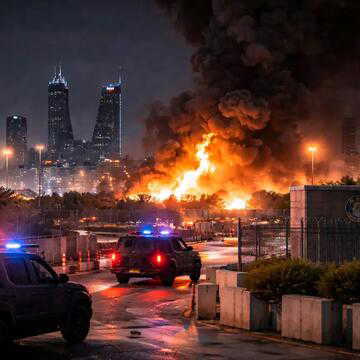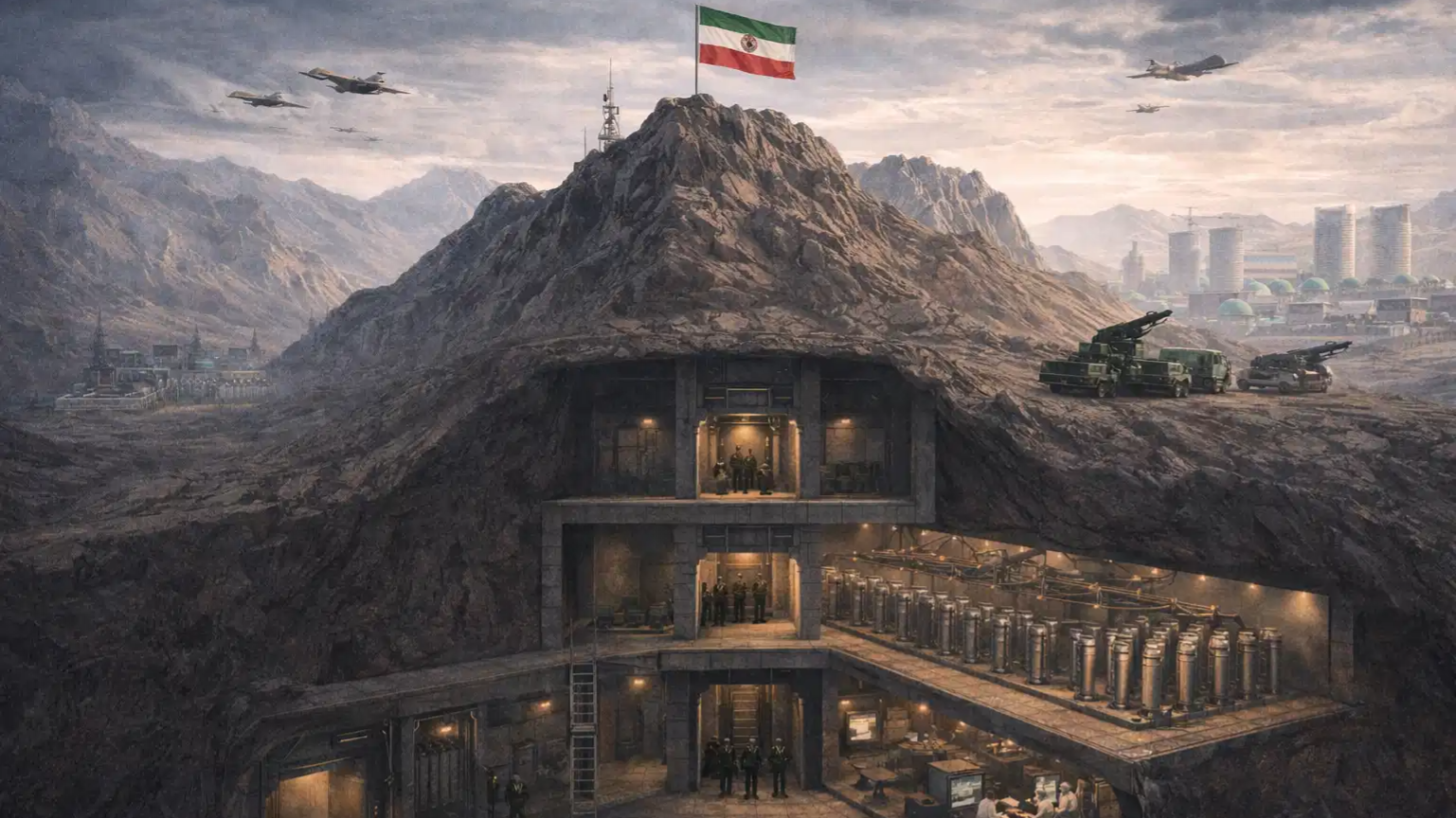
A deeply buried Iranian nuclear facility known as “Pickaxe Mountain” could become central to the outcome of the ongoing conflict involving Iran, the United States and Israel, according to security analysts and western intelligence assessments.
The site, reportedly located near the Natanz nuclear facility, is believed to be built more than 330 feet beneath a mountain, making it even deeper than the Fordow Fuel Enrichment Plant, one of Iran’s most heavily fortified nuclear installations.
Also Read | Is Ali Khamenei's wife alive? Iranian media dismiss claims of Mansoureh Khojasteh Bagherzadeh's death
Military experts say such extreme depth could make the facility difficult to destroy using airstrikes alone, raising questions about whether ground operations might eventually be required to neutralise the site.
A bunker deeper than Fordow
Western intelligence sources cited by the Foundation for Defense of Democracies say Iran may have developed the underground site as part of efforts to safeguard its nuclear programme from attacks. The facility is believed to be located roughly a mile from the Natanz enrichment complex, a key hub in Iran’s nuclear infrastructure.
According to analysts, Iran still possesses more than 900 pounds of uranium enriched to 60 percent, material that experts say is technically a short step away from weapons-grade enrichment. Much of this material is believed to be stored at facilities including Natanz and the Isfahan nuclear facility.
As per a report by New York Post, Andrea Stricker, deputy director of the nonproliferation programme at the Foundation for Defense of Democracies, said eliminating the deeply buried facility would be critical if the goal is to dismantle Iran’s nuclear capabilities.
"Before the United States and Israel end major combat operations against Iran, they must complete two urgent tasks,” Stricker wrote in a briefing. "First, they must neutralise Pickaxe Mountain."
Could ground forces be required?
The challenge lies in the depth and fortification of the facility. Analysts say conventional airstrikes may not be enough to destroy structures buried hundreds of feet inside rock.
Former and current military planners have suggested that a specialised ground operation could be required to fully dismantle underground nuclear infrastructure. US President Donald Trump has said halting Iran’s nuclear programme remains one of Washington’s main objectives in the conflict. Speaking to reporters recently, Trump indicated that deploying troops inside Iran was not currently planned but remained a possibility in the future.
"At some point maybe we will," he said, referring to potential operations targeting Iran’s nuclear facilities.
Meanwhile, analysts say recent strikes on Iranian military and nuclear-linked sites could signal a shift toward more direct targeting of infrastructure linked to uranium enrichment. Annika Ganzeveld, Middle East portfolio manager at the American Enterprise Institute’s Critical Threats Project, said that recent attacks may reflect growing pressure on Iran’s nuclear programme.
“With Iran’s launchers and defence systems degraded, it allows the US and Israel to make attacks on that front,” she said in comments reported by the New York Post.
What makes the site so significant
Iran has rebuilt and fortified parts of its nuclear infrastructure after previous strikes. Analysts say underground facilities are designed to ensure the programme survives military attacks.
Also Read | Israel Defense Forces claim strike on Iran nuclear facility linked to alleged AMAD project
The alleged Pickaxe Mountain complex is thought to be one of the most heavily protected locations in Iran’s nuclear network.
Experts say that unless deeply buried facilities and enriched uranium stockpiles are secured or destroyed, Iran could potentially resume its nuclear programme even after sustained air campaigns.